Terre Pruitt's Blog

In the realm of health, wellness, fitness, and the like, or whatever inspires me.

  • I teach yoga, Nia, and stretch online!

    ALL CLASSES ARE ON ZOOM AT 10:00 AM PDT

    Tuesday Gentle Yoga 

    Wednesday Nia

    Thursday Stretch

    Please see my website for details!

    I am also available for private Nia / yoga / Personal Training all virtual, of course!

  • Unknown's avatar

  • Enter your email address to subscribe to this blog and receive notifications of new posts by email.

  • My Bloggey Past

  • ******

    Chose a month above to visit archives, or click below to visit a page.

Archive for the ‘Yoga/PiYo/Pilates’ Category

Practice To Make Yourself Feel Good

Posted by terrepruitt on July 18, 2015

I wrote about compression a few posts back.  In the post I used pictures of Mr. Bones to help explain how sometimes an asana might not work for you in trying to do it the way you might see it pictured in Yoga Journal or on a yoga website.  It could be that your bones actually will connect before you can get that “perfect” pose.  But often what happens is the way you are doing a pose is perfect for you, you don’t have to look like the magazine.  Yoga magazines are just like fashion magazines, they pick the models that will look good doing the poses just like they pick the models that will look good wearing the clothes.  The people in the pictures are not DOING yoga, they are POSING for a PICTURE of a yoga pose.  What they are doing is TOTALLY different from what you are doing.  What you are doing is a practice in order for you to feel better.  So you want to do your asana in a way that will achieve that.

In other words, the idea is not to “get into a pose” the idea is to move into the pose, then BE in that pose.  Sense what your body is like in that pose.  Notice your breath in that pose.  Notice your emotions in that pose.  Notice your mind in that pose.  Could be that you notice pain somewhere, then you are to adjust your body so you are more comfortable.  If your breath is labored, perhaps you need to ease off?  Perhaps not, it depends upon the yoga you are doing . . . but notice your breath.  Some postures bring up certain emotions.  Take note of that.  It is ok to let them happen.  If you want and you feel safe let whatever comes up, come up and out.  But again, you do what you want to do and you do what you feel comfortable doing.  And, notice your mind, your thoughts . . . if you are able to let your mind wander perhaps you need to move deeper into the pose so you are more focused on your breath and body.

A lot depends on the type of yoga you are doing.  A lot depends on what the purpose of the pose is.  But the idea of asana in most types of yoga is to BE in the pose.  Take notice of the pose and all that is happening with you and your body at that moment.  Yoga is just like many things . . . unless you are practicing it for many, many, many hours a day you are better off doing it in your own body’s way then trying to achieve things you see in magazines like Yoga Journal and in the books written by yogis that practice for hours at a time and have been practicing for years.

Again it depends on what type of yoga you are practice, but many types, styles, and teachers realize it is more important to protect the body you have and move into a posture as your body will do the pose, than to try to achieve that “perfect” pose.  If you do the twists, the back bends, the forward bends, the balance poses, and all the other types to the best of your ability you will feel better.  If you do your practice mindfully you will feel better.

What is your most comfortable yoga pose?
Posted in Yoga/PiYo/Pilates | Tagged: , , , , | Leave a Comment »

Fingers And Toes

Posted by terrepruitt on July 14, 2015

About four months ago I went to a Foot Fitness Workshop as part of a Movement as Medicine Series by Tanya Baldwin N.D..  I wrote a post about it called Foot Fitness Workshop — Ahhhhh! I could have sworn we did an exercise where we put our fingers in between our toes, but I am not seeing that on the list nor in my post, but I know I would not have done it on my own.  I know I have seen it other places too, such as in connection with yoga, but I can’t put my finger on those references at the moment.  I am not fond of this exercise.  For some reason I really don’t like to put my fingers between my toes.  Well, I think it is more accurate to say I don’t like things between my toes.  But this is a great exercise for the feet.  It is also relatively simple.

I had to have done it at that workshop because I wouldn’t do it on my own.  But once I did it I realized how great it made my feet feel.  It helped open my foot and made it feel as if it had more space.  Everyone’s feet are different.  Some people have toes that are wide apart and some people have toes that are close together.  My big toe on both feet have enough room for another toe to be in between them and the rest of my toes.  So I have no problem wearing flip-flops where your big toes and second toes “straddle” something.  But I don’t like things in between my other toes.

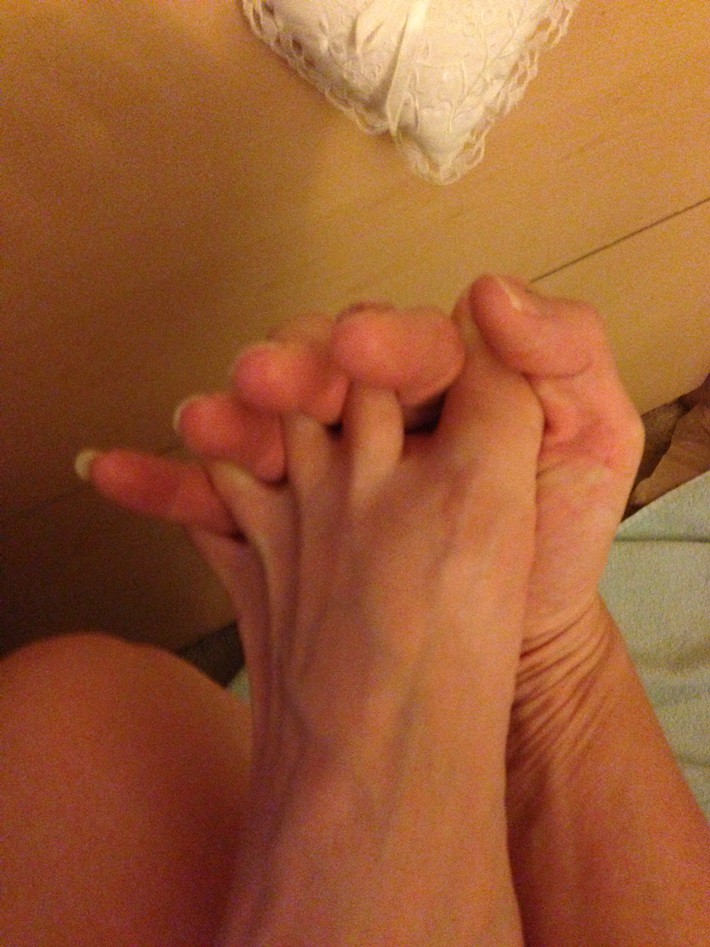
Dance Exercise, Nia, Nia in the City of San Jose,  Nia at the San Jose Community Centers, Nia classes in the South Bay, Nia Teacher, Nia Class, San Jose Nia, Nia San Jose, Nia workout, Nia, Gentle Yoga, Group Ex City of San Jose, San Jose Group Ex classes, YMCA, Zumba, PiYo, Nia TechniqueMy other toes are very close together.  It is a challenge for me to get my fingers in between my toes.  Now the idea is not just to put your fingers in between your toes.  The exercise involves putting your fingers in between your toes all the way down to your hand.  So your fingers are all the way down to where your toes meet with your feet and your toes are all the way down to where your fingers meet with your hand.  For me that is wedging my fingers in between my toes.  I don’t really like it.  The orientation is the bottom of your foot is in the palm of your hand.  You want to put your fingers in your toes from the bottom.

But as I said, I had done it and I loved the way my feet felt afterwards.  So . . . I took it to a stretching class I taught.  I told them I was doing something I didn’t like to do, but I knew was good for them.  I put it in the “routine” just for them.  After we did it our feet felt great.

Today I brought this exercise to my Nia class.  Since I did it and I like the way it made my feet feel I wanted to bring it to Nia, but it seems like a Floorplay exercise, but after we dance we don’t want to touch our feet.  No matter how clean the floor is, after moving around on it for 50 minutes, touching your feet is just not very comfortable.  Perhaps touching the top or even a quick touch.  But the way you have to wedge your fingers in between your toes, is not so great after almost an hour of barefoot dancing on multi-use type floors.

So today we STARTED class with this exercise.  We took a bit of time to do it.  We talked about the sensations of the our foot and our hand as we did it.  A lot of us didn’t really like it.  But we did it.  We noticed that one set of toes seemed easier to wedge our fingers in between.  All of us agree that our foot felt more open after doing it.  With the way we squish our feet into shoes.  It is great to allow them to open up with this exercise.

It helps with mobility in the foot because we move our foot around while I fingers are in between our toes.  It helps strengthen the toes because they are moved into a different position.  It helps bring mobility and flexibility into the toes because we are causing the toes to move and separate.  It is good for overall foot health.  Try it.  You will see how different your feet feel after.  You will appreciate the sensation.

Have you done this exercise before?  How does it make your feet feel?

Posted in Yoga/PiYo/Pilates | Tagged: , , , , , , | 2 Comments »

The Base Of Many Asana

Posted by terrepruitt on July 11, 2015

As you may know, there are thousands of yoga poses.  Some of those may be variations or modifications, but still, there are a lot of yoga poses.  I think of them in four categories; standing, sitting, lying down, and kneeling.  Some people break them into different categories or types: standing poses, forward bends, back bends, twists, balances, and inversions.  Or even standing, twists, sitting/forward bending, supine/prone, inverted, balancing, and back bending.  To me you can do a forward bend while standing or sitting.  Same with a twist.  Balancing can be done standing, sitting, or on knees.  Lying down is generally supine or prone.  Inversions can be done lying down or standing, and the same with back bends.  Within the four categories I named, I think of asana in terms of what are we doing.  Are we balancing, are we stretching, are we working on strength or is this a restful pose.  So sometimes those are my categories.  It just really depends.  Sometimes seated poses might look easy, but they might be more involved than you first realize.  It might appear to be a restful pose when in fact it is a strengthening pose.  One of those poses is Dandasana or Staff pose.

The staff pose is a sitting pose.  It might be considered somewhat restful, but you are using your muscles.  You are activating quite a few.  This pose might not be done often on its own in yoga classes, but it is a base or starting point of many poses.

This asana is simple, yet it might not be easy.  The pose requires you to sit up tall with a straight back.  You want to sit on your sitz bones.  Your weight is evenly distributed over both bones.  Your legs are extended straight out in front of you.  Your legs are together, thighs, knees, ankles and feet, together.  Your thighs are active.  You are actively pressing your legs gently into the floor.  Your knees are facing the sky.  Your feet are flexed with toes pointing up to the sky.  Your spine is lengthening.  You are reaching with the crown of your head to the sky, lengthening the neck, opening the chest, allow shoulders to relax, shoulder blades sliding down into your back pockets.  Your ribs are lifting up, away from your hips.  One way to do this pose is to press into the floor with your hands, arms are straight.

Using your hands is a variation or a modification . . . depends.  Pressing into the floor would give you tension in your arms allowing them to work.  But using your arms might be a modification because your arms might help you keep your spine straight allowing your core muscles to work less.

Another modification would be to sit on a blanket.  That might be more comfortable for your sitz bones.  Another modification would be to sit up against the wall.  This could be a step one might take if they need to build up core strength.

This pose is said to have the following benefits:

–strengthens muscles of chest, shoulders, and back
–tones abdominal organs
–improves digestion
–reduces heartburn and flatulence
–tones the spinal and leg muscles
–lengthens ligaments of the legs
–stretches and activates muscles of legs
–relieves sciatica
–improves posture

As I mentioned this post is the base of many poses.  The lengthening of the spine and legs is the start of many asana.  Some even keep that energy, the energy of the legs moving away from the hips and/or the energy of the head moving away from the hips, throughout the pose.  So this is a great one to master to help with other asana.

Do you practice Dandasana?

Posted in Yoga/PiYo/Pilates | Tagged: , , , , | 2 Comments »

Mr. Bones Helps Demonstrate Compression

Posted by terrepruitt on June 30, 2015

Dance Exercise, Nia, Nia in the City of San Jose, Nia at the San Jose Community Centers, Nia classes in the South Bay, Nia Teacher, Nia Class, San Jose Nia, Nia San Jose, Nia workout, Nia, Gentle Yoga, Group Ex City of San Jose, San Jose Group Ex classes, YMCA, Zumba, PiYo, Nia TechniqueRecently I watched a DVD that wonderfully demonstrated why not everyone can do the poses exactly like the person pictured in Yoga Journal or on a trendy yoga website.  The DVD was from Paul Grilley and it addressed compression.  While Paul focuses on compression of bone, you will be able to easily conclude there are other types of compression.  Compression in mechanics according to Wiki is:  “the application of balanced inward (“pushing”) forces to different points on a material or structure . . . .”  We are going to say compression occurs when movement of material or structure is to a point where it can no longer move.  The movement is stopped because of compression.  The DVD’s main point was bones.  A bone can only move so far before it contacts another bone.  Compression will stop something from moving.

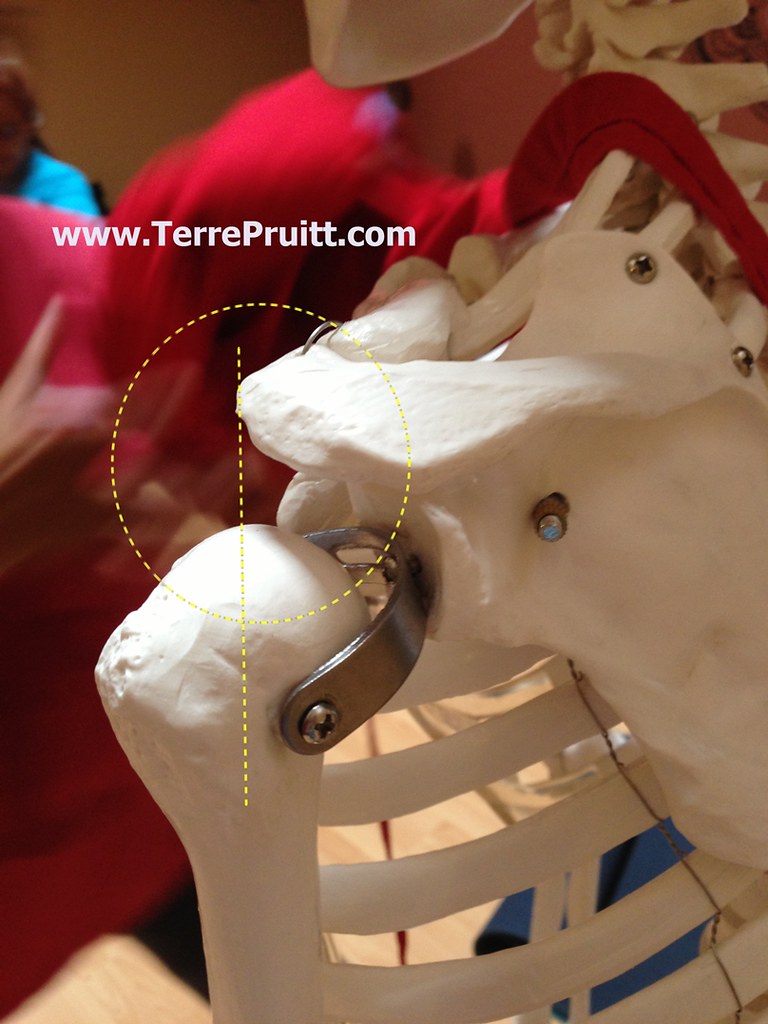
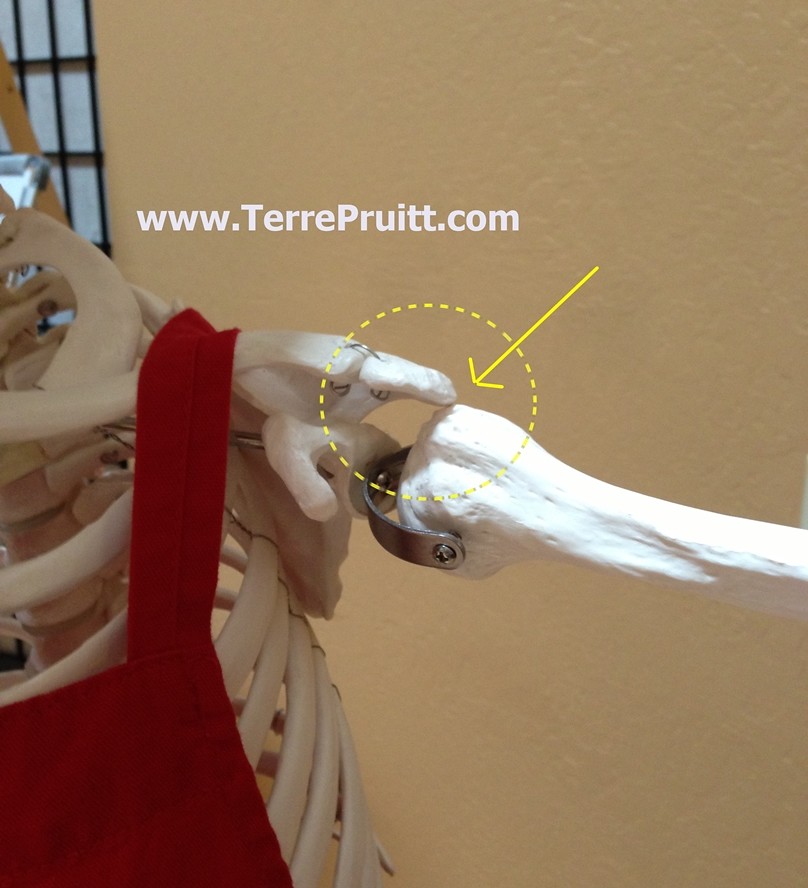
One of the most obvious points of compression is the shoulder.  The acromion or acromion process is the bony ridge that is part of the scapula.  It extends up and out over the top of the humerus.  Or it does on Mr. Bones.  You can see the acromion process sticking out and stopping almost halfway over the upper arm bone.  But it is not that way in everyone.  In some people it could be shorter.  In some people it could be longer . . . perhaps extending PAST the humerus.  Mr. Bones’ acromion is straight, in some people it could point up or point down.  Some people might have an acromion process that twists.  Whatever the case may be, the size, length, and projection point of this bony ridge can affect your movement.

SDance Exercise, Nia, Nia in the City of San Jose, Nia at the San Jose Community Centers, Nia classes in the South Bay, Nia Teacher, Nia Class, San Jose Nia, Nia San Jose, Nia workout, Nia, Gentle Yoga, Group Ex City of San Jose, San Jose Group Ex classes, YMCA, Zumba, PiYo, Nia Techniqueee how when Mr. Bones’ arm is lifted his humerus comes in contact with his acromion process?  That is the compression we are talking about.  If the acromion process on Mr. Bones’ was shorter or perhaps pointing upward, his arm could probably be lifted higher up.  If the process was longer or pointing down, his humerus would hit it sooner.

To put this into a pose example let’s talk downward facing dog.  Arms are straight up from the shoulders and hands are above the head.  If the acromion were, as in our examples long or pointing down, one would not be able to place their arms above their head while keeping their elbows straight.  They might need to bend their elbows to allow the humerus to go around the acromion process so that the arms can be placed above the head.

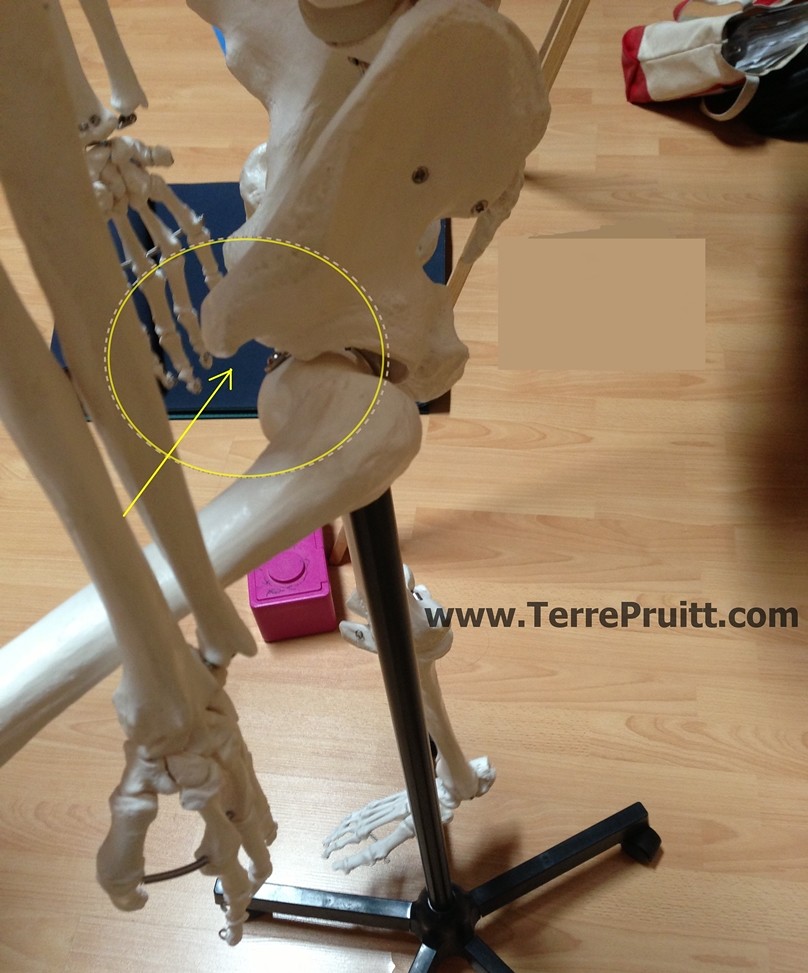
Another point of compression that is easy to see on Mr. Bones is in his hip area.  See how his femur can contact the lower portion of his pelvic girdle?  If his femur were set differently the compression would happen at a different angle.  The way the long leg bone is set and connected to the hip affects the bend that can be done.  The angle of a bend depends on that connection.

ADance Exercise, Nia, Nia in the City of San Jose, Nia at the San Jose Community Centers, Nia classes in the South Bay, Nia Teacher, Nia Class, San Jose Nia, Nia San Jose, Nia workout, Nia, Gentle Yoga, Group Ex City of San Jose, San Jose Group Ex classes, YMCA, Zumba, PiYo, Nia Techniquelso, don’t forget, Mr. Bones is JUST bones.  He has no muscles, fat, skin, tendons, or anything to get in the way.  All that other stuff can add to the compression.  Any one of those things that is in the way of the closing an angle would be considered compression.

Compression is always going to stop the movement, but sometimes compression can be pushed a little.  Let’s say there is fat or muscles that is keeping you from going further, sometimes, if it feels right to you, it can be squished a bit.  But something like a baby bump should not be squished.  Bones might benefit from a little compression, but caution should be used.  Sometimes the floor could even play a role in compression.  Say you were in a Upavistha Konasana (Wide-Angle Seated Forward Bend) /and you are able to get your head all the way to the floor, but you can’t go any further because of the floor, that could be considered compression.

Paul Grilley’s DVD can be purchased through his site or through Amazon.**  It really is one of those things that you know, you understand, but sometimes it helps solidify it to see examples.  He goes through several poses with his students.  The average seemed to be three students per pose so it was very clear as to the different body types and body structures.  With the different body types demonstrating, it was clear that not being able to do a pose was not always a case of lacking . . . it wasn’t that they were not strong enough or flexible enough, it could be that their structure affected a pose because of compression.  I would highly recommend this DVD to my students.

Does this make sense to you?  Did I explain it so that you could understand?  When you are practicing yoga are you aware of compression in some poses?

**06.01.25 It looks like the DVD is no longer available on his site, but there appears to be a streaming version, additioinally my link to Amazon no longer works so I am not positive that the DVD I was talking about in 2015 is the same one that is currently available so I have removed both links from the post above.

Posted in Yoga/PiYo/Pilates | Tagged: , , , , , , , | 4 Comments »

Bringing Focus Back

Posted by terrepruitt on June 9, 2015

About a month ago I was in a yoga class and afterwards there were a few people who were telling the person that was a couple of mats away from me how great her poses were.  They were going on about how beautiful she looked.  I felt bad.  I felt like an awful person for not even noticing how wonderful this fellow student was.  She was so wonderful that a few people came over to tell her.  Every class I have taken since then has me questioning that.  I started thinking I should be looking around and paying attention to other people’s poses.  I realized that I am really focused on myself when I am in a yoga class.  Sometimes I open my eyes and I am surprised there are other people in the class.  The last few classes I took I started looking around.  I started noticing what other people were doing.  I was thinking that I needed to be more attentive to the other students so I could pat them on the back when they did well.  But then I realized that looking around and watching what other people are doing is what I do when I teach.  When I take a class it is perfectly fine for me to let the students fade into the background.  When I am in a yoga class I NEED to be focused on me.

When I am instructing a class I am demonstrating a pose.  I am IN the pose, but I am not really DOING the pose.  I am not focused on the pose, I am focused on looking at the class.  I am focused on seeing if they are doing the pose.  I am thinking about how to gently guide them into the proper alignment.  I am thinking about what to say that will allow them to sense what they are doing.  Everyone says they want to be instructed on how to do it right, but no one wants to be the sole recipient of all the instruction.  So sometimes, general instructions is best.  I am thinking about all of that while I am in the poses.

At times I will step out of a pose to walk around the class to see the students posture from different angles.  I walk around to see if they are in alignment and to help someone with the pose.  So I am not really doing yoga.  I am not focusing on me, I am not focusing on my breath, I am not paying strict attention to sensation in the poses.

So when I am in a yoga class, I don’t look around.  I soften my gaze so I don’t really see my fellow classmates.  I allow myself to be the student and not look at others’ alignment.

I have been thinking about this for about a month now.  I was trying to figure out a post for today, when I came across “No Peeking!” and it reminded me of peeking around in a yoga class.  When I look around and pay too much attention to others when I am a student, I sometimes lose sense of what I am doing.  It could be that I see the person three over from me doing the pose “better than” me, so I try to go deeper (or higher . . . whatever the case may be) and then I am not listening to my body and what it needs at that moment.  No Peeking was about competitive swimming and how when you look around to see where you are in the race you move your head, which changes your body position, which changes the outcome of the race.  While yoga is not a race, when I look around whether the movement changes my pose or my thought process changes the pose, the outcome is adjusted.

Hmm.  I am going to keep that in mind.  And get back to my focus.  If I don’t complement your beautiful poses when we are in a yoga class, don’t take offense.  Now, Nia is entirely different.  While dancing you are tuned into your body, but there is also a sense of sharing and sometimes even stealing.  If you see someone doing something you want to try, have at it.

Are you completely focused in your yoga class?  Do you get motivated by looking at others?  Does looking at others distract you?

Posted in Yoga/PiYo/Pilates | Tagged: , , , , , | 2 Comments »

Folding Is An Art

Posted by terrepruitt on June 6, 2015

Many of you who attend yoga classes regularly might already know this, but then again, maybe not.  Sometimes there is not always time in any type of group exercise class to get the tips and tricks that are widely known.  As with me, I just recently learned this tip/trick.  And, I actually haven’t even had the chance to use is since I learned it.  This might not always be necessary even if you are using the same type of prop in a yoga class.  There are different uses and needs, so you might not always need this trick.  Recently I was in a yoga class and we were instructed to lie down on a specific configuration of blankets and blocks for pranayama.  The blanket was folded length-wise into thirds and we were to lie on it length-wise, with it running from the bottom of our neck to tail.  The idea is to allow the torso and chest to open.  We were to lie there and breathe.  As you may know, pranayama entails deep breathing and/or breathing specifically.  I think the pranayama we were supposed to be doing was three-part breath (Dirgha).  Where one is breathing into the belly, the rib cage, then the upper chest.  Then the exhale goes from upper chest, ribs, then belly.  Something I am just learning and that is not easy for me.  So, like I said before, breathing specifically.  Well, I could not concentrate because I was so uncomfortable. I couldn’t even take a full breath much less take it in from bottom to top and then breathe it out in the opposite fashion.  The blanket was bulky on the sides and it was keeping me from breathing with ease.  I couldn’t relax and let my chest open.  I ended up having to discard the blanket and just lie on the floor.

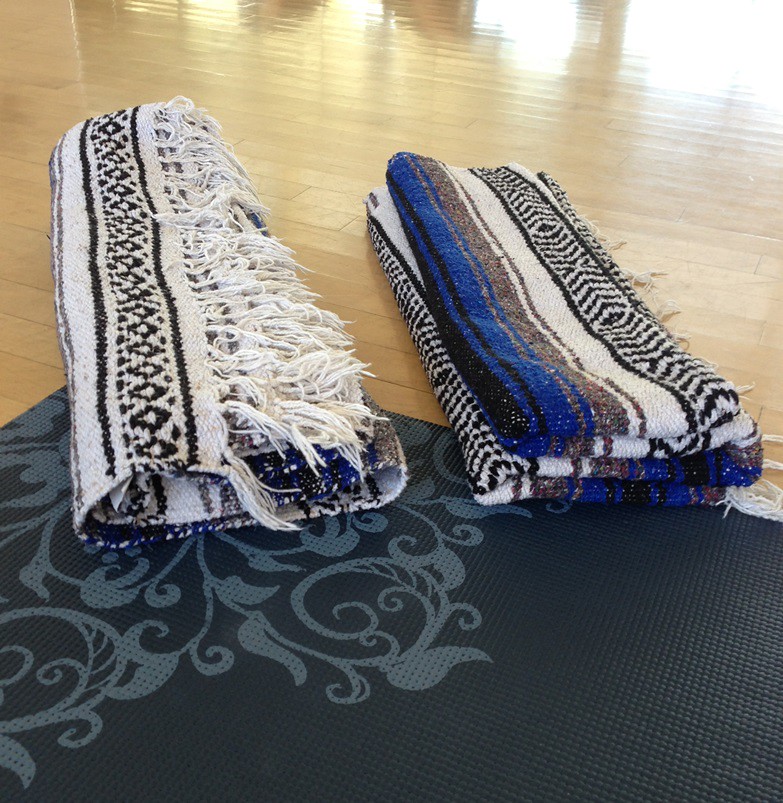
Dance Exercise, Nia, Nia in the City of San Jose,  Nia at the San Jose Community Centers, Nia classes in the South Bay, Nia Teacher, Nia Class, San Jose Nia, Nia San Jose, Nia workout, Nia, Gentle Yoga, Group Ex City of San Jose, San Jose Group Ex classes, YMCA, Zumba, PiYoAfter that portion of the class another teacher came in and explained how to fold a blanket to allow for maximum comfort.  It is easy and made complete sense.  Instead of folding it in halves or thirds like you would a blanket you are going to put in the closet, fold it like an accordion so that it is even.  There are no sides that are thicker.  When it is folded like an accordion it lies more evenly.  This is a much easier, more comfortable support to lie on.  When she demonstrated it, it looked perfect and comfortable.  I wanted to use it to see if it felt as comfortable as it looked, but it was not the time to do so.  And, as I mentioned, I have not yet had the opportunity to try folding a yoga blanket like that and using it.

I know, folding a blanket is an easy thing to do, but, as you may know, yoga blankets are very thick and sometimes they can be very bulky and bulgy when folded wrong.  The blankets and other props are there to be used to make poses more comfortable and give proper alignment.  Having it bulge and press on your body is not comfortable.

Do you use yoga blankets in your practice?  Might you see how this type of folding technique could create a comfortable platform to lie on?

Posted in Yoga/PiYo/Pilates | Tagged: , , , , , , , | Leave a Comment »

Church Yoga

Posted by terrepruitt on June 4, 2015

There are so many different types of yoga, it is out of my range to know them all or to even have HEARD of them all.  There are “ancient” types of yoga and types that have been around for a very long time, then there are new ones.  There are some that have popped up rather recently.  I believe many ancient types of yoga have been morphed into different types of yoga.  Then once you become aware of a type of yoga it can still be different from studio to studio and teacher to teacher.  I recently became aware of a type of yoga I had never heard of.  I read the description and I thought, “Ok, I’ll give it a try.”  Because I have to teach throughout the week, I have to be attentive to my energy levels.  I have no qualms about attending a class and, if it is more than I want to do at that time, not doing it at the level that is being instructed.  So if it was more strenuous than I wanted I was planning on just doing it gently.  But the description sounded like exactly what I wanted.  So, I went to this class I had never heard of and I am not sure if the class was a little different because it was a holiday or what, but there was a lot of talking.  It was Kriya Yoga.

Kriya Yoga – Low/Moderate

Kriya Yoga highlights the relationship between the breath and the mind.
Breath influences mind and vice versa. Breath control is self-control.
Techniques include preparing the body with stretching and bending
exercises, practicing meditation, and incorporating breath

Dance Exercise, Nia, Nia in the City of San Jose,  Nia at the San Jose Community Centers, Nia classes in the South Bay, Nia Teacher, Nia Class, San Jose Nia, Nia San Jose, Nia workout, Nia, Gentle Yoga, Group Ex City of San Jose, San Jose Group Ex classes, YMCA, Zumba, PiYoThe description of Kriya Yoga that I read on Wiki, had me thinking that it was the type of yoga where participants would be experiencing two of the eight limbs of yoga; asana and pranayama.  But, the class focus or subject seemed more to throw us into experiencing about six of the limbs.  It was memorial day, and I had stopped looking at Facebook before class because I wanted to go to yoga and have a relaxing time of breathing, stretching, and bending.  I was avoiding all the war stories until after class, but I felt jolted by the homily.  It was like yoga and church rolled into one.

When I got home I discovered there are some descriptions online that describe Kriya yoga as the “spiritual yoga”.  That could explain why I felt as if I was in church.

The class is normally an hour, but this class was an hour and a half, so I don’t know if the extra time was used for talking or if the talking is part of the class.  I have not been in regular attendance in classes where talking and thinking about deep subjects are involved.  It was very interesting.  It was not the type of yoga I had been hoping for, I think it was a bit different than the description. I am not sure I will have the opportunity to get back to it because of scheduling conflicts and the location.  But we will see.  As I said, I think the regular class might be different, but I don’t know.  I wouldn’t mind going back to see.  The next time I will be a bit more prepared and not have the idea in my head that I will just be able to relax and focus on the poses.

I am planning on trying more types of yoga!

Have you ever heard of Kriya yoga?  What types of yoga have you heard of?

Posted in Yoga/PiYo/Pilates | Tagged: , , , , , , , , , , , , , , , , | 4 Comments »

Legs Up The Wall Pose

Posted by terrepruitt on May 14, 2015

There are poses and moves that I love to do that I don’t get to do in my classes.  Some of the poses or moves require a wall.  While there are walls in the venues where I teach, they are not always accessible.  Some walls have mirrors and most venues ask people to NOT TOUCH the mirrors.  Some walls have chalkboard, white boards, cork boards, and other types of boards where announcements are hung.  It is not feasible to use the walls with the boards, because we would be touching and possibly damaging the announcements.  And some walls have cabinets and sinks, so that doesn’t work.  Some walls aren’t really WALLS at all, but they are windows, that is almost the same as mirrors in that we shouldn’t be pushing on them and putting our hand prints all over them.  And for some poses it wouldn’t just be hand prints — it just wouldn’t work.  Some walls have ballet barres attached to them so they wouldn’t work for the poses or movements.  And some walls just have too much stuff in front of them to be used.  So in the majority of the classes I teach we don’t use the walls, which is a bummer.  One pose that I have been doing a lot lately on my own is a great one, but it requires a wall.  The name is actually “Legs up the Wall Pose” or the relaxed version of Viparita Karani.

Basically for this pose you lie down on your back with your buttocks up against the wall and your legs straight up on the wall.  The benefits of this pose touted by practitioners of yoga are many.  Including calming the mind, easing anxiety and stress, relieving tired feet and tired lower legs.

According to Yoga Journal:

Dance Exercise, Nia, Nia in the City of San Jose,  Nia at the San Jose Community Centers, Nia classes in the South Bay, Nia Teacher, Nia Class, San Jose Nia, Nia San Jose, Nia workout, Nia, Gentle Yoga, Group Ex City of San Jose, San Jose Group Ex classes, YMCA, Zumba, PiYo“good for most everything that ails you, including:

Anxiety
Arthritis
Digestive problems
Headache
High and low blood pressure
Insomnia
Migraine
Mild depression
Respiratory ailments
Urinary disorders
Varicose veins
Menstrual cramps
Premenstrual syndrome
Menopause”

I find that I am comfortable in this position for about 15 minutes.  If I am going to stay in this position longer than 15 minutes I like to lie on something, like a folded towel.  I place the folded towel under the lowest part of my back.

This is a relaxing position and should feel very comfortable, so adjust your body in order for it to be comfortable for you.  That could mean moving your body away from the wall, so your buttocks are not touching it.  Move as far away as you need to in order to relax and still be in the pose.  Or it could mean using a bolster under your buttocks and lower back or a towel under your lower buttocks.  Move and adjust yourself and any prop you are using to find something relaxing and comfortable for you.  You may even want to put a rolled towel or something under the arch of your neck for support.  Stay in this position as long as you are comfortable.  Be aware of your feet and any sensation you may have.  I usually roll out of the pose when my feet get tingly.

In some styles of yoga Viparita Karani is done with the legs in the air and a support device or your hands supporting your lower back with elbows bent.  This version gives you the benefit of the legs being higher than your heart, but it is not as relaxing and restful as with your legs against the wall.

If you are in good health and cleared to do yoga and inversions, I would recommend this pose.  It is great for relaxation.  I have been doing it before I go to bed.

Are you familiar with this pose?  Have you ever tried this pose?

Posted in Yoga/PiYo/Pilates | Tagged: , , , , , , | Leave a Comment »

Light On Iyengar

Posted by terrepruitt on May 9, 2015

Some of you may have heard of Iyengar yoga.  It is a form of Hatha yoga created by Bellur Krishnamachar Sundararaja Iyengar.  It was borne from hours and hours (equating to years and years) of practice.  Iyengar yoga focuses on doing the asanas in a precise and exact manner with mindfulness and specific breath.  The poses are also held so that the practitioner can have “microscopic awareness and inner penetration” and not just mechanically do the pose without thought.  I never knew Bellur Krishnamachar Sundararaja (B.K.S.) Iyengar’s story and having just learned it, I find it very interesting.

Dance Exercise, Nia, Nia in the City of San Jose,  Nia at the San Jose Community Centers, Nia classes in the South Bay, Nia Teacher, Nia Class, San Jose Nia, Nia San Jose, Nia workout, Nia, Gentle Yoga, Group Ex City of San Jose, San Jose Group Ex classes, YMCA, Zumba, PiYoHis brother-in-law was a “respected yoga scholar” and he asked B.K.S. to move to his city to help his sister with running the house.  B.K.S.’s brother-in-law, Tirumalai Krishnamarcharya, was not impressed with B.K.S. suggesting he should practice yoga to improve his health.  B.K.S. did, and after three years he noticed improvement.  His brother-in-law ran a yoga school and during a yoga demonstration asked B.K.S. to execute a pose he was not familiar with much less able to do.  But B.K.S. did it anyway and injured himself.  It took him years to fully heal the injury.

This was the catalyst for his thoughts on progression and sequencing.  He realized that one needs to work his way up to certain poses.  One needs to prepare himself both mentally and physically for certain asanas.  Poses should not be done without any preparation.

B.K.S. married during the time when yoga was not very popular and his efforts to bring it to a wider audience did not help his family’s financial situation.  It took 12 years for B.K.S. situation to change for the better and many more years for yoga to become popular.  But as you may know yoga eventually caught on and is now practiced in many corners of the world.

In 1975, three years after his wife, Ramaamani Iyengar, died, the Ramaamani Iyengar Memorial Institute in Pune, India was opened.  Thousands of people attend the yoga school to learn Iyengar yoga.

B.K.S. Iyengar died in August of 2014.  If you consider 1934, when he moved to Mysore to help his sister, as the year he started doing yoga, he had been doing yoga for 80 years.  He died when he was 95.

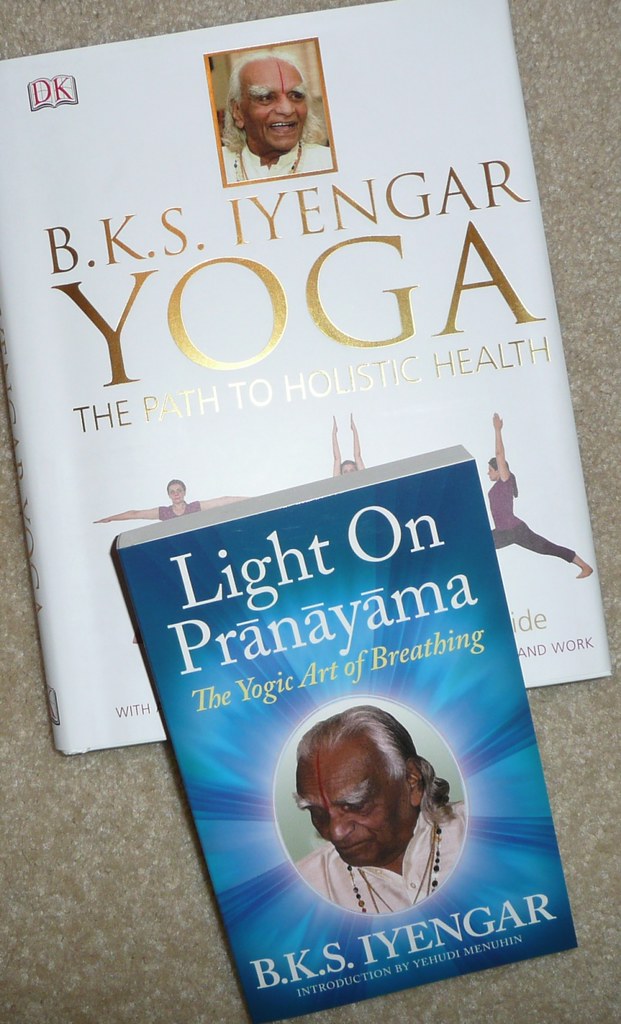
The title of this post is a play on the titles his books Light On Yoga, Light On Pranayama, Light on Astanga Yoga, and Light on Life.  Having not read any of them, I am assuming the books shed light on each subject in the title.  Since I just learned a bit about B.K.S. Iyengar I thought I would share, shedding some light.

I just received B.K.S. Iyengar Yoga The Path To Holistic Health, I am sure that I will be learning a lot more about Yogacharya B.K.S. Iyengar and Iyengar yoga so I am sure I will be sharing more about it.  With  the different branches of yoga and the many different types there is always something to learn and that means there is always something to share!

Have you heard of Iyengar yoga?  Do you do yoga?  What type of yoga do you do?

Posted in Yoga/PiYo/Pilates | Tagged: , , , , , , , , | 8 Comments »

Breath: Quiet And Safe

Posted by terrepruitt on March 14, 2015

There are a lot of different aspects of yoga.  Just like there are a lot of different aspects of Nia.  As I have said before you can do Nia without getting involved in all of the principles and aspects of it.  You can treat it like a workout and not take it any further.  The same goes for yoga.  That is why I always compare the two.  You can go to a yoga class and go through the poses without giving any of the other aspects a second thought.  I believe that both Nia and yoga can be more beneficial, more satisfying when you do think about the other parts of it . . . but we all have different goals and different ideas.  One of the “aspects” of yoga or limbs of yoga – is pranayama.  There are different pranayamas.  A common one – Ujjayi is typically done while doing the yoga poses, and it might be helpful in reducing or stopping snoring.

So, pranayama is the practice of controlling one’s prana (life force) through breath or the practice of controlling one’s breath.  There are many forms of this type of practice and many ways in which to perform them.  But as I said, a common one is ujjayi breathing.  It is what many recommend be done while doing the asanas.  Some call it the Victory Breath, the Warming Breath, the Ocean Breath, Snake-breathing, throat breathing, or even the Darth Vadar Breath.  It is done through the nose, both the inhale and the exhale.  Some of the names stem from the fact that when you do it you may sound like the ocean, a snake, or Darth Vadar.

This breath “exercise” is done by closing the glottis partially on the exhale.  This post is not to get into the mechanic of how to do ujjayi breathing.  But a quick way to give you an IDEA of how to do it, is to think Felix Unger.  Remember him?  Remember that annoying noise he used to make?  Well, that is a lot more sound than you want, but that gives you an idea of what needs to be going on in your throat / nasal area.

I am excited by the prospect that this type of breathing could help stop snoring or even more importantly sleep apnea.  The idea behind this thought process is that the muscles need toning.  People snore because stuff in there gets to relaxed and it makes noise as the person breathes.  So, it kind of makes sense that if it can be toned or trained then it could help stop the snoring or the life threatening sleep apnea.

Yoga Therapy.com says:  “In fact, this snoring is the sound that occurs when air passes through stenosed nasopharynx, caused by vibration in the air flow of compliant structures of the pharynx (tongue, soft palate, etc.). The main reason that causes vibration of the said formations is impairment of muscle tone of the pharynx and soft palate, structural anomalies and functional abnormalities of the pharynx and soft palate.”  Like I said the stuff in there makes noise.

Again, as I said, this makes sense to me . . . as in, why not try it, it can’t really hurt, but if it did help . . . Oh man, for some it would be a life saver.  I think it is worth a try.  Just another reason to practice pranayama.

Do you think a breathing practice is worth trying if it would stop snoring and/or sleep apnea?  Do you know anyone that snores?  Do you know anyone with sleep apnea?


Posted in Yoga/PiYo/Pilates | Tagged: , , , , , , , , , , , , , , , , , , , | 2 Comments »