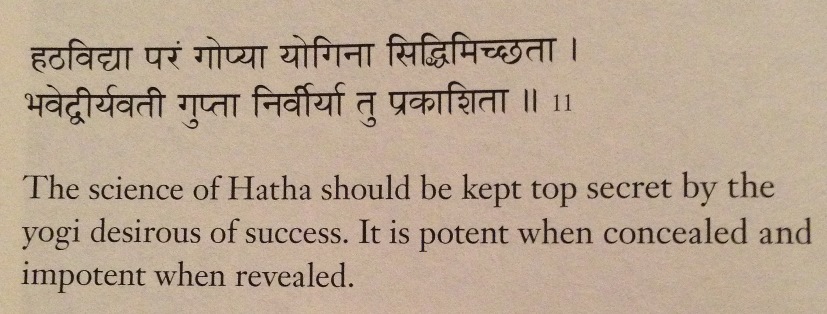
This is a snapshot of chapter one verse eleven in “An Explanation of Hatha Yoga” or The Hatha Yoga Pradipika. I believe that this is true. I believe that it was originally meant for men that wanted to give up everything and JUST practice yoga. That would be – to me – the only explanation as to how some of the poses described and some of the “states of being” described could be achieved. That is why yoga used to – and actually still does (some poses or things) – seem so impossible to do. A lot of the asana are not just things you can pop into when you practice once a week. Hatha Yoga was also shared with royalty . . . again, what did they have to do, but sit around and work their bodies into these poses that promised longevity and enlightenment?
Like many things, in order to make it somewhat possible for the average person, it has morphed over the centuries. It has become – for many, not all – a form of exercise. Still with many poses that cannot be achieved with a once-a-week practice. So I always ask my students to practice ahimsa, where they are gentle with themselves and remember that they might not be able to get into the pose and look like the picture in Yoga Journal because they are just practicing once, twice, or even three times a week (or whatever). They are not devoting their life to it. So I just remind them to do the best they can today and to enjoy what they are receiving.
This post started out as a Friday Photo even though this photo should have actually gone along with my post Yoga Was Supposed To Be A Secret. But when I popped over to that post to remind myself about what exactly I wrote, I was reminded of the current trend in yoga that I am hearing about. Goat yoga. Have you heard about that? It is somewhat like doing yoga at a cat cafe or adoption lounge, except with goats.
“Regular” (whichever type is being offered) yoga classes are held in the presence of goats. And the goats just mill around. Could be they hop on you or not. When I looked it up just now two sites came up and it looks as if the places the sites are about do yoga outside. (One says that is what actually was the motivation for their goat yoga classes.) But the other stories I had seen were inside. I saw a story where the yoga was being done in a barn and another one where it was a room because the goats (they were kids) were hopping all over and their hooves were making clickety-clack noises on the floor. Seems as if there are several different places that it is done. It is really popular.
I am not sure that I would want to have that be a part of my regular practice, but I might try it once. I like the idea of cats better as I don’t think they are as heavy and rowdy as goats. But . . . . I don’t know . . .
What do you think? What is your take on Hatha Yoga starting off as being a secret? Would you be interested in doing yoga around a herd of goats?
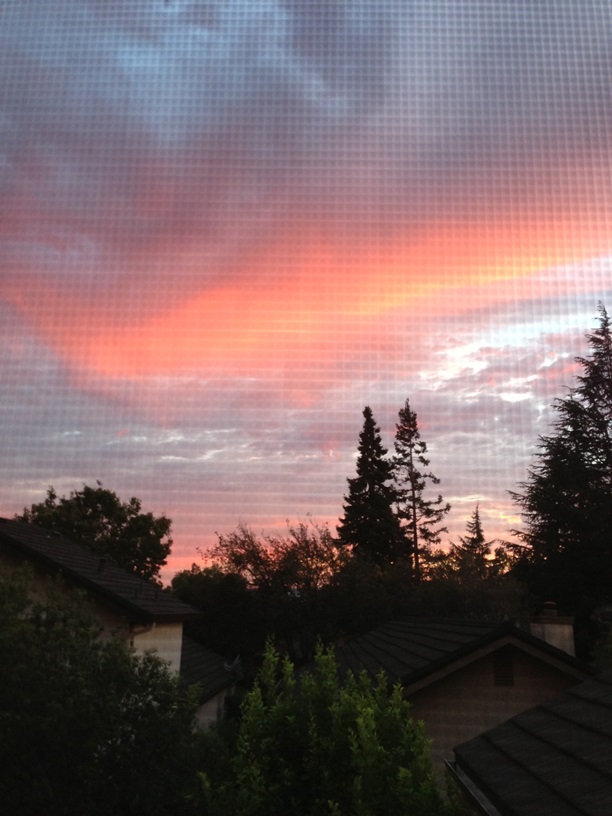
So this is an old photo, but I like it. I am often treated to beautifully colored skies via my office window. This was from 2014. I makes me smile so I thought I would share it with you. Perhaps it can make you smile.
On chilly nights sometimes I like to have a hot adult beverage. We had been lucky to receive a lot of rain not too long ago. Some of the storms were warm and some of them were cold. On one night that was cold and stormy I wanted to have my regular hot chocolate that is hot chocolate and peppermint schnapps but we didn’t have any schnapps. But we did have Frangelico Hazlenut Liqueur and caramel vodka. The Frangelico was almost gone. I don’t remember what I purchased it for, but I do remember it was for a specific recipe and I was surprised how expensive Frangelico was. I don’t normally drink it, I had just wanted it for a recipe and now I don’t even remember what that was. The caramel vodka was unopened. A few years ago my hubby had bought some because I love caramel and vodka and we had company one night and – glug, glug – the bottle was gone. So he had replaced it with two, not just one bottle. But that was a long time ago, so I thought, “Hmmm. Might as well open that.” So I decided to make a new hot chocolate drink. It turned out pretty good. Here is the Caramel Hazelnut Hot Chocolate.
______________________________
Caramel Hazelnut Hot Chocolate
8 to 10 ounces of water
3 teaspoons of hot water chocolate
1/2 shot of Frangelico Hazlenut Liqueur
1 shot caramel vodka
boiling water
splash of milk or cream
whipped cream
Heat the water in a teapot or pan. While the water is coming to a boil put the powdered chocolate in the mug. Then add the liqueur, vodka, and milk. Stir it until it is all mixed and there are no lumps of chocolate powder. When the water has boiled add it to the mug. Stir until it is well mixed. Add whipped cream if you want.
Ahhh, time to sit down and enjoy the tasty warmth!
______________________________
I didn’t have it with whipped cream, but that sound like a good addition to me. It makes it sound more fancy and fun. You could even sprinkle some chocolate on top of the whipped cream or maybe drizzle some caramel sauce. Ya know, make it like a drink you would get in a restaurant.
Well, I think we might have a few more cool days left. Perhaps you will have a chance to enjoy this before we move onto iced drinks.
Do you have a favorite hot adult beverage? What is it?
Because it is Monday, and sometimes we all just need to start the work week (for those of us that start our work week on Monday) off with something silly. This is silly and it is quick. It will only take you about 30 seconds to watch. There is nothing exciting about it. There isn’t even sound! No “wait-for-it” moment. It is just our cat being silly. It makes me laugh when she gets her tail. I don’t understand the situation when animals try to get their tail. Do they not control it? Do they not know it is connected to their body? What is up with that? That is part of what makes it so funny to me. And then, once they get it, what do they do with it? Bite it, then realize, “Oh! That’s my tail!”? I don’t get it.
Sometimes I will not even understand what she is doing. I will see her staring at something, but I don’t see what because it doesn’t cross my mind that she is staring at her tail. What, is she waiting for it to move? Does it move by itself? I think that is what happened here – I didn’t realize she was staring at her tail until she grabbed at it. So THEN I picked up my camera and only caught 28 seconds of the vicious attack. Ok, not vicious, I am trying to add excitement and drama to a silly little clip.
Sometimes a pretty card makes a pretty photo. I was wondering what to post today and as I was cleaning – strike that, who am I kidding, my desk is never clean – as I was straightening up my desk I came across this. It is so pretty. And is very sweet. I happen to receive it when I was up at my dad’s house for several days going through the house. It was a very nice (and timely) surprise. I will probably end up posting pictures of what it accompanied because that is stunningly beautiful.
A week ago in a post I brought up three different ways that a yoga teacher might cue a pose; Anatomic – basically just moving the body this way and that or Sensory – moving the body by sensing and feeling how it is moving or Imagery – moving the body with images to help us get to where we are instructed to be. Usually a combination is used and if you take a yoga class you probably don’t really even notice. The idea is that each way appeals to different people and can allow everyone to follow along with the instruction to get into the pose. Here are examples of all three for Janu Sirsasana orHead-to-Knee Forward Bend.
Anatomic
From Dandasana (Staff pose), rotate your left thigh out allowing a bend at your knee. Bring your left foot as close to your pelvis as possible, the sole of your foot is against your inner right thigh. Continue to sit up tall, lengthening the spine. Bend, from the hips, over the straight leg. Keep the straight leg active with toes and knee pointing up. Your stomach moves towards the right thigh, chest staying open as it lowers towards the leg. The top of your head continues to reach away from your shoulders, you are still lengthening the spine as you fold over your leg from the hips. Hands/Arms can remain on either side of the leg or you can hold your right foot, or perhaps even reach your hands beyond your foot and clasp. Breathe.
Sensory
From Dandasana (Staff pose), turn your left leg out sensing your thigh bone rotate in its socket. Bring your foot as close to your pelvis as possible. Feel your left food connect to your right thigh. Continue to sit up tall, sensing your spine lengthening. You have plenty of room to breath as you continue to open the chest. Then fold from the hips over the extended leg. Help to keep the right leg active by feeling the floor with the entire length of the back of the leg. Keep the toes and knee pointing toward the ceiling. You sense the stretch in the back of your straight leg, as your belly moves towards it. You may also sense a bit of a stretch in the inner thigh of the bent leg. Continue to fold over bringing the chest closer to the right leg. Maybe you feel the press of it on your leg. Sense the space between your back bones as you fold over your leg, heart opening towards your leg. Perhaps your arms are heavy on the ground of either side of your leg or perhaps you are gently reaching for your foot. If you feel you want more of a stretch through the back of the right leg perhaps reach your hands beyond your right foot and clasp. Breathe.
Imagery
Imagine you’re a sunflower, your head is the blossom reaching for the sun directly above you. Your spine, the stem, is long and straight. Your legs, the roots, reaching straight out from the stem. The stem and the roots form a 90° angle. One root, the left one, rotates outward, then bends in the middle, at the knee. The end of the root, your foot, is as close to your pelvis as is comfortable with its sole against your right leg. Now the sun is going down in front of you, and you, the sunflower still reach for it. Unlike a typical sunflower you follow the sun as it descends with a long, straight stem, folding from where your stem meets your roots. You use your leaf arms to reach out towards your root feet. They may lie on the earth on either side of your root-legs or, if you can, your grab your feet, or even wrap your leafy hands beyond your rooty feet and clasp them together. You are a happy sunflower as the top of your head, the sunflower blossom reaches towards the setting sun. You take a deep breathe lengthening further towards the sun and relax onto your roots.
What do you think? Are you noticing the different types of cuing in your yoga class now?
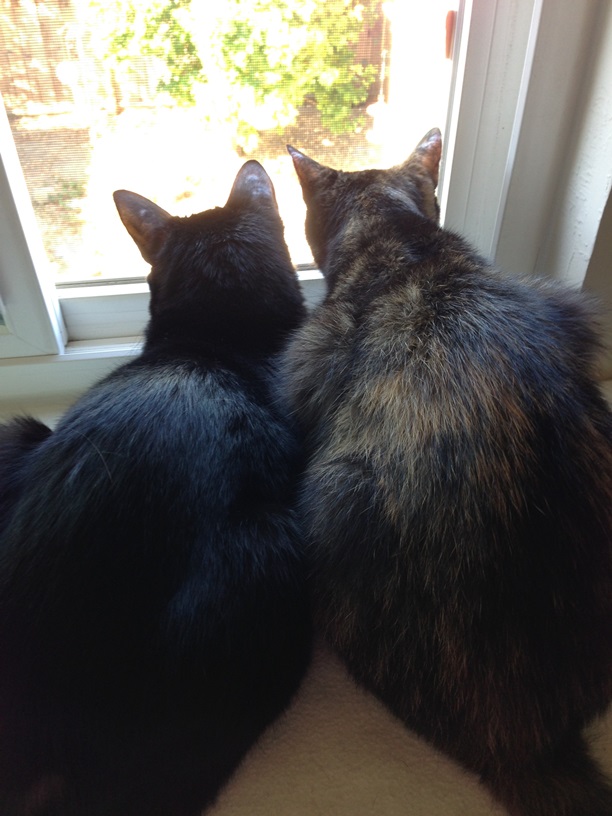
Wow! I thought I had written about this a long time ago. A long time ago as in almost two years ago when we got the cats. You may or may not know that we adopted two cats back in July of 2015. After bringing them home I discovered they had ringworm. So, going off of what the internet said on how to handle it – aside from just lighting the house on fire – I put a strict protocol in place for these new cats. They were restricted to a room until they had the course of medication and their cultures came back clear. It was 30 days. I vacuumed and wiped the room down twice a week. It was a long 30 days. The poor kitties new to us and their new home were locked in a room. And it was HOT. It was super hot that summer. Since it was so hot I wanted to leave the windows open at night for them. But my husband was afraid to. It would be really easy for an excited cat to jump through the screen at the animal in the yard. So I bought temporary screens.
I want to remind people that in July of 2015 California was still in the drought and things were very dry. Our area was very hot. When there is not enough water things get out of balance. So, the earth doesn’t have enough water to quench the thirst of the vegetation. The vegetation doesn’t grow so the insects and animals don’t get the proper nutrition. Things get out of whack. When the body isn’t in balance the things that are encountered every day sometimes get the best of a body. I am saying all of this – not that it is EXACTLY why, but – because that year there was a huge outbreak of ringworm in the shelters. A week after we got our cats I discovered they had ringworm. Shortly after I discovered that and let the place know where we got them, an article came out in the paper saying it was the worse they had seen in a long time. Kittens and cats were being brought in with ringworm in record number. This was AFTER I told my vet I thought my cats had ringworm and he scoffed at me. He said in all his years as a vet he had only seen one or two cases. Well, that year there were many cases. The shelters were having to treat all the kitties. I say all this so that people know it was just an unusual thing. Most of the time cats and people don’t get it even when they are exposed because we are healthy enough to fight it off. But I think the drought had a lot to do with it. It was unusual for there to be such an outbreak of ringworm.
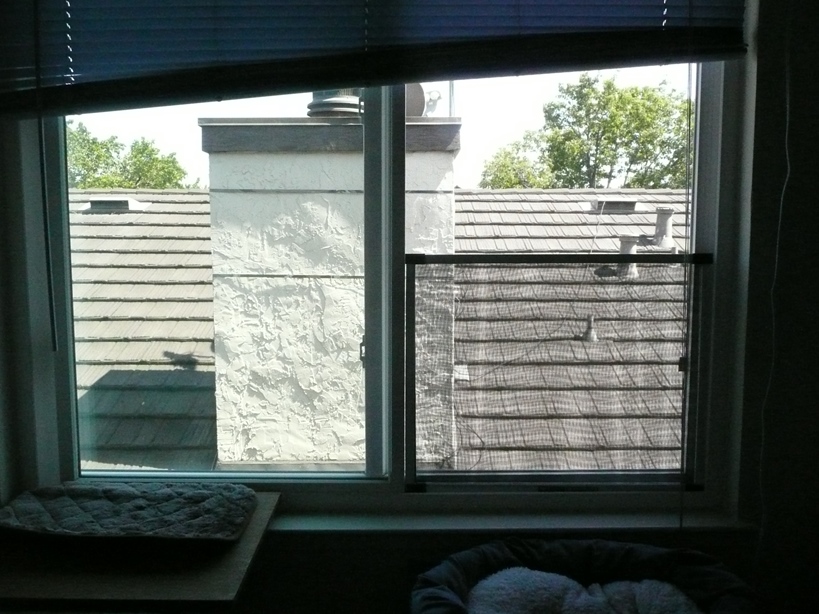
Anyway . . . I read a lot of reviews on the internet regarding temporary screens. A lot of the reviewers were upset because they were using screens to try to keep dogs and large cats from getting outside. Well, I guess I am familiar with screens enough to know that if a large animal wants out bad enough it is doing to get through a screen. And I wasn’t planning on using these permanently. Also, I wasn’t planning on using them as the only screen. They were really just to reinforce the screens that were already there. I hate the heat. But I am thankful that it was so hot that summer because I think that it helped keep the cats’ energy low. So it was really unlikely that they would jump though the window screen so having this as an extra reinforcement was perfect.
I think they really appreciated being able to have the windows open. Even though the screen over screen allowed less air in than just the one screen would have it was still more than a shut window. Both my hubby and I felt better having that extra reinforcement. I thought they worked great. They weren’t a perfect fit, but they were perfect enough considering they were a standard order.
The one large screen fit in the large window great. It was able to be held in both ways . . . as in it didn’t fall into the room and the way it fit in the window frame it would not be able to be pushed out. The screen for the smaller window would only fit when we took the window out. It was something we had to do every night and every morning, but I think it was way worth it to allow the cats to have some air AND to give us peace of mind.
I know there are others out there that might want to have that extra reinforcement for their windows so I would suggest getting a temporary screen. The ones I got from Quality Screen Co, LLC (LP) were adjustable so they worked great. I went looking for my post regarding these screens when I saw this post – Stay safe and secure open windows! – on Katzenworld. That is when I discovered I had not written a post. I thought this would be a good time. The weather is getting warm and open windows provide relief from the heat. A temporary adjustable screen could help reinforce the screen already in your window and save you and your pet from an unfortunate situation.
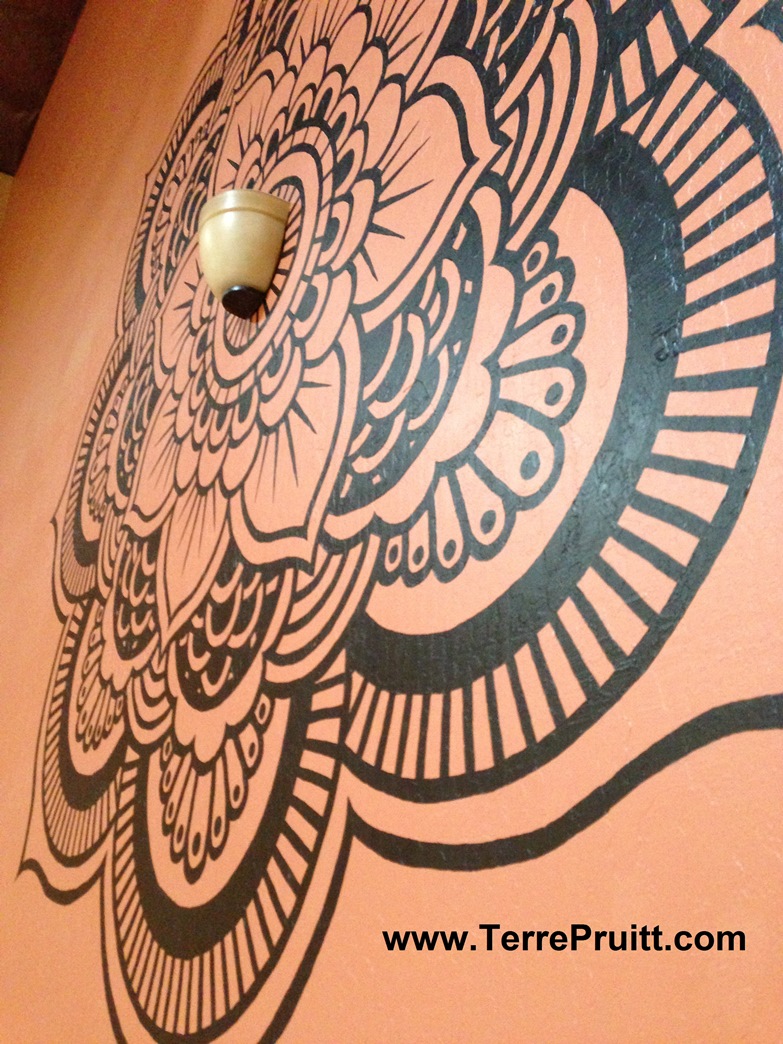
Ah, I think this is the perfect time to post this picture since I just went to a workshop at Mind Body Zone. I really need to get back to the studio for yoga regularly. This is a wall in the studio. That is one thing that is kind of a misfortune in the places that I teach yoga, there is no wall space. Well, I shouldn’t say NO wall space, I should say ENOUGH wall space. There is not enough wall space for each student in the class to have a spot so we can use the wall. That is a great thing about a studio that is just for yoga, the ones I have been to have a lot of wall space because using the wall can be a great tool. The wall can be just like a prop. It can really help in some poses. It can definitely help you sense the poses in a different way!
Here I am sharing a photo of the wall for my latest Friday Photo.
When teachers cue students as to what asana to do and how to move in a yoga class, they can use three basic ways to do it. The three basic ways to cue are Anatomic, Sensory, and Imagery. Most of the time you will find, when you are in a yoga class, the teacher uses a mix of all three. Other types of classes might stick to just one form, but yoga and Nia use all three. Different ways appeal to different people. With the three different ways it can also elicit different responses in the body. I thought I would share in a few posts different poses cued with the three different styles.
With strictly anatomic the cuing is all about the body. Instructing on how to move a body part and where. Using the body and its parts as destinations (move your arm up to your ear). With sensory it is all about what you are sensing (feeling) in the body (move your arm up, yawning open the side of the body). And with the imagery the movement is connected to the imagination or thought (lift your arm as if you know the answer in class).
Parivrtta Parsvakonasana (Rotated Side Angle)
Anatomic
Step right foot forward into a lunge, knee centered over ankle. Rotate your torso moving your left shoulder towards your bent knee. Rest your left elbow on your right thigh. Your left leg remains straight or you may bend the knee and rest it on the floor. The front of your left leg is getting the stretch. Bend your right elbow bringing your right hand to meet your left hand in the center of your chest. Or you can twist further to your right, letting the left triceps can press against the outside of the right knee. No matter how far your twist your gaze is to the area on the right side of your knee. It could be on the floor on the right of the knee or on the wall to your right.
Sensory
Step right foot forward into a lunge, allowing you to sense an elongation in your left leg. In addition to the stretch sense the strength in your left leg keeping it straight. Sense the stability in your ankle as your right knee is centered directly over it. Pull your torso to the right, letting your right shoulder lead, as you sense your left shoulder moving towards your right leg. Place your left elbow on your right thigh. Take a deep breath encouraging your chest to remain open. If you think you would be more stable with your left knee on the ground, you may lower it down. If your twist is deep, you may notice your left arm as it seeks to press against the outside of your right leg. Your right arm bends allowing your hands to come together with thumbs resting in the center of your chest. The energy in your right shoulder keeps pulling your shoulder back to help deepen the twist, you may feel your left triceps on your right thigh.
Imagery
Imagine taking a big step with your right foot over a puddle. The puddle grows as you are stepping so you end up in a lunge. Your right knee is bent and your shin is straight up from the earth, with the knee centered over your ankle. You’ve missed stepping in the puddle and you are keeping your left leg straight so as not to touch the water. You notice a beautiful rainbow out of the corner of your right eye, so you turn to look. You want to get a better look so you gently rotate your torso towards the bright colors, allowing you to place your left elbow on your right thigh. The puddle has miraculously dried up so if you want you can place your left knee on the earth. Your right arm bends at the elbow and your hands meet at your heart center. You bask in the beauty of the rainbow.
Is there a particular type of cuing you are fond of?
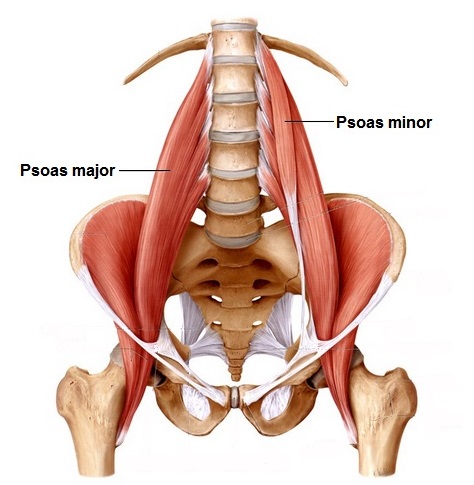
So this past Sunday I took a workshop at Mind Body Zone yoga studio in Fremont that was called Core Release and Restore™. This is the second time I have attended this workshop. It was so fascinating to me the first time I just had to do it again. It is very educational. The first part of the workshop is lecture, then the second part we move. The presenter Joanne Varni first talks about the psoas muscle. She sets the stage for the movement part of the class. She first explains what type of muscle it is and what it should be like in a healthy state. She talks about how it is a muscles that is primal and instinctive, how it works with our brain and nervous system. She explains how, because of that, it is hugely affected on the levels of BMES (Body/physical, Mind/brain, Emotional, and Spirit/energetic). She clarifies how stress (all types) affect this muscle. Then she instructs us through movements that can help bring some relief to our psoas and iliopsoas muscles.
One technique she shares is neurogenic tremoring. It is one of the oddest things I have ever experienced. First we went through some asana to specifically slightly fatigue our legs and affect the psoas. Some of the poses could be used on their own to help release the psoas. Then we did Supta Baddha Konasana with our heels as close to our middle as we could get them. We stayed there for a little while. Then we brought our knees in, toward each other, one inch at a time over a long period of time. We would bring them in an inch and then hold it there. Then closed them by another inch and hold it. This caused a tremor response in the legs. Some people can continue to do so until their feet are flat on the ground, yet the tremors are still happening.
This was my second time doing it, so it was weird, but since I was expecting it, it wasn’t as odd as the first time. But this is what I wrote after the first time: “It was sooooo weird. My legs were just moving on their own with no sensation. It was so odd. I mean, I have had my limbs shake from being weak or fatigued while I was doing something and that has a sensation (to me), but this was just waves of tremors. Like an earthquake. It was so odd. Fascinating. Yeah! That’s it. REALLY fascinating!”
Joanne specializes in helping those with trauma (including PTSD) and has attended and completed her Level II certification in TRE™ (Tension & Trauma Releasing Exercises) with Dr. David Bercelli. She is also certified as TSY teacher (Trauma Sensitive Yoga).
Keep in mind that this is called both Trauma Release and Tension Release. So not everyone has trauma necessarily, but we all pretty much have tension. Even it we don’t have stress, because of our lifestyles (in that we sit in chairs) we have tension in our psoas and iliopsoas muscles. So while Joannes does not feel these muscles needs to be strengthened she does feel they need to be released and lengthened.
If you want to see a video example of the TRE™ (Tension & Trauma Releasing Exercises), you can click here and go to Joanne’s site where she has a video.
It is so very fascinating how our bodies hold and store tension and trauma. I would recommend this class to anyone that is interested in helping their body cope with the stresses of living in our bodies.
Have you ever heard of this technique before? Have you experienced this technique before?





 Terre Pruitt's Blog