Terre Pruitt's Blog

In the realm of health, wellness, fitness, and the like, or whatever inspires me.

  • I teach yoga, Nia, and stretch online!

    ALL CLASSES ARE ON ZOOM AT 10:00 AM PDT

    Tuesday Gentle Yoga 

    Wednesday Nia

    Thursday Stretch

    Please see my website for details!

    I am also available for private Nia / yoga / Personal Training all virtual, of course!

  • Unknown's avatar

  • Enter your email address to subscribe to this blog and receive notifications of new posts by email.

  • My Bloggey Past

  • ******

    Chose a month above to visit archives, or click below to visit a page.

Archive for the ‘Yoga/PiYo/Pilates’ Category

Ahimsa And Yourself

Posted by terrepruitt on February 5, 2016

Recently I posted a bit about the eight limbs of yoga.  Basically a list of the limbs and a sentence about each.  Then I followed up with a list of the yamas and niyamas which are the first two limbs of yoga.  I am sure each limb can and does have volumes written about them.  And I am sure that each of the yamas and niyamas have volumes written about them.  I thought I would just do a post on each yama and niyama.  I was taught the yamas are restraints or restrictions, while the niyamas are observances or rules.  Ethical principles and spiritual practices, respectively.  I mentioned one way to look at it is our attitudes toward our environment and our attitudes towards ourselves.  Well, this is a bit about Ahimsa.  A way to look at Ahimsa.  Not the only way, just one way.  And not even the entire way, just a bit.

Ahimsa is non-violence, non-harming, and/or non-injury.  Now for me, the first thing I think of is non-violence as a physical act.  I think of hitting, punching, stabbing, shooting – something physical and VIOLENT.  I don’t actually do any of those things.  So I think, “I’m good.”  I bet a lot of us are.  But then when I remember that the idea is to have it apply to our thoughts, our words, and our actions, I realize, “I’m not so ‘good'”.  How often do we say that all too common phrase, “I wanna kill . . .” or “I could kill for a . . . ” even though I never really would, am I practicing ahimsa when I say it?  I don’t think so.  I am not sure that this type of talk is not harmful.

Another way we can look at ahimsa is as compassion.  So if we are compassionate we are non-violent, non-harmful, and/or with not cause injury.  And this could be applied to ourselves.  Are we compassionate with ourselves?  Do we get down on ourselves when we don’t do as we expected?

An exercise I participated in recently had us examining how we practice ahimsa when it came to ourselves.  Ahimsa and our self on and off the yoga mat.  In regards to Ahimsa with myself off the mat I realized I say – to myself – I am stupid a lot.  Because of my habit of getting to bed so late the first think I think of on Monday morning is  “Oh, I’m so stupid.”  I think, “Every Sunday since you don’t have to teach on Mondays you stay up too late and then it is so difficult to get up on Monday.  And it sets the tone of being tired for the rest of the week.”  What about you?  Do you ever find yourself saying things not in keeping with ahimsa in regards to yourself?

On the mat or in any exercise situation, we could apply ahimsa.  It could be as simple as not being violent with oneself.  It could be as simple as not causing harm – don’t do anything that will harm you or cause you injury.  But sometimes it is the compassion that is the challenge.  The compassion that says, “You need to be gentle with your body today, right now.”  We so often have that other voice saying, “You are here, get the MOST out of your workout.  Work harder.  Burn more calories.”  Perhaps even chiding you for something you ate and so feeling like you were “bad” for eating something “bad” you have to punish yourself with a really hard workout.  That is not ahimsa from many angles.  Sometimes it is difficult to be compassionate with yourself on the mat or in a workout situation.

It could just be a matter of, as Aadil Palkhivala said, not pushing when we should be pulling back, not fighting when we need to surrender, not forcing our bodies to do things they are not yet ready to do. So sometimes it is not just “not doing” more, but surrendering or not fighting.

As with all the Yamas, there is a lot of room for me to improve in practicing them.  I am not posting about them because I have them all figured out and I practice them perfectly.  I am writing about them to help me remember them.  I think I have a lot to work on when it comes to ahimsa in thought and even words.

What about you?  Just in regards to Ahimsa towards yourself?  How are you with that?  How does it differ on and off the mat?
Posted in Yoga/PiYo/Pilates | Tagged: , , , , , , , | 4 Comments »

Special Offer – Free Is Always Special!

Posted by terrepruitt on January 29, 2016

FREE YOGA THE WEEKEND OF FEB. 27 and 28, 2016


Mind Body Zone in Fremont is having a weekend of FREE yoga classes. The schedule is as follows (note only the classes listed below are free):


Saturday, February 27, 2016Dance Exercise, Nia, Nia in the City of San Jose, Nia classes in the South Bay, Nia Teacher, Nia Class, San Jose Nia, Nia San Jose, Nia workout, Nia, Gentle Yoga, Group Ex classes, YMCA, Zumba, PiYo, Nia Technique, SJ City Fit, SJCityFit, San Jose Yoga Teacher

3:30-4:30       Vinyasa Yoga

4:45-5:45       Yin Yoga


Sunday, February 28, 2016

10:30-11:30    Hatha Yoga

11:40-12:40    Gentle Yoga

2:15-3:15        Intro to Yoga

3:25-4:25        Restorative

Since it is free, it might fill up fast, so be sure to reserve your spot at the online sign-up website for the studio.  You can use the date field or calendar tool to get to the correct dates, then sign up for whatever classes you want to attend.  (Note: ONLY the classes that are indicated as “FREE” are free.  There are other classes that are being taught that weekend that are not free, so if you are wanting to take the FREE classes, please be sure to sign up accordingly.)  🙂

Bring your own yoga mat or rent one from the studio.  Bring water or purchase a bottle from the studio.  If you are planning on taking more than one class you might want to bring a snack.  It is up to you.

Keep in mind these classes are kinda like a Nia Jam, each class will be taught by three or four teachers per class.  And they are new Graduates of Yoga Teacher Training.

Dance Exercise, Nia, Nia in the City of San Jose, Nia classes in the South Bay, Nia Teacher, Nia Class, San Jose Nia, Nia San Jose, Nia workout, Nia, Gentle Yoga, Group Ex classes, YMCA, Zumba, PiYo, Nia Technique, SJ City Fit, SJCityFit

Sign up now, so you can join the fun!


Mind Body Zone: 3335 Seldon Ct, Fremont, CA 94539
(a couple of blocks down from Fry’s right off of 680)

I hope to see you there!

Posted in Yoga/PiYo/Pilates | Tagged: , , , , , , , , , , , , , | 4 Comments »

Yoga’s First Two Limbs

Posted by terrepruitt on January 25, 2016

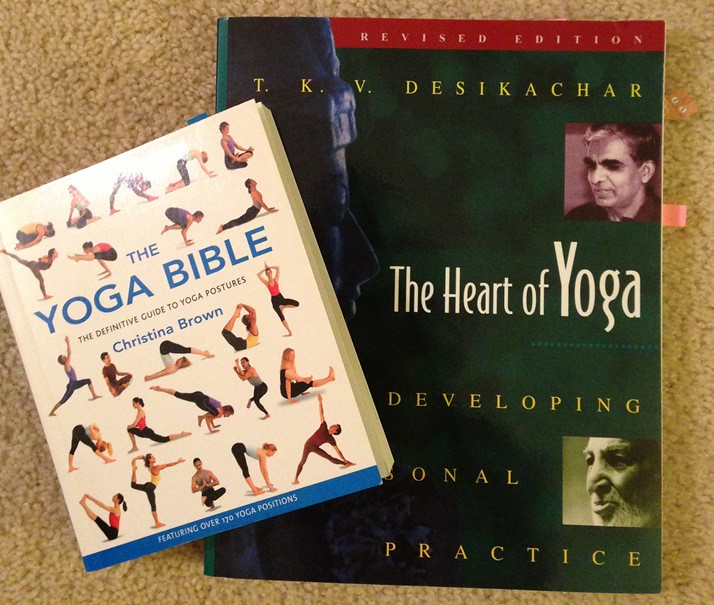
Dance Exercise, Nia, Nia in the City of San Jose, Nia classes in the South Bay, Nia Teacher, Nia Class, San Jose Nia, Nia San Jose, Nia workout, Nia, Gentle Yoga, Group Ex classes, YMCA, Zumba, PiYo, Nia Technique, SJ City Fit, SJCityFitIn my post earlier this month about there being More To Yoga Than Just Asana, I listed the eight limbs of yoga.  Two of those limbs, the first two limbs have five principles or observances associated with them.  The first limb is the yamas and they, as I mentioned in the other post, are sometimes thought of as restrictions.  The second limb, the niyamas, are sometimes thought of as rules.  But to me rules and restrictions are somewhat the same things.  Many rules seem to be made to restrict people from doing things.  So I am not sure that is a clear enough distinction for me.  Yoga is so ancient and many of the text have been lost, so there are many translations to things.  Another way of looking at the first two limbs: are the yamas are our attitudes toward our environment and the niyamas are our attitudes towards ourselves.  That is from T.K.V. Desikachar’s translation of the Yoga Sutra in The Heart of Yoga.

The five yamas are:

Ahimsa – non-violence, non-harming
Satya – truthfulness
Asteya – non-stealing
Brahmacharya – celibacy, chastity
Aparigraha – non-possessiveness, non-coveting, non-hoarding, non-clinging

The five niyamas are:

Sauca – purity, cleanliness
Santosha – contentment
Tapas – discipline
Svadhyaya – study of self
Ishvara Pranidhana – surrender to the Divine

These rules, restrictions, attitudes, whatever you choose to think of them as, are meant to be applied to our thoughts, our words, and our actions.  So, I am not really even sure there needs to be a distinction between whether it is a rule or a restriction.  But I do like the idea that one is related to an attitude towards our environment and one is related to an attitude towards oneself.  Although, I think all ten can be related to both.  Sigh.  I guess I will just stick to there really doesn’t need to be a distinction.

Each of these can be talked about in detail.  I am definitely going to be writing more posts on these.  Whether it is one post for all the yamas and one post for the niyamas, is yet to be seen, but I do want to share some of the ideas that were shared with me regarding them.  I would like to shed some light on how they can be applied to life both on and off the yoga mat.

Do you want to share any ideas about them?


Posted in Yoga/PiYo/Pilates | Tagged: , , , , , , , , , , , , , | 2 Comments »

More To Yoga Than Just Asana

Posted by terrepruitt on January 13, 2016

I have often mentioned how Nia is a cardio dance exercise that you can take to another level and make it a practice, like yoga.  Yoga is an exercise that you can take to another level by practicing some of the other limbs of yoga.  Yoga has eight limbs.  These limbs are things that one can work with throughout a lifetime.  They are not necessarily things that one masters – well, not things that I can master.  There could be days when it feels as if they have been mastered and then days when it feels like you had never even heard of them because the ideas or actions were just not present.  So . . . these things get “practiced”.  The physical, exercise part of yoga is just one of the limbs.  While Nia is not as . . . I’ll say, “preachey” as yoga we do have some things that can be practiced outside of the dance class, off the dance floor.  Things like noticing your movement and being aware of your relationship with others and things.  But yoga’s limbs are more like rules to live by.

The eight limbs of yoga are:

1)  The yamas.  There are five yamas.  They are often compared to restrictions.  Some think of them as restraints or ethical principles.

2)  The niyamas.  There are five niyamas.  They are often compared to rules.  Some think of them as observances or spiritual practices.

3)  The asana.  There are thousands of poses.  This is the physical limb of yoga.  This is the exercise that has become very popular.  Not only are there a lot of poses, there are many different types of yoga.  Some are ancient and some are very new.  Some types have created new poses.  And sometimes I think that the ancient text has been translated so many different ways we end up with different poses.

4)  Pranayama.  There are various types of pranayama.  This is the breath work of yoga.  I have posted about two types of pranayama, Ujjayi Breathing and Equal Breath
Since this was originally posted I have posted about additional types of pranayama:
Dirgha 03.12.18, and Sitali 06.19.17


5)  Pratyahara.
  This is the withdrawal of the senses.  The idea is that when the mind has control over the senses, can withdrawal them, then it can focus on the other limbs of yoga without distraction.

6)  Dharana.  This is concentration.  The idea of concentration of the mind on one thing leads to meditation.

7)  Dhyana.  This is meditation.  The idea is to be able to concentrate on one point.  Being able to breathe to a state of withdrawal of the senses.  Having complete control.  Then concentration is pure.  Meditation is supremely focused and then . . .

8)  Samadhi.  This is transcendence.  When one is in control over mind and body.

Each of these could definitely use a blog post of their own.  Not sure I will get to them all.  But, I will at least do a post on the yamas, a post on the niyamas, and a post on pranayama.  Probably multiple posts on each of them.  So, if you are interested stay tuned.

I had heard about the first two, and knew that poses and breathing were apart of yoga.  But was not and am not so familiar with the last four.  Did you know there were eight limbs to yoga?  Which ones are you familiar with?    

Posted in Yoga/PiYo/Pilates | Tagged: , , , , , , , , , , , , , , | 10 Comments »

Practice Makes It Possible

Posted by terrepruitt on December 10, 2015

I’ve been thinking lately about when a student once asked me what exercises to do so that s/he would be able to do yoga.  My reply was to just do the poses.  I explained that doing the pose in the way that s/he could at that moment is the way to “do yoga”.  I got the feeling that this answer was not satisfactory, because the look on her/his face.  Then the following week after class, the student had a little booklet.  This person said that her/his spouse was given the booklet by their doctor and was told to do the exercises.  The question being asked was what exercise could the student do that would enable her/him to do yoga.  I softly sighed and took the booklet and flipped through the pages.  I pointed to the exercise that were pretty much like some of the poses we had just done.  I suggested s/he try them.  I’ve been thinking about this because of two things:  One, yoga is not about DOING a specific pose.  This is very difficult for people to accept.  And, two, I think I will start suggesting one pose that will help with all poses when asked this type of question.

I’ve been thinking about how yoga is not about “doing a pose”.  Doing yoga is so much more.  And I am specifically just talking about the asana here.  In regards to do the asana the way to do them is by doing them.  As we do them, they might get to be more than what it was when we started.  An asana is not like running a marathon.  One needs to plan and prepare for a marathon.  One needs to train to run a marathon.  One needs to build up to being able to run 26 miles.  But even the training for a marathon consists of running.  It consists of DOING the thing it is you are going to be doing.

Warming up the body with easier poses or very highly modified poses before doing the most challenging pose is recommended.  But doing other exercises so that you can do yoga is not necessarily the point of the postures.  Part of the beauty of yoga is that you do what you can when you can and you continue to do it until you can do more.  Then you continue to do what you can do, until you can do more.  You keep practicing until you think you have it perfect, then you do more.  “More” could be matching the perfect pranayama to the pose.  It could be concentrating so well that you can sense “every” muscle required to do that pose.  It could be making your mind quite.  It could be moving ever so slightly while in the “perfection” of that pose to see what it is like when you move a little more forward/back/up/down.  There is always “more” to a pose.

I was really trying to convey this to the student, but that was not the answer s/he wanted to hear.  S/he wanted to know what to do so that s/he could get into the poses and do the poses.  I know there are things in my life I am impatient for and I just want the end result without having to do/wait for it.  But with yoga there really is no end.  It is like life it is the journey.

But regardless, when I get this question again, I might just reply with the most challenging of all poses . . . . corpse pose or shavasana.  I might just suggest that the student try practicing shavasana for three to five minutes.  I think that might actually help.  Once the practice of being still (in the body) and being quiet (in the mind) is achieved or at least better understood, then maybe the answer about doing yoga to do yoga will be understood.

I’ve heard many people say there aren’t flexible enough to do yoga, well, you do yoga to GET flexible.

So, what do you think about doing something in order to do it?

Posted in Yoga/PiYo/Pilates | Tagged: , , , , , | 2 Comments »

So Ancient, There Are A Lot Of Differences

Posted by terrepruitt on November 12, 2015

So I was told that Sanskrit is an ancient language.  About 14,000 years old.  It was not a written language, it was mostly just an oral language.  It was not written until 5000BC.  Sanskrit is known as the language of the gods.  It is a sacred language.  It is the oldest language.  It is the root of many languages.  That is what I was told.  I imagine that if it is actually the oldest language it would be the root of many languages.  Since it was first an oral only language and is so old I believe it has changed.  I believe it has changed A LOT.  How I think about it first off is like that game telephone, I mean if the language wasn’t written for thousands of years that is a lot of ways it can get changed.  Then once it gets written things get lost in translation.  And it just gets more and more morphed from there.  So there are a lot of translations out there where it comes to Sanskrit texts.

Originally I found it VERY, VERY annoying that almost every yoga pose I researched had different names or slightly different names.  Now, since I can understand how things could have gotten mixed up and changed it is only annoying.  Sometimes it makes learning and even teaching difficult because there are so many translations out there, and then on top of that so many versions and modifications . . . but finding one and sticking to it is a good way to keep your practice consistent.  For me that translates into meaning when I meet someone who says it different or has a slightly different name for it, they aren’t wrong, it just means that I have my path that I am following and they have theirs.  Some words, things, poses are more common and people have seem to agree on them, but some seem to be different no matter what.

One thing that can help with learning poses is to have some of the words memorized.  A break down of the asana name.

Here is what I am going with.

adho   — downward
agni     — fire
anga     — limb
angusta     — big toe
ardha     — half
baddha     — bound
baka     — crane
bala     — child
bandha     — formation
bharadvaja   — ancient sage
bheka     — frog
bhujanga     — snake
chandra     — moon
chatur     — four
danda     — staff
eka     — one
go     — cow
hala     — plow
hasta     — hand
janu     — knee
jathara     — stomach
kapota     — pigeon
kararu     — doing, making, action
karna     — ear
kona     — angle
krouncha     — heron
kurma     — tortoise
marichi     — sage / ray of light
marjari     — cat
Matsyendra   — lord of the fishes
mayura     — peacock
mukha     — facing
nata     — dancer
nava     — boat
pada     — foot
padma     — lotus
parivartana   — turning, rolling
parivrtta   — rotated / revolved
parsva     — side
paschim     — west
pida     — pain
pinca     — feather
raja     — king
salabha     — locust
salamba     — supported
sarvanga     — all the limbs
sarvanga     — entire body
setu     — bridge
simha     — lion
sirsa     — head
supta     — reclined
svana     — dog
tada     — mountain
tan     — stretch
tri     — three
triang     — 3 parts of the body
upavista     — seated
urdhva     — upward
ut     — intense
utkata     — intense fierce
uttana     — intense
utthita     — stretch / extended
virabhadra   — warrior
varja     — thunderbolt
vasistha     — celebrated sage
viparita     — turned around/inverted
vira     — hero, warrior, chief
vrksa     — tree


I reserve the right to change, too.  But for now, I am using these translations to add to my yoga practice and yoga teaching.  I am going to learn the Sanskrit names of the asana by this list/translation.

Does your yoga teacher say the poses in Sanskrit?

Posted in Yoga/PiYo/Pilates | Tagged: , , , , , , , , | Leave a Comment »

Asana Flashcards

Posted by terrepruitt on September 29, 2015

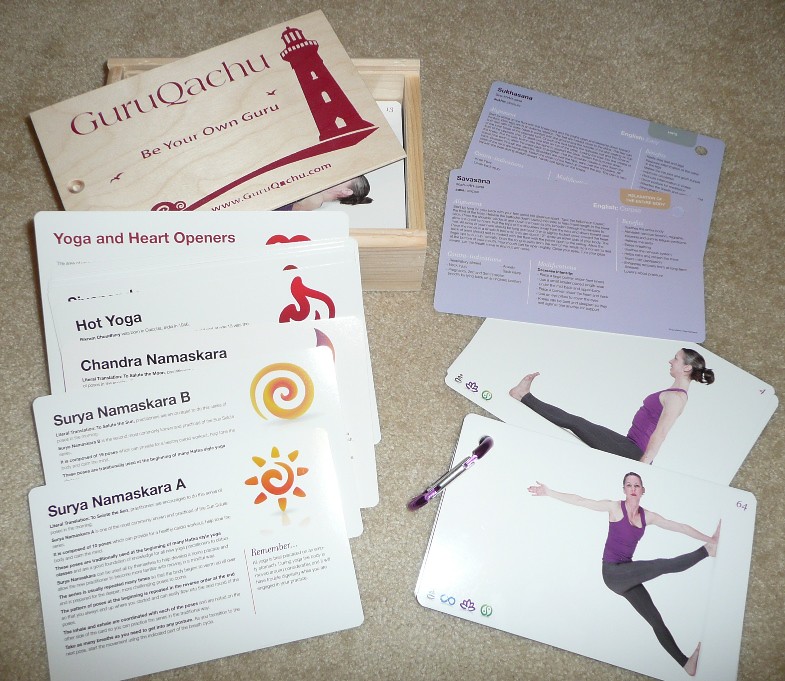
I have many yoga books.  I bought them to study and also to use them as material for posts on my blog.  I haven’t quite gotten around to writing about the books.  But I will.  They are all different and they serve different needs.  So sometimes it is nice to know about a book before you buy it.  It does help that most sites have reviews on products now, so you somewhat know what you are getting.  Well, I just purchased yet another yoga product.  It is pretty cool.  They are called Asana Flashcards.  So basically they are flashcards that have yoga poses on them.  And by basically, I mean that is just the lowest most basic description there is about them.  Because they are a lot more than that.

Dance Exercise, Nia, Nia in the City of San Jose, Nia at the San Jose Community Centers, Nia classes in the South Bay, Nia Teacher, Nia Class, San Jose Nia, Nia San Jose, Nia workout, Nia, Gentle Yoga, Group Ex City of San Jose, San Jose Group Ex classes, YMCA, Zumba, PiYo, Nia TechniqueThere are 108 Flashcards with poses on them.  Now, these are larger than the typical flashcard.  Or larger than I picture the typical flash card.  They are 8 1/2 by 5 1/2, so they are fairly large.  They contain a ton of information.  On one side is a picture of the lovely creator of the cards.  So she not only created them, but she posed for all the poses.  There is a number in the corner so you can easily refer to the cards.  There are symbols on the front in the lower left corner (if the pose is demonstrated horizontally on the card, upper left if the pose is demonstrated vertically on the card).  The symbols are indicative of what part of the body is targeted and what “recognized standard series of movements” it belongs to.  So the symbols might represent that the pose targets the knees and be a part of the Sun Salutation series of movement.

The other side of the card states the name of the pose in Sanskirt and English, the sanskrit pronunciation, and a breakdown of the components of the name.  For example Parivrtta Trikonasana – parivrtta:  revolved and trikona:  three or angle.  It gives a description of how to do the pose, the contra-indications, the modifications, and the benefits.  It also has a small round corner rectangle that is color coded to with the main action of the pose (seated, balancing, standing, etc) and the words inside state the target area or the area in which you will feel the asana the most.

The set comes in a very nice wooden box.  In addition to the asana flashcards there are flashcards with Sun and Moon Salutations, two types of yoga, a card about yoga and heart openers, and cards with information regarding your back, shoulders, knees, core, and hamstrings.  These cards have the names of the poses with the numbers indicating which poses are involved.  So the card with the Sun Salutation has pictures, names, and the numbers listed so you know which cards and poses to use.  The heart opener cards has a list with names and numbers of which poses are considered heart openers.

There are many website and books out there that share a lot of this information.  Some have some of these elements, some have others, some might even have all . . . I don’t know, I have a lot of books about yoga, but I don’t them all.  No books allow me to put the poses on the floor all lined up for a sequence.  None of them have a little harbinger clip so that I can clip my sequence together.

So . . . this an amazing yoga tool.  Plus it is really cool.  The versatility is awesome.  I think this is great for yoga teachers and yoga students.  I have heard that it has taken about two years to complete, and the love and care that went into it is obvious.

As usual, I am just sharing something that I like.  Something that I think some of you may like.  If you are interested in purchasing the product or getting more information about it, please visit:  http://guruqachu.com/

What do you think?  Pretty awesome, huh?


Posted in Yoga/PiYo/Pilates | Tagged: , , , , , , | Leave a Comment »

Talking Body, On The Mat

Posted by terrepruitt on September 17, 2015

Do you practice yoga?  Do you have a yoga mat?  Do you have to reposition (either facing the front of the class or the side) yourself on your yoga mat in order to do certain poses?  Do you ever have a portion of your body not on the mat while doing some poses?  I have been thinking about a round yoga mat.  Have you seen them?  An average rectangular yoga mat is 6 feet long and 2 feet wide.  You can find longer ones and a little bit wider ones, but I don’t think the wider ones would accommodate some poses as well as a ROUND one.  The first ones I had seen were Mandala’s and they are six feet in diameter.  Six feet of circular mat.  Not having to turn your body in order for the majority of your body to be on the mat.  Not having to turn your mat so you are facing the correct direction in order to see the instructor.  Not having to have some part of you off the mat.  For me – I’m not tall – all poses could be done without me having to touch the ground on a round mat.  I am intrigued by this circular yoga mat.

If you only do yoga in a yoga studio then the cleanliness of the floor might never be an issue.  There is always going to be feet and sweat, but usually yoga studios have rules about shoes on the floor so that helps keep it a little more clean than some venues that use the floor for everything from daily meals to cycling.

I am not certain that the round mats would fit in a small room with a lot of yoga students.  But if everyone was using round mats it could work, since the mats are six feet in diameter and that alone would be enough room for most people.  So instead of having the normal space between the mats they could all just barely touch and that would be enough room for people to move freely through poses.  So, in other words the space that is normally between mats would just be covered with a mat, but people would have somewhat, the same space.  In theory.  Right?  Am I thinking correctly?  Wouldn’t work in really crowded classes.

Well, I just Googled it again (I started this post a while ago) and I found some that are 4 feet in diameter.  I don’t think that would be big enough.  It is actually labeled as an “Aerobics Mat” but the website says they can be used for yoga.  But I am taller than 4 feet so to me a 4 foot circular mat would be worse than a regular rectangular mat that is 6 feet long.  Oooo!  Perhaps they are getting more popular because when I originally typed up this post all I could find were 6 feet in diameter mats that were about $65.00, now I am finding smaller ones, 5 feet in diameter, on Amazon, that are $40.00.  (Or there are a few on Amazon, there is one for $25.00, but you can see how it is not long enough.)  But again is a round mat that is less than 6 feet better than a 6 foot rectangular mat?

Oh, I found a six foot one on sale for $49.95, but you have to buy at least two.

In looking at the reviews on Amazon in regards to the 5 foot one, it will not really work in a crowded yoga class, just as I thought (and you probably did, too!).  With everyone else having a rectangular mat it doesn’t work for there to be one round one.  But in some classes that are not crowded it would work.  It would be nice to have one for outside because that is another place you might not want to be off the mat.

A round mat would be great for Nia, too, since we often move more than the space of a regular yoga or exercise mat!

I am intrigued.  Any one have one?  What do you think?  Where did you get it?

Posted in Yoga/PiYo/Pilates | Tagged: , , , , , , , | 2 Comments »

Equal Breath

Posted by terrepruitt on September 3, 2015

You may be familiar with yoga.  You know those stretching exercises people do?  That is what many people think of as yoga, stretching and bending and making your body a pretzel.  Well, the poses, the postures, the asana are a part of yoga.  That is really only one part of eight.  There are eight limbs of yoga.  Another part is pranayama.  I mentioned one in my post Breath: Quiet and Safe.  In that post I also mentioned why I often compare Nia and yoga.  First of all I believe that Nia has incorporated many things from yoga into Nia, so that is one reason why I talk about yoga and Nia.  But I also talk about them being similar because Nia is a dance exercise and for many people that is all it is.  And since cardio exercise is beneficial I think that is fine, if that is as far as people want to go with it.  The same with yoga.  Yoga is an exercise.  You can just do the moves and, I believe through movement, gain many benefits.  However, if you want to get more out of it, there are these other things that you can practice, and one of them is pranayama.

Now, Iyengar says “attempt pranayama only when the yoga asanas have been mastered.”  Because that is what Patanjali says in the Yoga Sturas.  But for many of us that means we would never do pranayama or if we did it would be years and years AFTER we have been practicing.  Now, I am just starting to learn more about pranayama, so if you want to heed the master, by all means, please do.  I think, however, that pranayama is beneficial so I don’t want to wait until I have mastered the asana, because, quite honestly I might not “MASTER” them at all.

Now some people might hear pranayama and think that is just to woo-woo.  What is that anyway, just a bunch of crossed-legged people breathing?  Well, there are specific pranayamas.  And there are specific ways to do them.  And even specific times.  But let me ask you this:  have you EVER, EVER, just stopped and held your breath?  Perhaps someone said something that made you angry so you stopped and held your breath.  Perhaps someone in a store cut in front of you in line so you stopped and held your breath.  Or have you ever stopped to took a breath?  Perhaps you were just going, going, going and you realized you wanted to slow down so you took a breath?  Perhaps you looked outside your window and realized what a beautiful day it was so you took a breath.  Now, as I said, pranayama is specific so I am not saying THAT or THOSE breaths were pranayama, but I am saying that if you have ever stopped breathing or stopped and taken a breath for any reason you might be able to see how pranayama could be beneficial.

I mentioned the other post I wrote about pranayama, Ujjayi specifically.  Well there is another one that I think of as “easy”.  It is Samavrtti.  Sama means equal so it is a practice of equality in breathing.  But in this type of breath there are FOUR parts.  Typically I think of breathing as TWO parts, inhale and exhale.  Well, with this the other two are retention.  As in holding.  Pausing after the inhale then pausing after the exhale.  The reason I say this is “easy” with quotation marks is sometimes the retention is stress inducing.  Some people don’t like to hold their breath on the inhale and some people don’t like to hold their breath on the exhale.  So while the idea is that anyone can do this at anytime, you want to make sure that this is not something that will cause you anxiety.

With this, the idea is to inhale then hold, exhale then hold.  Keeping the SAMA in mind, the goal is to inhale, hold, exhale, hold equally.  So there are many ways to do it if you are counting as a way of keep track you can inhale 1,2, hold 1,2, exhale 1,2, hold 1,2.  If the holding causes anxiety, it is ok to build up to it.  Perhaps just holding after the inhale.  Or maybe just hold on whichever retention causes less anxiety.  Then perhaps graduating to inhale 1,2, hold 1, exhale 1,2, hold 1.  There are many combinations to do while you work up to EQUAL parts.

Remember that the breaths should be relaxed and even.  So the idea is not to inhale then hold so long that your exhale is a rush of air.  It should all be even and relaxed.

Yogacharya B.K.S. Iyengar states in his Light On Pranayama to practice in ratios retain only on the inhalation.  Once you achieve his stated ratios THEN move onto the retention after the exhalation.  But he begins that instruction stating you will not be able to retain on the exhale.  So it could be he means to follow the ratios is you really are unable to hold your exhale.  While in general I love to follow the instructions and guidelines of the masters and experts, sometimes if I restrict myself to their instructions I end up not doing it at all.  So . . . my recommendation is to try it and do what is comfortable for you.  Being mindful and cautious.

Some say the samavritt calms the mind and can help to create steadiness and focus even in the most challenging asanas.  And others say it calms the body and focuses the mind.

Do you practice any pranayama?  Do you ever take a deep breath?


Posted in Yoga/PiYo/Pilates | Tagged: , , , , , , , , , | 4 Comments »

Butterfly, Baddha Konasana, Bound Angle

Posted by terrepruitt on August 11, 2015

A great hip opener is Baddha Konasana.  Baddha means bound and kona means angle.  So this is Bound Angle.  I learned this pose as Butterfly.  I like this pose.  This is great for the hips.  It can be a very intense stretch for the inner thighs.  This is the pose where you sit up tall, legs straight out in front of you, then bend your knees and roll your thighs outward, so your knees are facing out to the sides.  You have the soles of your feet together.  Your heels are as close to your pelvis as is comfortable.  Then you hook your two fingers of each hand around your big toes.  Your knees are the “angle” and your hands hold your feet for the “bound”.

In my gentle yoga classes I instruct the students to bring the soles of the feet together while their legs are out in front of them.  Then I have them bring their their feet to their pelvis.  This way people are getting the stretch that is enough for them.  People will bring their feet in as far as they can.  I have also instructed this asana where the students bring one leg in close to the pelvis, then the other.  The idea is to get the stretch your body needs and will allow.  When props are available they can be used to help support the knees.  Without props it works to bring your feet in only as far as is comfortable.

If holding your toes is not comfortable, you can use your hands to support you, allowing you to keep your spine long and tall.  Check to make certain your weight is balanced on both sitz bones.

This pose is said to have the following benefits:

frees the hip joints
stretches the adductors
relieves mild depression
relieves anxiety
relieves fatigue
strengthens the back and the spine
improves circulation through the hips, legs, and pelvic region
keeps kidney and prostrate gland healthy
treats urinary tract disorders
keeps ovaries healthy
helps open blocked fallopian tubes
good prep for child birth

If you want MORE of a stretch you can gently press on the knees, pushing them towards the floor.  Or you can fold forward from the hips.  But remember to listen to your body.  Having your knees touch the ground is not necessarily better.  Wherever you SENSE the stretch (“wherever” as in wherever your knees are) is where you should be.  The pose is about stretching the hips and legs, so whatever you do that does that is great!

Also . . . keep in mind that the benefits are listed as possible benefits people may have experienced.  The list in no way represents a substitution for medical attention.  This is pose is not a substitute for seeing a doctor if you have known or suspected issues with any of the things listed.

Also, if you have knee issues this might not be the best pose for you.  Again . . . .listen to your body.

Are you familiar with this asana?  Do you do this asana?  Do you like this asana?

Edit (03.12.25): A photo was posted on Another Stretch For EVERY DAY!

Posted in Yoga/PiYo/Pilates | Tagged: , , , , , , , | 4 Comments »