Some of you may have heard of Iyengar yoga. It is a form of Hatha yoga created by Bellur Krishnamachar Sundararaja Iyengar. It was borne from hours and hours (equating to years and years) of practice. Iyengar yoga focuses on doing the asanas in a precise and exact manner with mindfulness and specific breath. The poses are also held so that the practitioner can have “microscopic awareness and inner penetration” and not just mechanically do the pose without thought. I never knew Bellur Krishnamachar Sundararaja (B.K.S.) Iyengar’s story and having just learned it, I find it very interesting.
His brother-in-law was a “respected yoga scholar” and he asked B.K.S. to move to his city to help his sister with running the house. B.K.S.’s brother-in-law, Tirumalai Krishnamarcharya, was not impressed with B.K.S. suggesting he should practice yoga to improve his health. B.K.S. did, and after three years he noticed improvement. His brother-in-law ran a yoga school and during a yoga demonstration asked B.K.S. to execute a pose he was not familiar with much less able to do. But B.K.S. did it anyway and injured himself. It took him years to fully heal the injury.
This was the catalyst for his thoughts on progression and sequencing. He realized that one needs to work his way up to certain poses. One needs to prepare himself both mentally and physically for certain asanas. Poses should not be done without any preparation.
B.K.S. married during the time when yoga was not very popular and his efforts to bring it to a wider audience did not help his family’s financial situation. It took 12 years for B.K.S. situation to change for the better and many more years for yoga to become popular. But as you may know yoga eventually caught on and is now practiced in many corners of the world.
In 1975, three years after his wife, Ramaamani Iyengar, died, the Ramaamani Iyengar Memorial Institute in Pune, India was opened. Thousands of people attend the yoga school to learn Iyengar yoga.
B.K.S. Iyengar died in August of 2014. If you consider 1934, when he moved to Mysore to help his sister, as the year he started doing yoga, he had been doing yoga for 80 years. He died when he was 95.
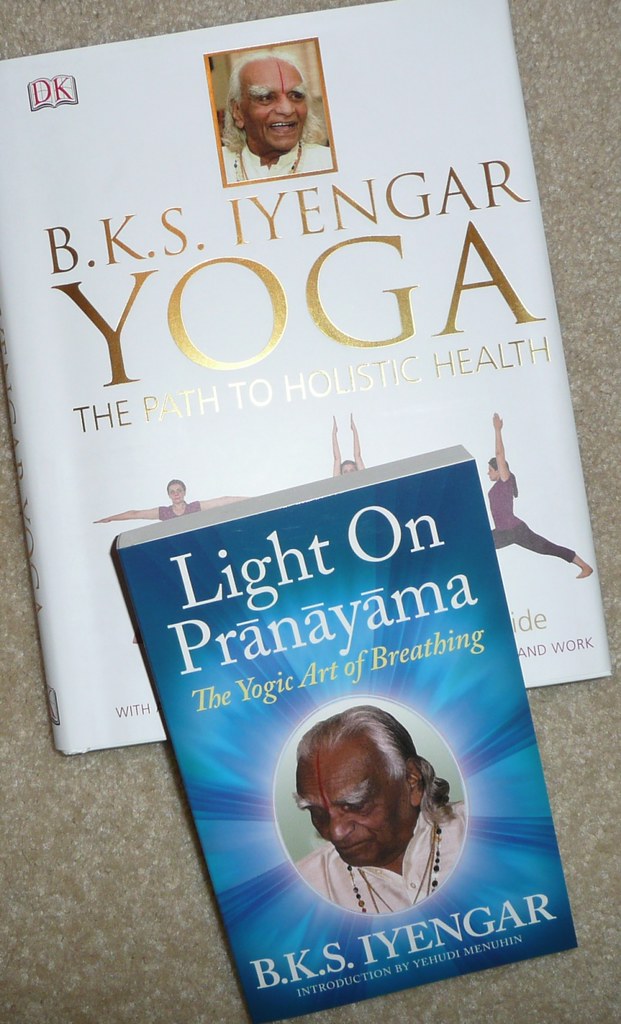
The title of this post is a play on the titles his books Light On Yoga, Light On Pranayama, Light on Astanga Yoga, and Light on Life. Having not read any of them, I am assuming the books shed light on each subject in the title. Since I just learned a bit about B.K.S. Iyengar I thought I would share, shedding some light.
I just received B.K.S. Iyengar Yoga The Path To Holistic Health, I am sure that I will be learning a lot more about Yogacharya B.K.S. Iyengar and Iyengar yoga so I am sure I will be sharing more about it. With the different branches of yoga and the many different types there is always something to learn and that means there is always something to share!
Have you heard of Iyengar yoga? Do you do yoga? What type of yoga do you do?
There are a lot of different aspects of yoga. Just like there are a lot of different aspects of Nia. As I have said before you can do Nia without getting involved in all of the principles and aspects of it. You can treat it like a workout and not take it any further. The same goes for yoga. That is why I always compare the two. You can go to a yoga class and go through the poses without giving any of the other aspects a second thought. I believe that both Nia and yoga can be more beneficial, more satisfying when you do think about the other parts of it . . . but we all have different goals and different ideas. One of the “aspects” of yoga or limbs of yoga – is pranayama. There are different pranayamas. A common one – Ujjayi is typically done while doing the yoga poses, and it might be helpful in reducing or stopping snoring.
So, pranayama is the practice of controlling one’s prana (life force) through breath or the practice of controlling one’s breath. There are many forms of this type of practice and many ways in which to perform them. But as I said, a common one is ujjayi breathing. It is what many recommend be done while doing the asanas. Some call it the Victory Breath, the Warming Breath, the Ocean Breath, Snake-breathing, throat breathing, or even the Darth Vadar Breath. It is done through the nose, both the inhale and the exhale. Some of the names stem from the fact that when you do it you may sound like the ocean, a snake, or Darth Vadar.
This breath “exercise” is done by closing the glottis partially on the exhale. This post is not to get into the mechanic of how to do ujjayi breathing. But a quick way to give you an IDEA of how to do it, is to think Felix Unger. Remember him? Remember that annoying noise he used to make? Well, that is a lot more sound than you want, but that gives you an idea of what needs to be going on in your throat / nasal area.
I am excited by the prospect that this type of breathing could help stop snoring or even more importantly sleep apnea. The idea behind this thought process is that the muscles need toning. People snore because stuff in there gets to relaxed and it makes noise as the person breathes. So, it kind of makes sense that if it can be toned or trained then it could help stop the snoring or the life threatening sleep apnea.
Yoga Therapy.com says: “In fact, this snoring is the sound that occurs when air passes through stenosed nasopharynx, caused by vibration in the air flow of compliant structures of the pharynx (tongue, soft palate, etc.). The main reason that causes vibration of the said formations is impairment of muscle tone of the pharynx and soft palate, structural anomalies and functional abnormalities of the pharynx and soft palate.” Like I said the stuff in there makes noise.
Again, as I said, this makes sense to me . . . as in, why not try it, it can’t really hurt, but if it did help . . . Oh man, for some it would be a life saver. I think it is worth a try. Just another reason to practice pranayama.
Do you think a breathing practice is worth trying if it would stop snoring and/or sleep apnea? Do you know anyone that snores? Do you know anyone with sleep apnea?
Ok, not really, but it seems as if many of us are always seeking balance. Balance in our diets. Balance in our lives between work and play. Balancing our budgets. Balance between saying yes and saying no. Balance within the body between all of the delicate (yet amazingly strong) systems. There is a lot in our lives that require the act of or the state of balance. In Nia we practice balance a lot, in all of the realms: physical/body, mental/mind, emotional/emotions, spiritual/spirit. Yoga practices that balance too. When I ask the students in gentle yoga what they would like to focus on, they often say balance. When we think of balancing or when we think of balance poses we might think of standing poses, but not all balance poses are standing poses. I’ve already posted about the Gate pose in my post titled Finding Balance In The Gate. That pose is done on one knee and one foot. There is also the Extended Cat pose or Utthita Marjaryasana. That is a great balance pose.
One of the reasons Utthita Marjaryasana is such a great balance pose is that being so close to the ground and being on two limbs helps alleviate the fear of falling. Yet it is a balance pose. The two sides of the body have to work together. This pose is done on one hand and one knee, the opposite hand from the knee. We are using opposing limb extension to create a situation in which we need to balance. So if extending left foot, you extend right hand. If extending right foot you extend left hand.
This pose starts on the hands and knees. Often times I have my students start on JUST their knees with their body upright and their thighs lengthened. I like for them to position their knees directly under their hip joints. I also want them to see their thigh bones perpendicular to the floor. When they come down onto their hands I want that 90° angle to remain in the knee joint. So with knees directly under the hip joint and the knee bent at a 90° angle we are on our hands and knees. The wrist are directly under the shoulder joint, palms on the earth. The spine is in neutral position.
In our example we will use the left foot and right hand. Extend the left foot back with the ball of foot on the floor, raise the right arm bringing the hand in front of you to shoulder height. Use the “karate chop” position, so the side of the hand is towards the floor with the thumb side to the sky. Then move your foot so you are only balancing on your big toe. Then, if you are able, use your glutes to lift your leg keeping it in the straight position. Your leg is stretched out behind you, your foot is flexed. Gently reach with your heel away from your extended hand. Gently reach with your extended hand and the crown of your head away from your extended foot.
The hips remain squared to the floor. One reason we slowly move the leg into the lift position is to ensure that the hips remain facing the floor. The top of the foot, along with, the knee faces the floor. The ankle, the knee, and the hip are aligned. I prefer the foot that is on the supporting leg to be top-of-foot on the floor. But you can curl your toes and be on ball of foot.
It also might help during your set up to bring the supporting hand in a little towards the heart center. It should still be even with the shoulder joint; not higher or lower, but it can be toward the center if that gives you more stability.
This is a balance pose so if you looking at one spot on your mat it helps. Also remember to breathe.
Once you are comfortable with the pose and can balance on opposing limbs the foot can be lifted off of the floor without going through the steps of “ball of foot” to toe positions.
This pose engages the core, the arms, and the legs. It is great pose to activate the stabilizing muscles.
I love twists. The folding, bending, twisting poses in yoga. Right now I’m thinking about Ardha Matsyendrasana or Half Lord of the Fishes Pose. This is the one where one leg is folded or bent and the other leg is over it and you’re twisted. Twists can be challenging, but you can often find a level of execution that you can relax into. And as with all poses the more you practice it well, the more you can twist as you gain flexibility. Some twists – depending on the supporting factor – can be good to practice strength and stability. Twists are good for flexibility and digestion.
I prefer to start this pose sitting on one hip (I’ll use the left hip in the example) with my feet to the (right) side. Using the clock as we do in Nia, sit in the middle of the clock, with the left knee at 12 O’clock. Reach with the crown of your head to the sky. Lengthen the neck – create space between the ears and the shoulders. Open the chest. Draw the shoulders back and down. Let those shoulder blades slide down the back. Lift the ribs off of the hips. Gently bring the right knee up and the right foot over the left knee to rest with whole foot on the floor at about 11 O’clock. Use your left hand to gently hold the right knee as you twist your torso to the right. Keeping the posture that you set up before you brought your right leg over the left (lengthened spine) allow your right hand gently press into the earth behind you . . . a few inches from your right buttock. Both hips remain on the floor. With your posture intact relax into it for a few breaths, then untwist, and bring your feet back to the right side. Then switch your feet to the other side and proceed on this side.
That was the gentle version. Stay with this until you are comfortable and confident that you can retain the long straight posture through your entire back and neck before you add the rest of the pose. The additions could be using the crook of your elbow to hold your knee more snuggly up to your rotated torso. The supporting hand would land on the floor more towards the center of your back as you increase the depth of the twist. As you twist further you might find your right foot past the 11 O’clock position, straying towards 10 O’clock. Find your comfortable place, keeping the whole foot on the ground.
A deeper twist would be to place the left elbow (keeping with the original example) on the outside of your right knee. Your left hand could even rest on the left knee. With this the supporting hand would land on the floor perhaps just a smidge more towards the center of your back as you increase the depth of the twist or not. This is a different type of intensity but it might not take your supporting hand that much further back.
There is even a further step where you can thread your left arm (keeping with the original example) through your right leg under the knee and the right arm behind your back so they can link up.
There is also a way to decrease the intensity and that would be to straighten the left (keeping with the original example) leg. It would remain active. As in you would gently press it straight out and down. Hip, knee, ankle and toes in alignment, with knee and toes to the sky. The straight leg version can be used with any of the aforementioned “holds” (hand holding knee, crook of elbow, elbow on other side of knee).
This twist really helps with flexibility in the hips, knees, and ankles. I think of it as one of those “pretzel-y” yoga poses. I have experienced that it is best demonstrated with my back toward my students so they can bend, twist, turn, and hold the exact same sides.
Do you know this pose? Do you practice this pose? Do you like this pose? How do you feel after you do this pose?
I like this pose, Utthita Hasta Padasana (Extended Hands and Feet Pose). It is an easy pose. It is one of those asanas that can be used in so many places in a yoga routine. It can be used in the beginning to allow you to “come into your body” and start the process of concentration. It can be used in between other poses, either to rest or reset, or to allow for an easy transition. It can be used at the end. It can be used to help practice awareness and learning sensations in your body. I often use it as part of the cooldown in my Nia classes. It is basically something almost everyone can do. Sometimes it might present an initial challenge for some needing help with balance, but after a bit it becomes easy. I like it. It is very versatile.
Generally no matter when or where in the routine this pose is placed in my current yoga classes we do not hop into it. We step into the wide stance. The feet are beyond the width of the shoulders. If we have come from a mountain pose then we continue with our reaching, lengthening, relaxing, and lifting, but if we are stepping into this from another pose then we check our posture. We want to reach with the crown of the head to the sky, lengthening the neck – creating space between the ears and the shoulders, we allow our shoulders to relax and our shoulder blades to “drip” down our back, we lift the ribs off of the hips, and lift the knee caps by activating our thigh muscles. The feet – in the wide stance – are parallel to the edges of the mat and each other. The chest is open. Arms are stretched out to the side, elbows and hands are at an even height with the shoulders. We are reaching for the opposite walls.
Standing there you open your chest and create space in the joints. Reach up to be taller and reach out to be longer. The head reaching up, the arms reaching out. Feet are firmly planted, weight is evenly distributed over the entire foot (both feet), toes are spread. Here is where you sense the strength and stability while opening.
This pose is traditionally done from the mountain pose with hands at chest level, finger tips touching in front of the heart center. Then when you hop your legs into your wide stance you put your arms out at the same time. In order to be “gentle” we step into our Utthita Hasta Padasana.
Many yoga poses are challenging. Many test strength, many test balance, many test flexibility. The ones, like this one might be very easy so the possibility that they are over looked and not practice in many yoga classes could be very high. But it is the easy asanas where sometimes we learn the most. We learn to take a moment to sense the body. What does it feel like to stand wide, reaching and lengthening? What is the sensation in my bones? What is the sensation in my muscles? Can I open my chest any further? Can I make my arms longer? Check into these sensations. Allow yourself to learn and become familiar so that you can do more challenging poses with the body knowledge you have gained from the easier poses.
Do you do this pose as part of your practice? Do you do this pose in the yoga class you attend?
We have sounding in Nia . . . where we make sounds as we are dancing. Plus people are always invited and . . . in my class . . . encouraged to sing. I’ve written several posts about sounding and put them in their own category under Nia. (Click here for the link to those posts) Although I do not think of making sounds as being regulated to Nia, I just have them as a sub-category under the category Nia. I think sounds are appropriate to make during other exercises and workouts. One that always comes to mind when people seem to need convincing of making noises and exercising is martial arts. Once I remind them that “Hi-Ya!” is a common sound, they seem to relax into the idea a bit. As I probably have mentioned before, I remember it being an unspoken rule that you didn’t make noise while you are doing Jazzercise, lifting weights, or working out at the Lady Spa. Could have been ideal that it was unladylike to make noise. I don’t know, because I never remember being told NOT to make a sound, I just know that no one did it. It was almost as if even breathing heavy was taboo! One reason I love Nia: breathing and making sounds are encouraged. But I think of these sounds as helping with the flow of oxygen and energy. I think of them as stress relieving and joy bringing. So when I was flipping through Yoga Journal and came across an article titled “How To Be Fearless” I thought, “Huh? Interesting.” Mark Moliterno, an opera singer and yoga instructor has paired yoga with voice to create YogaVoice.
This reminded me of one of Nia’s instructors who created Kivo® The Kinetic Voice . . . which is – according to her website – “a vocal practice that uses the whole body. It is designed to harness the power of vocal vibration and movement as transformational tools that unlock energy, activate your true radiance and empower you to go out and create the life you were born to live.” So . . . back to the article when I looked at the chart within the article I realized that the pairings were for more than just overcoming public speaking jitters as the subtitle read. It was for a list of different areas.
Just as we know certain sounds to be related to certain chakras and feelings, you probably also know poses are related to certain chakras and feelings. When sounds and asanas are paired up they can be very beneficial. I would bet many of you are familiar with “OM” as a yoga chant. Different sounds and different mantras can be used. The information on the YogaVoice websites leads me to believe this is different from chanting while doing yoga, there are indications that it goes beyond that.
I just love that more sounding is coming into the workout. Since I believe there is a lot more to sounding — a lot more benefits can be reaped than just breathing — I love movement forms that stem from sounding or that incorporate it.
Do you believe the is benefits to making noises while working out? Do you make noises while exercising?
There is a move I do often at the end of my Nia Classes. I learned it as the Ragdoll Pose in yoga. Some say it is just a variation on the Uttanasana or the Forward Fold. Since it is a standing pose where you bend over I can see that. But the Forward Fold is a very active pose. You are using other muscles, you are actively lengthening your spine. Whereas in my classes, the move we do as the Ragdoll pose is just a hang. The idea is to hang, ya know, like a rag doll.
After all the movement we do in a cardio dance exercise class where moving your entire body is the key, it is nice to just hang around for a bit. This pose made my list of favorite yoga poses but is not one of my sixteen favorites. Kinda surprised me.
With the Ragdoll, as I said the idea is to hang like a rag doll folded over at the hips. Your body goes limp. Your arms can hang. Your shoulders and hang. Everything just hangs. Legs can be straight or bent at the knee. It is a relaxation pose so doing it to your optimum comfort is advised. Let the weight of your head help lengthen and stretch your back and spine. So you are not actively lengthening or straightening, it all comes from the weight of the head. Even if you are resting you forearms on your thighs you are hanging.
One way that people do this pose is with the arms hanging overhead, but bent at the elbows. The forearms are folded together allowing the hands to hold the opposite elbow. This variation is just like the bent knees and/or the arms — or even hands — on the thighs, it is up to the individual at the time of the pose.
Bending over or doing an inverted pose is good for the systems in your body. Such as the circulatory system, turning upside down helps blood flow which helps the respiratory system. The lymphatic system is assisted by inversions which stimulates the body’s immune system.
It seems as if the body enjoys the break from the normal pull of gravity and it likes to be upside down every once in a while. Calms the nerves, heightens the sense, and brings a little peace. Only when done reasonably comfortable. Poses should not be held if they cause pain or dizziness. So when you are in any pose especially and inversion stay only as long as it is comfortable.
To me, the Ragdoll is one of those comfortable poses. Usually just fold over and hanging. But I do remember at least once when my neck was not aligned properly so the full on hang did not feel good, but bending my knees and resting on my thighs was the ticket. Always remember that you do a pose for the moment you are in at the moment you are doing it. So yesterday all the way down might have been the way, but maybe today it is not. Do what your body wants in the moment.
Enjoy the weight of the head and the arms. Let it stretch your spine and bring space into your back. Hang as a rag doll would.
Do you like the Ragdoll pose? Do you like inversions? Which ones are your favorite?
There are a lot of yoga poses. Especially since a lot of them I know are the modification of the actual pose. Some of these modifications seemed to have morphed into their own pose with their own name. In addition to teaching Nia in San Jose, I am now teaching Gentle Yoga. And I was thinking. I wanted to make a list of my favorite poses. I was thinking I could have a list and do them every day. But it turns out that I like a lot more than I was thinking. And some I don’t like at all. And some I look at the picture and guffaw, saying, “Yeah, right?” Anyway I came up with about 38 poses that I really like, ones that I would call my favorite. I have a feeling that I am forgetting a couple too so I bet my list could really be in the 40’s. I could do over 40 poses a day, but I would rather do less and repeat a handful of poses then just work my way through all of my favorites. So then I circled ones that I would like to do every day and I ended up with 16. I was thinking I could do those 16 every day. But then I realized that while I will probably do that every once in a while I would be better off just picking some from the list everyday. Whatever strikes my fancy. I feel that if I pick a group every day I will end up getting the exact practice I need for that day. It could end up being my favorite 16 of the favorites.
I do feel that my “favorites” for the day will end up being exactly what I need. I plan to post about some of my favorites. Working my way through the list. I have already posted a few of them. One of my favorites that I have posted about is the Gate Pose. This is a balance pose but it is done on a knee and an extended leg. Not all balance poses are done standing. This is a pose that helps with stabilization, strength and flexibility.
Another favorite with a post is the Locust Pose. I REALLY like this pose. This is one that I do extremely modified. I mean I’ve seen the locust pose where most of the yogi’s body is off the ground and they are resting on just their sternum, upper shoulders, and their chin. That doesn’t even look comfortable to me. I prefer the belly-on-the-earth-with-the-head, chest, arms, and legs-lifted-off-the-ground version. This is a whole body pose. Not only on my favorite list but on the favorite 16!
I also like the Sphinx. This is another backbend, but with this one we rest on the forearms and elbows. Another pose that made my list is another back bend, the Cobra. This one to me is more of a lift using the back. And another backbend – the Updog – made the list. Updog and Cobra sometimes look the same in demonstration – depending on who is demonstrating. Be sure to check out my posts to see the difference. I use Patrick Reynolds’ video to explain the difference. I think of Up Dog more like a hanging backbend. The only backbend that made my top 16 was the Locust Pose.
The Garland Pose made my list of favorites and the top 16. This is a position I try to find myself in every day. Even if I am not doing yoga or any type of practice, I will put myself in this posture to pick up something. I think that this pose is a great way to help keeps hips bones healthy and juicy. Also pushing up from this squat is good for the legs.
So I have already posted about a few of my favorite poses. So I will continue to explore and share with you.
What is your favorite yoga pose? Why is it your favorite?
I love my students. They are a great source to me; they teach me and they make me laugh. Recently one of my students happen to mention a policy that was told to her – a facility stated she could try the class for 10 minutes without charge, but would have to sign up for the class to stay longer. The comments from those that she was sharing this with was that 10 minutes was not really long enough to get a sense of the class and if they would like it. She said, “I know, if I would have only stayed 10 minutes I would have missed the nap time at the end!” That was the best. She, of course, was kidding . . . sort of. She was talking about Shavasana. A very important part, yet for many, one of the most difficult times in yoga.
She was kidding in the sense that we all know it is not nap time, but not having been familiar with yoga she would have missed seeing that part of the class if she had only been allowed to stay for 10 minutes. Shavasana is a pose of total relaxation. It is where you allow your body to rest and relax from the workout it just participated in. In some classes this is a necessary time for recuperation of the body, but in others it might not be so much about the body. In a Gentle Yoga class it could be more about the mind. In Nia we have BMES – Body, Mind, Emotion, and Spirit. We could say that shavasana is a time for those four things. So after a nice gentle class it could be more a time more for the mind, emotion, and spirit to relax. While the inner dialog should be kept to a minimum while practicing the asanas it is even more important to do so during shavasana. This is the time when the body absorbs all the goodness from the poses it just performed.
I had once thought that you DID shavasana IN the corpse pose, but the name comes from the Sanskrit words Shava meaning “corpse” or dead body and Asana meaning “posture”.*
One of the reasons shavasana is so difficult is because there is not supposed to be any inner dialog going on (as I just mentioned). This is not the time where you begin making your shopping list for your trip to the store after class, or where you decide what you are going to say to your boss/friend/spouse. This is a time of quiet, a time of reflection, a time where you do a “body check”. Check in with each body part or area of your body to see if it needs any attention, see if it needs to be relaxed and focus on allowing it to relax. Sometimes because of this relaxation one might fall asleep. When I first started every time I did shavasana I fell asleep. Now I don’t, I am better at being mindfully relaxed. It is a practice though. This might not be something that comes easy to you, it might be a challenge, but it is something worth practicing.
I’ve heard different ideas on how to hold shavasana in a class. Some say that a guided meditation is the way it should be done. Some say that total silence is the only right way. Some say some music or nature sounds should accompany this pose. In my classes I usually softly lead the participants into a relaxed state. Then I allow them quiet time with this pose — I do have sounds playing during class and I don’t turn that off, but sometimes I turn it down. Then after the time allowed I talk them back to awakening their bodies and moving again.
If this pose and time is not something that you include in your yoga practice, I encourage you to give it a go. Try it. If you fall asleep that is ok. But keep doing it and when you are able to achieve that relaxed state while staying awake you will see how powerful this simple pose is.
Do you practice shavasana? Have you ever fallen asleep during shavasana? How long do you stay in this pose?
As I was saying in my recent post, Bend Like The Snake, Upward Facing Dog or Up Dog and Cobra are sometimes called the same thing or thought of as interchangeable. But they are not the same pose. Cobra usually does not have the straightened arms, but it can and that might be the source of confusion. They are similar, but not the same thing. To me, Cobra is more of an “energy from the back” type of pose, where Upward Facing Dog is more of an “energy from the arms”.
For Up Dog, you lie on your stomach. Your legs are stretched out behind you. The tops of your feet are on the earth. Place your hands, palms on the earth, at your arm pits – your starting position will probably adjust as you become more flexible and can straighten your arms. You want to start with your hands in a position on the floor so that when you push up and straighten your arms your hands end up directly under your shoulders. When you are ready you push up with your arms. Your legs remain together. As you straighten your arms you continue to keep your shoulders down, the blades back. The neck is lengthening. Keep the space open between your shoulders and your ears. No scrunching or hunching. When you arrive at a place that is comfortable your body hangs. Even if your arms are not all the way straightened the body hangs. If you are able to straighten your arms your gaze brings your chin parallel to the ground. If you arms are not all the way straight your gaze could be at the ground. This is a pose that is best worked into. Start with back bends that are not as large . . . like the Sphinx.
The “hang” of Up Dog is what really makes the poses different for me. The Upward Dog IS a backbend, but the energy is coming from the arms. Whereas in the Cobra the MAIN energy is located in the back. The arms are still working, but it is the back where the main energy resides. The Up Dog is a nice hang.
One thing that really helped me with discovering the difference is this video by Yoga Garden. I really love how this video explains the difference between Cobra and Upward Facing Dog. Yet, as I have said, many times, about all things, you might find conflicting information. You have to find what works for you. The thing I think that is most important to remember about Yoga and its poses is the benefit you and your body receive from it. While it is GREAT to know the names and to be able to move into that position, sometimes it all might not match up perfectly. But the strength and flexibility you gain is what will be the most important.
So does all of this information help you identify the differences between the Cobra yoga pose and the Upward Facing Dog pose?

 His brother-in-law was a “respected yoga scholar” and he asked B.K.S. to move to his city to help his sister with running the house. B.K.S.’s brother-in-law, Tirumalai Krishnamarcharya, was not impressed with B.K.S. suggesting he should practice yoga to improve his health. B.K.S. did, and after three years he noticed improvement. His brother-in-law ran a yoga school and during a yoga demonstration asked B.K.S. to execute a pose he was not familiar with much less able to do. But B.K.S. did it anyway and injured himself. It took him years to fully heal the injury.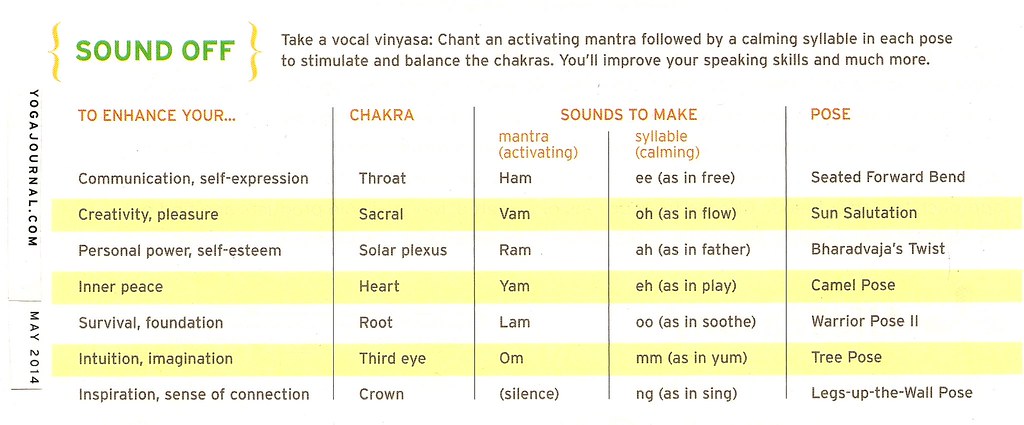
 Terre Pruitt's Blog