Posts Tagged ‘Yoga Practice’
Posted by terrepruitt on May 14, 2015
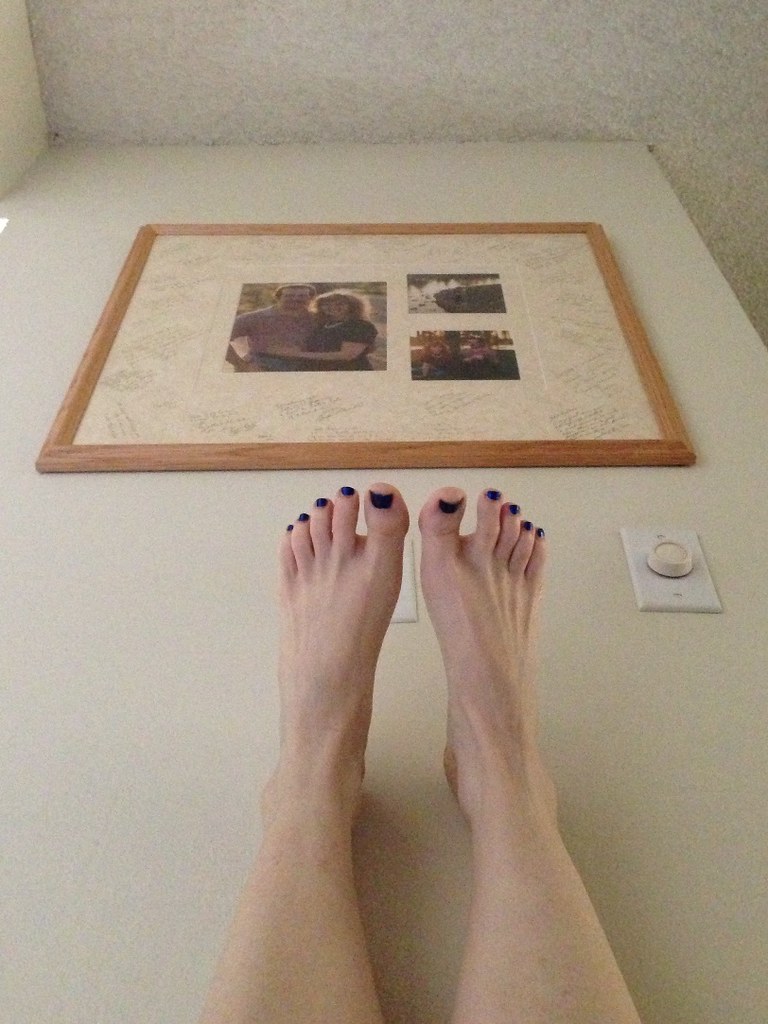
There are poses and moves that I love to do that I don’t get to do in my classes. Some of the poses or moves require a wall. While there are walls in the venues where I teach, they are not always accessible. Some walls have mirrors and most venues ask people to NOT TOUCH the mirrors. Some walls have chalkboard, white boards, cork boards, and other types of boards where announcements are hung. It is not feasible to use the walls with the boards, because we would be touching and possibly damaging the announcements. And some walls have cabinets and sinks, so that doesn’t work. Some walls aren’t really WALLS at all, but they are windows, that is almost the same as mirrors in that we shouldn’t be pushing on them and putting our hand prints all over them. And for some poses it wouldn’t just be hand prints — it just wouldn’t work. Some walls have ballet barres attached to them so they wouldn’t work for the poses or movements. And some walls just have too much stuff in front of them to be used. So in the majority of the classes I teach we don’t use the walls, which is a bummer. One pose that I have been doing a lot lately on my own is a great one, but it requires a wall. The name is actually “Legs up the Wall Pose” or the relaxed version of Viparita Karani.
Basically for this pose you lie down on your back with your buttocks up against the wall and your legs straight up on the wall. The benefits of this pose touted by practitioners of yoga are many. Including calming the mind, easing anxiety and stress, relieving tired feet and tired lower legs.
According to Yoga Journal:
 “good for most everything that ails you, including:
Anxiety
Arthritis
Digestive problems
Headache
High and low blood pressure
Insomnia
Migraine
Mild depression
Respiratory ailments
Urinary disorders
Varicose veins
Menstrual cramps
Premenstrual syndrome
Menopause”
I find that I am comfortable in this position for about 15 minutes. If I am going to stay in this position longer than 15 minutes I like to lie on something, like a folded towel. I place the folded towel under the lowest part of my back.
This is a relaxing position and should feel very comfortable, so adjust your body in order for it to be comfortable for you. That could mean moving your body away from the wall, so your buttocks are not touching it. Move as far away as you need to in order to relax and still be in the pose. Or it could mean using a bolster under your buttocks and lower back or a towel under your lower buttocks. Move and adjust yourself and any prop you are using to find something relaxing and comfortable for you. You may even want to put a rolled towel or something under the arch of your neck for support. Stay in this position as long as you are comfortable. Be aware of your feet and any sensation you may have. I usually roll out of the pose when my feet get tingly.
In some styles of yoga Viparita Karani is done with the legs in the air and a support device or your hands supporting your lower back with elbows bent. This version gives you the benefit of the legs being higher than your heart, but it is not as relaxing and restful as with your legs against the wall.
If you are in good health and cleared to do yoga and inversions, I would recommend this pose. It is great for relaxation. I have been doing it before I go to bed.
Are you familiar with this pose? Have you ever tried this pose?
Posted in Yoga/PiYo/Pilates | Tagged: Legs up the Wall Pose, relaxing pose, San Jose Group X, stress relieving pose, Viparita Karani, yoga classes, Yoga Practice | Leave a Comment »
Posted by terrepruitt on May 9, 2015
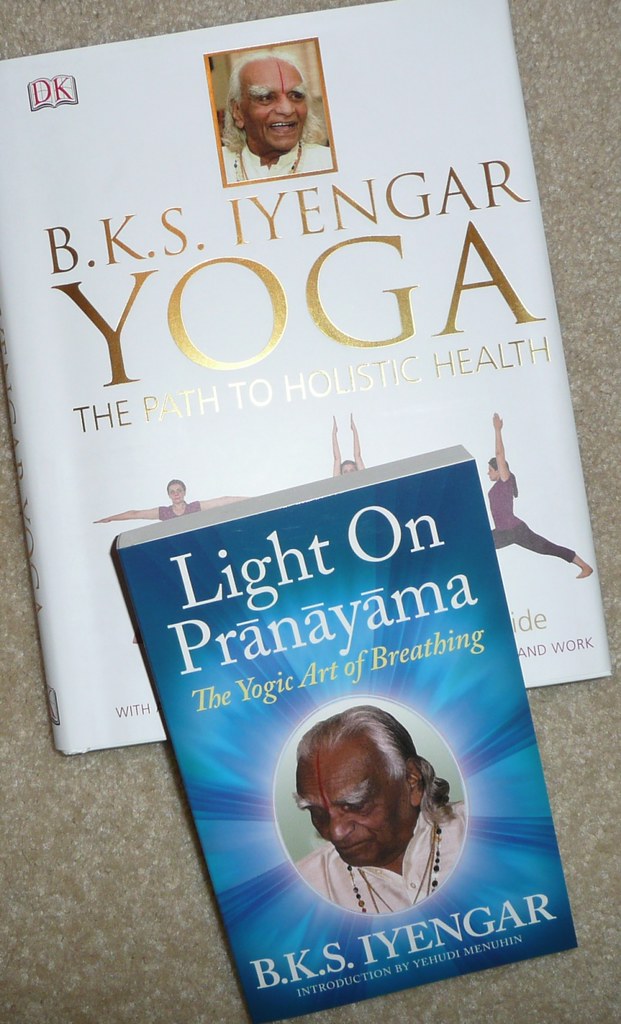
Some of you may have heard of Iyengar yoga. It is a form of Hatha yoga created by Bellur Krishnamachar Sundararaja Iyengar. It was borne from hours and hours (equating to years and years) of practice. Iyengar yoga focuses on doing the asanas in a precise and exact manner with mindfulness and specific breath. The poses are also held so that the practitioner can have “microscopic awareness and inner penetration” and not just mechanically do the pose without thought. I never knew Bellur Krishnamachar Sundararaja (B.K.S.) Iyengar’s story and having just learned it, I find it very interesting.
 His brother-in-law was a “respected yoga scholar” and he asked B.K.S. to move to his city to help his sister with running the house. B.K.S.’s brother-in-law, Tirumalai Krishnamarcharya, was not impressed with B.K.S. suggesting he should practice yoga to improve his health. B.K.S. did, and after three years he noticed improvement. His brother-in-law ran a yoga school and during a yoga demonstration asked B.K.S. to execute a pose he was not familiar with much less able to do. But B.K.S. did it anyway and injured himself. It took him years to fully heal the injury.
This was the catalyst for his thoughts on progression and sequencing. He realized that one needs to work his way up to certain poses. One needs to prepare himself both mentally and physically for certain asanas. Poses should not be done without any preparation.
B.K.S. married during the time when yoga was not very popular and his efforts to bring it to a wider audience did not help his family’s financial situation. It took 12 years for B.K.S. situation to change for the better and many more years for yoga to become popular. But as you may know yoga eventually caught on and is now practiced in many corners of the world.
In 1975, three years after his wife, Ramaamani Iyengar, died, the Ramaamani Iyengar Memorial Institute in Pune, India was opened. Thousands of people attend the yoga school to learn Iyengar yoga.
B.K.S. Iyengar died in August of 2014. If you consider 1934, when he moved to Mysore to help his sister, as the year he started doing yoga, he had been doing yoga for 80 years. He died when he was 95.
The title of this post is a play on the titles his books Light On Yoga, Light On Pranayama, Light on Astanga Yoga, and Light on Life. Having not read any of them, I am assuming the books shed light on each subject in the title. Since I just learned a bit about B.K.S. Iyengar I thought I would share, shedding some light.
I just received B.K.S. Iyengar Yoga The Path To Holistic Health, I am sure that I will be learning a lot more about Yogacharya B.K.S. Iyengar and Iyengar yoga so I am sure I will be sharing more about it. With the different branches of yoga and the many different types there is always something to learn and that means there is always something to share!
Have you heard of Iyengar yoga? Do you do yoga? What type of yoga do you do?
Posted in Yoga/PiYo/Pilates | Tagged: Bellur Krishnamachar Sundararaja Iyengar, Hatha yoga, holistic health, Iyengar yoga, Light On Pranayama, yoga asanas, yoga poses, Yoga Practice, yoga school | 8 Comments »
Posted by terrepruitt on January 17, 2015
Perception. Such an odd thing. I remember when I was 15 years old and working in an office with some young women. They were probably in their 20s so really still young. I remember all the stories they would tell me and how they would carry on like 20-somethings do. Then one day a child walked in and the woman I knew to be a young person who enjoyed to go out and have a good time became a mom. It was the weirdest thing. I am not saying this woman was a party animal, but it was just odd to see this woman go from working woman to working mom. Since she didn’t really talk about her kid all that much it was easy to forget that she was a mom. I am not saying she didn’t talk about her kid because she didn’t love her child or because she didn’t care. She talked to me more about things that a 15 year old is involved in or going through; relationships, school, and being young . . . . not kids. The group conversations in the office tended to be around other things since not everyone had kids. Also, there was seeing a tough boss lady with her spouse. Seeing the loving side of a meany. Seeing different sides. I didn’t know the woman as a mother, so it was odd to see her acting like one. I didn’t know the gruff boss lady as a wife so it was odd to see her act like one. Friends also might have different perceptions than family members because they’ve seen different things and experienced different things. Also new friends and old friends. Sometimes people modify their behaviors, mature, or just change so people who are just meeting someone for the first time might not have any idea of how it used to be. So the perception of the person is different for the new person than for the person that has been around. What you know to be true from your experience, can be different from what someone else knows because they have had different experiences.
 So amazing how that is. It is amazing how everyone’s perception can be different. Our perception has a lot to do with ourselves. Someone who has been cheated on by a significant other might take “I’m working late,” completely different from someone who has never had that mistrust thrust upon them.
This is all just talking about people. What about “things”? Like viewing clouds or art. Two people look up in the sky, one person sees a dinosaur and the other a horse. And even if both people were to look up and see a horse it would probably still be different types of horses. As I was contemplating the “people” aspect it occurred to me that recently I had been thinking about perception in regards to Nia. I always say it is a practice like yoga, and for those people who think of yoga as a religion, I am wondering now if they think I mean that Nia is a religion. A recent conversation made me think so. Even though I was hoping I was explaining it well when I say that you can take some of the ideals and principles of Nia out into the world just like you do with yoga. I guess that could sound like a religion – especially if you think of yoga as a religion. Yoga being a religion is also a funny thing, because some people say it is and some people say it isn’t. I was hoping to get a regular Nia class going at a yoga studio a long time ago and I said something about “some people believe it is a religion” to the owner of the studio, she got very upset saying that was not true. Well, it is VERY true some people DO think it is a religion. I never got a class there.
I think of Nia as an exercise program with a holistic twist. Just like yoga. But yoga can be taken to the point of being a religion, but not everyone that does yoga considers it a religion. I actually don’t know anyone that teaches Nia who considers it a religion. But the more I think about it, the more I can see how some people could think of it that way. Perhaps comparable somehow to the people who have been cheated on. If they think of everything as being in competition with their own religion maybe anything outside of it that you practice would be considered a religion to them. I don’t know . . . that is one of the things I have been thinking about when thinking about how people see things. Perception is weird. The ol’ “glass half full, glass half empty” thing.
Do you ever experience the differences in perception? With people you know that your friends know? With co-workers? With family? How do you experience it?
Posted in Misc | Tagged: exercise program, glass half full glass half empty, holistic exercise, Nia, Nia class, Nia Practice, Perception, religion, Yoga, Yoga Practice | 2 Comments »
Posted by terrepruitt on November 22, 2014
I sometimes think life is always trying to teach us lessons. I admit that sometimes I am oblivious to the lessons. But I also think that sometimes I can see them. I also think that sometimes the lessons are a practice. It is not as if I go through life, have something happen, see the thing I am supposed to learn and then – BAM! I got it. Lesson exposed, lesson learned, I’m good. Nope. Sometimes it is a practice. Just like yoga and Nia or learning an instrument. Continuous or multiple exposures helps you learn the art of it. Last month I wrote about “The Art Of Letting Go“, where I went with a friend to an evening event called Paint Nite. The idea is to paint something in two hours being led step-by-step by an artist. My idea was to just let go. To know that my painting was not going to look exactly like the original, but it would look like something. It would bear a resemblance to the one I was taught to paint. I liked it because it was blue. Well, I have been doing things that remind me to concentrate and be in the moment. Yes, I write about this often because it is something I need to be reminded of constantly. I need to live in the moment. I need to concentrate on what I am doing. I need to enjoy what I am doing. I need to fully sense and experience what I am doing.
I think my first post about this was me talking about brushing my teeth. I stated that I brushed my teeth while doing a lot of different things — all the time. I am better now. I used to think that if I brush my teeth while doing something else I could save time, but what ended up happening was that I was concentrating on the other task so much so that I didn’t know if I brushed the upper left side so I would do it again. Then wonder if I brushed the bottom right . . . the point is, I think I ended up brushing a lot longer because I was not concentrating on just brushing my teeth, than if I would have JUST brushed my teeth. I am better at that now. I start to step away from the sink and I remember that I will be done faster if I just get it done than if I go . . . do whatever.
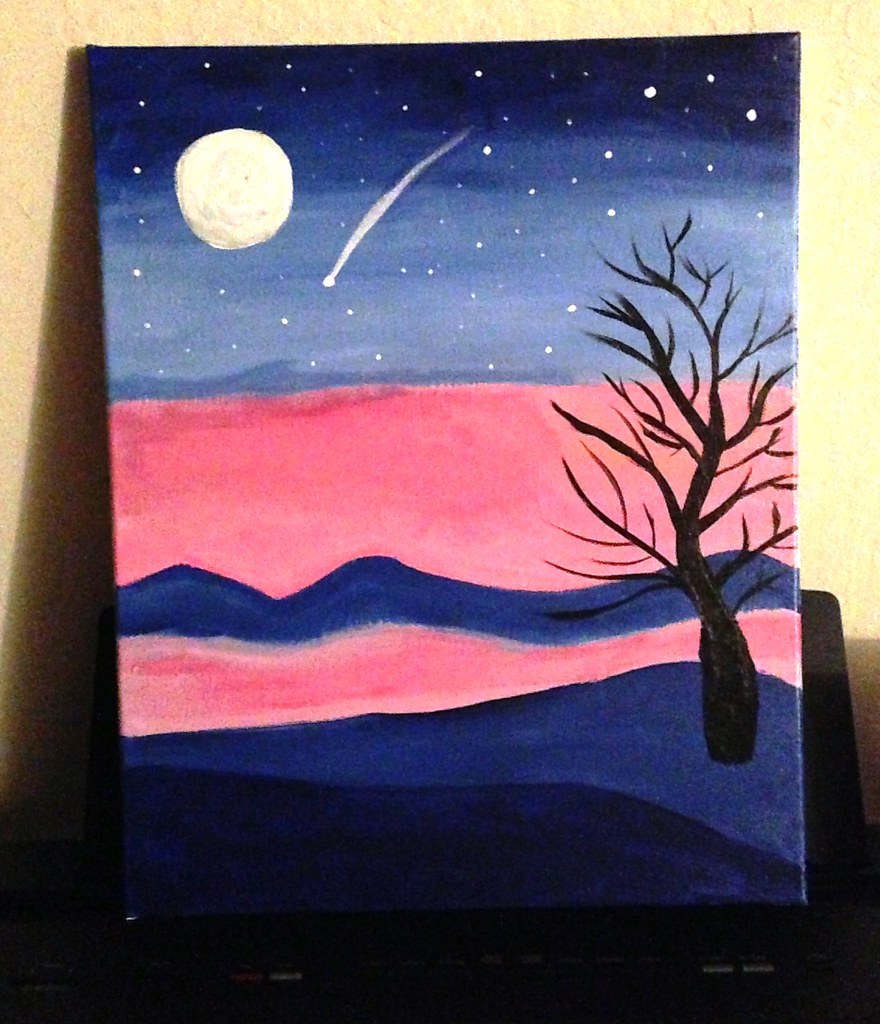 I did another Paint Nite and I really had to concentrate on what I was doing in order to keep up with the artist. It is my opinion that she was going really fast. I couldn’t keep up, so listening and talking and participating in what was going on around me put me WAY behind the instruction. I just had to buckle down and concentrate on what I was doing so that I could listen to what she was saying so that I could do the next step she explained. I was concentrating so hard on what she was saying that I took a swig of paint water. YUP! I was listening to her, I reached behind my canvas, grabbed the cup and brought it to my lips and took a sip. I realized it tasted odd and spit it out – mostly in my cup, partially on my friend. (Thank God, she is so understanding and forgiving.) That was me not paying attention to the cup I was grabbing.
But I like this creation better than my last. I learned so much from my first time, that I was able to do this one better, but I actually had the opposite problem. I wasn’t using enough paint. But I think — still not, sure it was the water I need more of. Regardless, I learned some more and I really like this painting. No, it is lacking the soft lines of the original, but I like it.
One of the other things I am doing that requires one to clear one’s thoughts is archery. I wanted to see what shooting a bow was like. I wanted to use a “regular” bow, but that is not the popular bow to shoot. We were shooting one of those fancy things with what remind me of pulleys on each end. We weren’t even using what they call a “recurve”. Whatever bow you use the target is the target so learning how to get the arrow where you want it to go was the interesting part. Not that my arrow always went where I wanted to go, but I was taught the premise. But the instructor (Mike at Predator’s Archery) really emphasized concentration. He shared his (award winning) techniques regarding targeting and shooting the arrow, but he emphasized again and again how you have to concentrate. And you might be surprised on what you concentrate on, but that is not the point of this post, the point is you have to not think about distracting things. Live in the now and focus on the task at hand.
Focusing and concentrating really goes a long way in getting things done. We are always multitasking because that is just how life is. In most situations you cannot not think about more than one thing, but sometimes just DOING one thing really helps you get it done quick and with focus so that you can move on to the next thing. Things like to have your undivided attention. I will continue to practice focus, concentration, and living in the now even though the world around me as a whole thinks I need to do fifty things at once in order to be productive.
What do you thing? Do you think that less can be more? Do you think sometimes if you just do ONE thing (instead of multitasking) you can get it done faster and better?
Posted in Misc, Nia | Tagged: archery, concentrate, instrument practice, life's lessons, Mike, multitasking, Nia, Nia Technique, Paint Nite, Practice, practice painting, Predator's Archery, The Art Of Letting Go, Yoga Practice | 8 Comments »
Posted by terrepruitt on October 30, 2014
I love twists. The folding, bending, twisting poses in yoga. Right now I’m thinking about Ardha Matsyendrasana or Half Lord of the Fishes Pose. This is the one where one leg is folded or bent and the other leg is over it and you’re twisted. Twists can be challenging, but you can often find a level of execution that you can relax into. And as with all poses the more you practice it well, the more you can twist as you gain flexibility. Some twists – depending on the supporting factor – can be good to practice strength and stability. Twists are good for flexibility and digestion.
I prefer to start this pose sitting on one hip (I’ll use the left hip in the example) with my feet to the (right) side. Using the clock as we do in Nia, sit in the middle of the clock, with the left knee at 12 O’clock. Reach with the crown of your head to the sky. Lengthen the neck – create space between the ears and the shoulders. Open the chest. Draw the shoulders back and down. Let those shoulder blades slide down the back. Lift the ribs off of the hips. Gently bring the right knee up and the right foot over the left knee to rest with whole foot on the floor at about 11 O’clock. Use your left hand to gently hold the right knee as you twist your torso to the right. Keeping the posture that you set up before you brought your right leg over the left (lengthened spine) allow your right hand gently press into the earth behind you . . . a few inches from your right buttock. Both hips remain on the floor. With your posture intact relax into it for a few breaths, then untwist, and bring your feet back to the right side. Then switch your feet to the other side and proceed on this side.
That was the gentle version. Stay with this until you are comfortable and confident that you can retain the long straight posture through your entire back and neck before you add the rest of the pose. The additions could be using the crook of your elbow to hold your knee more snuggly up to your rotated torso. The supporting hand would land on the floor more towards the center of your back as you increase the depth of the twist. As you twist further you might find your right foot past the 11 O’clock position, straying towards 10 O’clock. Find your comfortable place, keeping the whole foot on the ground.
A deeper twist would be to place the left elbow (keeping with the original example) on the outside of your right knee. Your left hand could even rest on the left knee. With this the supporting hand would land on the floor perhaps just a smidge more towards the center of your back as you increase the depth of the twist or not. This is a different type of intensity but it might not take your supporting hand that much further back.
There is even a further step where you can thread your left arm (keeping with the original example) through your right leg under the knee and the right arm behind your back so they can link up.
There is also a way to decrease the intensity and that would be to straighten the left (keeping with the original example) leg. It would remain active. As in you would gently press it straight out and down. Hip, knee, ankle and toes in alignment, with knee and toes to the sky. The straight leg version can be used with any of the aforementioned “holds” (hand holding knee, crook of elbow, elbow on other side of knee).
This twist really helps with flexibility in the hips, knees, and ankles. I think of it as one of those “pretzel-y” yoga poses. I have experienced that it is best demonstrated with my back toward my students so they can bend, twist, turn, and hold the exact same sides.
Do you know this pose? Do you practice this pose? Do you like this pose? How do you feel after you do this pose?
Posted in Yoga/PiYo/Pilates | Tagged: Ardha Matsyendrasas, asana, flexibility, Half Lord of the Fishes Pose, Nia, Nia Practice, stability, strength, twists, Yoga, yoga poses, Yoga Practice | 2 Comments »
Posted by terrepruitt on October 7, 2014
I often tell my students at the end of class that making them get up is the worst part of my job. I have posted blog posts about savasana. The restful period of time at the end of a yoga class where you take time to relax letting the body and mind absorb the benefits to be had from the asanas that were just practiced. Let the body remember the stability and strength. Give the body time to become accustom the space that was created. Allow the mind to reflect on the stillness. Well, in Nia we often end the routine in Floorplay. Floorplay is either playing with gravity to experience the muscles or stretching or . . . it can be a combination of both. There are a lot of ways to play on the floor. There are a lot of ways to end the class. Our Nia training DVDs have floorplay and ending movements, but they are not choreographed. So there is a lot of freedom in the last songs. Nia teachers can either duplicate what the trainer does on the DVD or they can create their own movements to the songs and end the class in their own way. I know I sometimes do what I sense the class needs so sometimes I lead the class through movements and sometimes I instruct them to do their own free dance. Often times we end by lying on the floor in a restful pose. Just like in my yoga classes I don’t like to have to make my students get up.
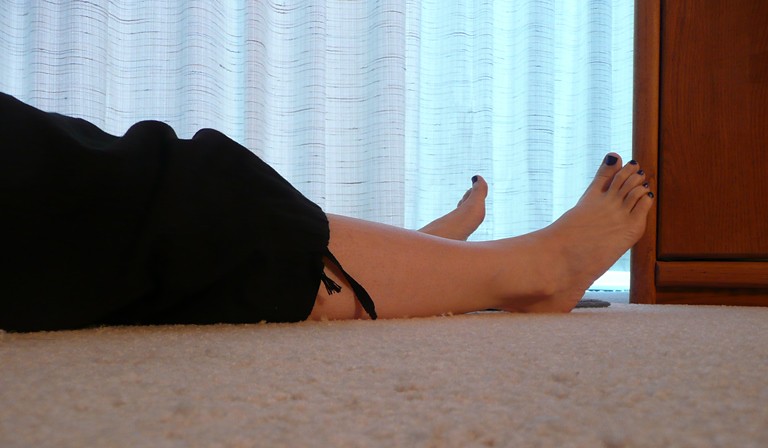 In the studio I rent, I think that I should rent an extra 30 minutes so we can just lie there. Sometimes I sense the class could easily just stay there for an extra 30 minutes beyond the one hour Nia class. In the classes I teach for the San Jose Park and Recs Department, I sense they could do that too, but we need to end on time. Sometimes there is a class right after us so our restful period is interrupted. But when it is not, it is a challenge to know when to interrupt the peace.
Recently I taught a class and I really didn’t want to tell them to get up. The clock in the room was not working so I snuck up to check my phone and as I was returning to the circle I saw such peace and relaxation I didn’t want to bother them. I toyed with the idea of just letting them stay an extra 5 or 10 minutes. But without having planned that in advance, I didn’t want someone lying there past the hour and not knowing it. Many people workout on their breaks so they need to get back to work. Or they just need to get on with their day. So as much as I don’t like interrupting their peace and as much as I would like to just let them relax, I need to keep to our schedule. But it really is the worst part of my job when I feel they would love to just stay.
But, on the other hand, it really is a great part of my job when I can be in the presence of those that can just relax and let go. After dancing and getting all sweaty it is so nice that they can just take a deep breath and melt into the earth and relax. I get a huge sense of peace when I am in the presence of their stillness . . . . that is why it is so hard to disturb them.
Do you take moments out of your day to just relax and experience peace?
Posted in Nia, Yoga/PiYo/Pilates | Tagged: asanas, body weight exercises, Body-mind, dance exercise, gravity exercises, Nia class, Nia DVDs, Nia flooplay, Nia Free Dance, Nia Practice, Nia routine, Nia routines, Nia songs, Nia students, Nia training, Nia workout, restful period, San Jose City Nia classes, San Jose Park and Recs Department, savasana, shavasana, Yoga class, Yoga Practice | Leave a Comment »
Posted by terrepruitt on September 6, 2014
I like this pose, Utthita Hasta Padasana (Extended Hands and Feet Pose). It is an easy pose. It is one of those asanas that can be used in so many places in a yoga routine. It can be used in the beginning to allow you to “come into your body” and start the process of concentration. It can be used in between other poses, either to rest or reset, or to allow for an easy transition. It can be used at the end. It can be used to help practice awareness and learning sensations in your body. I often use it as part of the cooldown in my Nia classes. It is basically something almost everyone can do. Sometimes it might present an initial challenge for some needing help with balance, but after a bit it becomes easy. I like it. It is very versatile.
Generally no matter when or where in the routine this pose is placed in my current yoga classes we do not hop into it. We step into the wide stance. The feet are beyond the width of the shoulders. If we have come from a mountain pose then we continue with our reaching, lengthening, relaxing, and lifting, but if we are stepping into this from another pose then we check our posture. We want to reach with the crown of the head to the sky, lengthening the neck – creating space between the ears and the shoulders, we allow our shoulders to relax and our shoulder blades to “drip” down our back, we lift the ribs off of the hips, and lift the knee caps by activating our thigh muscles. The feet – in the wide stance – are parallel to the edges of the mat and each other. The chest is open. Arms are stretched out to the side, elbows and hands are at an even height with the shoulders. We are reaching for the opposite walls.
Standing there you open your chest and create space in the joints. Reach up to be taller and reach out to be longer. The head reaching up, the arms reaching out. Feet are firmly planted, weight is evenly distributed over the entire foot (both feet), toes are spread. Here is where you sense the strength and stability while opening.
This pose is traditionally done from the mountain pose with hands at chest level, finger tips touching in front of the heart center. Then when you hop your legs into your wide stance you put your arms out at the same time. In order to be “gentle” we step into our Utthita Hasta Padasana.
Many yoga poses are challenging. Many test strength, many test balance, many test flexibility. The ones, like this one might be very easy so the possibility that they are over looked and not practice in many yoga classes could be very high. But it is the easy asanas where sometimes we learn the most. We learn to take a moment to sense the body. What does it feel like to stand wide, reaching and lengthening? What is the sensation in my bones? What is the sensation in my muscles? Can I open my chest any further? Can I make my arms longer? Check into these sensations. Allow yourself to learn and become familiar so that you can do more challenging poses with the body knowledge you have gained from the easier poses.
Do you do this pose as part of your practice? Do you do this pose in the yoga class you attend?
Posted in Yoga/PiYo/Pilates | Tagged: asana, body sensations, chest open, Extended Hands and Feet Pose, gentle yoga, Nia, Nia Classes, Nia cool down, shoulder width apart, stability, strength, Utthita Hasta Padasana, yoga classes, yoga poses, Yoga Practice | Leave a Comment »
Posted by terrepruitt on May 17, 2014
I was in a yoga workshop all day. The day was beautiful and I was in Santa Cruz, but I was inside all day. Well, most of the day. I was in a class about “How do we make our yoga practice and our approach to teaching yoga more meaningful?” A lot of people do yoga just for the physical exercise of it. But some people are interested in making it more of practice. Some people are interested in exploring the deeper aspects of it. I often compare Nia to yoga because it is the same thing in that both are a great workouts in and by themselves, but there is the part that I call the “practice” where it is more than just doing the exercises it is it taking some of the “deeper aspects” out into the world. Or even applying them in the class. But first you have to be exposed to the deeper aspects. This class touched upon that and throughout the class I smiled at the similarities between it and Nia.
Yes, Nia has taken aspects of yoga and used them to make the mix that is Nia, but I am not certain that all of the similarities were used on purpose. As an example, several people have told me that they do not do yoga because it is a religion. I have experienced debate on this. I have read articles that exclaim angrily that Westerners have taken their religion and made it into an exercise. Then I have had yoga instructors/owners of yoga studios vehemently deny that yoga has anything to do with religion. I have had people say they will not come to Nia because we talk about “Spirit” and in a song or two there is an “Om.”
Today it was said that some people do use yoga to connect to God. But “there is no God in Nia” (as quoted from Carlos Rosas during my Nia White Belt Intensive in 2008.) Today’s workshop started out with the religious aspect. Briefly exploring how to teach and stay true to oneself.
During the class there was a lot of talk about awareness and being present. Something that is understandable when in a yoga class. Sensing the body while moving through and holding asanas. This is also something we employ in a Nia class. Being able to dance in the now. At one point Nia was NIA = Now I Am. So during both types of workouts there is an emphasis on moving with awareness and being in the present. Being aware of how your body moves. Noticing the bends and flexes, the circles and lines. Being present and not thinking about our to-do list we have to accomplish after class. And, this is where I consider it a practice . . . where you take those ideals out into your everyday life. Be aware of what you are doing while you are doing it and BEING in the moment. (By the way: This is particularly challenging for me right now. As you might imagine.)
Then the topic of listening to students to learn what they needs was discussed. It went along with teaching people as opposed to teaching poses. I particularly loved this because just last week I told my students we were going to start doing a particular group of poses and they looked at me and said, “Why?” And I said because you told me you needed to. They hadn’t actually told me they needed to so I explained to them that what they told me led me to that conclusion. As a teacher you might be able to relate to the eye rolls I received. Of course, as I feel I do this (teach people), I know there is always room for improvement so I will continue to listen.
Most often I ask my Nia students if they are having any issues or would like to focus on anything in particular during the class. I feel that allowing them to pick the focus or take part in picking it helps me teach to them and their needs. I felt that was a Nia connection to this part of the yoga workshop.
In the workshop, I also kept hearing talk from the students about no judgment and self acceptance. Two things which are also taught and emphasized in Nia. No Judgment is part of witnessing which is a stage in Free Dance. While dancing just witness what is happening but don’t judge. Could be something like, “I kick to shin height.” Instead of, “I am in such bad shape I can’t get my leg higher than my shin.” Non-judgment. Accept what you can do and work to do more if that is your desire.
It was a nice day. And this about sums it up. Plenty of things to think about and work on.
What did you do today?
Posted in Nia, Yoga/PiYo/Pilates | Tagged: physical exercise, Santa Cruz, teaching yoga, workout, Yoga, yoga asana, Yoga class, Yoga Exercise, Yoga Practice, yoga workshop | 2 Comments »
Posted by terrepruitt on April 24, 2014
In one of the sessions I taught for the City of San Jose at the Willow Glen Community Center I taught a progression of back bends over the course of the sessions. We started with a very gentle standing back bend, Upward Salute. Then in our next meeting our next step in the back bend lesson plan was a back bend on our bellies, it was a Locusts Pose. With this one it can be a very gentle progression as it can be done in mini forward steps. It is an easy pose to modify. It can be broken down into three separate components all which can be modified. Then we moved onto the Sphinx Pose, which is more of a bend. Then the next pose we moved on to was the Cobra Pose. This is a bigger back bend and while it can be modified it is not as obvious in its modifications as the Locusts Pose. The last one we did in the series was Upward Facing Dog, which is a hanging pose which allows for a big bend in the back. In my posts regarding each pose I talked about how to do them, but I didn’t really explain the benefits of them.
Here are some of the benefits of each pose:
Upward Salute (Urdhva Hastasana)
Good for relief from symptoms of:
Fatigue, asthma, congestion, indigestion. Also, like all of the back bends, it helps relieve back ache.
It helps Improves digestion, relieve mild anxiety and create space in the chest and lungs.
Locust Pose (Salabhasana) (11/17/21: Click Gate, Locust – Pictures May Help for a picture.)
Is an invigorating pose so it can help alleviate fatigue. It also helps with relieving flatulence and constipation. It can assist in relieving indigestion.
Sphinx Pose (Salamba Bhujangasana) (11/17/21: Click Picture The Great Sphinx for a picture.)
Helps calms nerves and relieve fatigue and stimulates abdominal organs. It also helps relieve stress.
Some say Traditional texts say that Bhujangasana increases body heat, destroys disease, and awakens kundalini. (According to the Yoga Journal’s website.)
Cobra (Bhujangasana) (11/17/21: Click Picturing Cobra And Updog for a picture.)
This pose also helps relieve stress.
Soothes sciatica along with the same as the sphinx (some believe that Bhujangasana increases body heat, destroys disease, and awakens kundalini.)
Upward dog (Urdhva Mukha Svanasana) (11/17/21: Click Picturing Cobra And Updog for a picture.)
Is similar to the other back bends as it stimulates abdominal organs, and helps relieve fatigue and sciatica. It is also therapeutic for asthma. It also helps with mild depression.
Many yoga poses separately boast stress relief. I believe, however that yoga in general helps relieve stress. I understand though that some poses target stress specifically. All the back bends open up the chest and bend the back so ailments associated with those areas are often made better by doing back bends. The benefits stated here are benefits that can be found after engaging in a yoga practice and doing the poses properly. This page is not to be used to diagnose or treat any issue you may be having. Please make sure you are seeing a medical professional for your serious health issues.
In addition to know how to do the pose, I always think it is nice to know how poses can help you. Back bends are a good way to reduce stress. Please take caution in doing them.
Do you include back bends in your practice?
Posted in Yoga/PiYo/Pilates | Tagged: back bends, benefits of back bends, Corbra, Locusts, Sphinx, stress relief, Up Dog, Upward dog, Upward Facing Dog, Upward Salute, Yoga Journal, Yoga Practice | Leave a Comment »
Posted by terrepruitt on February 25, 2014
I love my students. They are a great source to me; they teach me and they make me laugh. Recently one of my students happen to mention a policy that was told to her – a facility stated she could try the class for 10 minutes without charge, but would have to sign up for the class to stay longer. The comments from those that she was sharing this with was that 10 minutes was not really long enough to get a sense of the class and if they would like it. She said, “I know, if I would have only stayed 10 minutes I would have missed the nap time at the end!” That was the best. She, of course, was kidding . . . sort of. She was talking about Shavasana. A very important part, yet for many, one of the most difficult times in yoga.
She was kidding in the sense that we all know it is not nap time, but not having been familiar with yoga she would have missed seeing that part of the class if she had only been allowed to stay for 10 minutes. Shavasana is a pose of total relaxation. It is where you allow your body to rest and relax from the workout it just participated in. In some classes this is a necessary time for recuperation of the body, but in others it might not be so much about the body. In a Gentle Yoga class it could be more about the mind. In Nia we have BMES – Body, Mind, Emotion, and Spirit. We could say that shavasana is a time for those four things. So after a nice gentle class it could be more a time more for the mind, emotion, and spirit to relax. While the inner dialog should be kept to a minimum while practicing the asanas it is even more important to do so during shavasana. This is the time when the body absorbs all the goodness from the poses it just performed.
I had once thought that you DID shavasana IN the corpse pose, but the name comes from the Sanskrit words Shava meaning “corpse” or dead body and Asana meaning “posture”.*
One of the reasons shavasana is so difficult is because there is not supposed to be any inner dialog going on (as I just mentioned). This is not the time where you begin making your shopping list for your trip to the store after class, or where you decide what you are going to say to your boss/friend/spouse. This is a time of quiet, a time of reflection, a time where you do a “body check”. Check in with each body part or area of your body to see if it needs any attention, see if it needs to be relaxed and focus on allowing it to relax. Sometimes because of this relaxation one might fall asleep. When I first started every time I did shavasana I fell asleep. Now I don’t, I am better at being mindfully relaxed. It is a practice though. This might not be something that comes easy to you, it might be a challenge, but it is something worth practicing.
I’ve heard different ideas on how to hold shavasana in a class. Some say that a guided meditation is the way it should be done. Some say that total silence is the only right way. Some say some music or nature sounds should accompany this pose. In my classes I usually softly lead the participants into a relaxed state. Then I allow them quiet time with this pose — I do have sounds playing during class and I don’t turn that off, but sometimes I turn it down. Then after the time allowed I talk them back to awakening their bodies and moving again.
If this pose and time is not something that you include in your yoga practice, I encourage you to give it a go. Try it. If you fall asleep that is ok. But keep doing it and when you are able to achieve that relaxed state while staying awake you will see how powerful this simple pose is.
Do you practice shavasana? Have you ever fallen asleep during shavasana? How long do you stay in this pose?
*Wiki and Jaisiyaram
Posted in Yoga/PiYo/Pilates | Tagged: asana, BMES, body check, corpse pose, inner dialog, Jaisiyaram, naptime, nature sounds, Nia, Nia Classes, Nia Practice, relaxation pose, sanskrit, savasana, shavasana, Yoga, yoga poses, Yoga Practice, yoga students | 2 Comments »

 Terre Pruitt's Blog