As you know different people learn different ways and as we were only on stage 5 with just 20 minutes left in class on Monday, I was wishing that we had more time to explore the principles. I wanted to be able to be with each stage longer. This is my first time re-taking the Nia White Belt. After class, Debbie stays after to answer additional questions and receive comments and, funny enough, one person said she liked how fast we went through the stages. She felt she got more out of it instead of spending so much time on them. Someone else spoke up and “mirrored” that sentiment. I don’t think it was their first re-take. I would have loved to spend more time with it. For my blog, I thought I would at least separate the introduction of the principle from the stages, since for many people exercising without specific instructions is a new and challenging concept. Being able to move one’s body in their own body’s way in a dance exercise class is not the norm – unless you are in a Nia class. The Nia White Belt Principle #4 is FreeDance and it has eight stages.
With Nia FreeDance participants can dance what their body needs at the time they are in the class, but not everyone knows what to do with that freedom. Not everyone knows what their body needs. So there are eight stages we use in our practice that can help. I am not going to do a language comparison (between when I took it in 2008 and now) I am just going to say the verbiage has changed a bit but the message is the same. Here is the 2020 Nia White Belt Principle #4 8 stages with their tag lines and explanations, as usual there is a lot more, I am just sharing a bit.
1 – FreeDance ~ Anything goes movement-wise: this really means, just move your body. A lot of people have a strict idea of what “dance” means so unless someone is doing ballet or waltzing across the floor they will say, “that’s not dance”. But in Nia we kick, we punch, we shimmy, we bob our heads . . . . pretty much ANYTHING GOES MOVEMENT-WISE. Granted in a class we will make certain that is it safe.
2 – Being Seduced By The Music ~ The Art of Listening: this is where you can stop moving. You may be surprised at what you hear when you are just listening to the music. And then once you start dancing again you may be moving differently because you actually heard something you hadn’t heard before. Or you may just have a different sense of the music.
3 – Feelings + Emotions ~ Pretend, Fake it, Act “as if”: this is where you pretend. You can pick an emotion . . . and act as if you are XXXX. You can pretend to be mad, angry, happy, sad, tired, bored, flirty . . . whatever and then you dance that. You let your body MOVE that emotion.
4 – Creative Source ~ Real You: here you remember a story and allow yourself to feel that emotion and dance that. You may find that you use less energy when you are actually tapping into a real emotion than when you are acting and the emotion is coming from your head. Dance your story and see where that emotion takes your movements.
5 – Authentic Movement ~ Change!!: this is about the way your body moves. We dance and as we are “forced” to change we find authentic movement. For those that know how to count the bars we change every two bars, but until you know that, just change often . . . let’s just say you should change about 15 times in an average speed 5 minute song.
6 – Witness ~ Neutral Observer: this is where we just notice what our body does. We aren’t supposed to change it we are just noticing what it does.
7 – Accidental Click ~ Music + Movement Integration: this is where we have a “click”, when we really feel our body move to the music and we know that that is how it is supposed to be moving. Something “clicks”. Once you sense that keep doing it.
8 – Body-Centered Choreography ~ Levels 1, 2, 3: this is where you can take that movement tendency or that click and dance through the three levels. The three levels are what we want to demonstrate in a Nia class so that everyBODY can have fun and get the workout their body needs at that time. Level one is less, smaller movements, two is more, and then three is the biggest and something you may not even be able to (or want to) maintain throughout the class. It is nice to visit all the levels so that you can experience the different sensations in the body. Also, it is important to keep in mind that these levels relate to YOUR body. My level one might be your level three, that person over there . . . their level three might be my level two . . . . so do YOUR BODY’S levels.
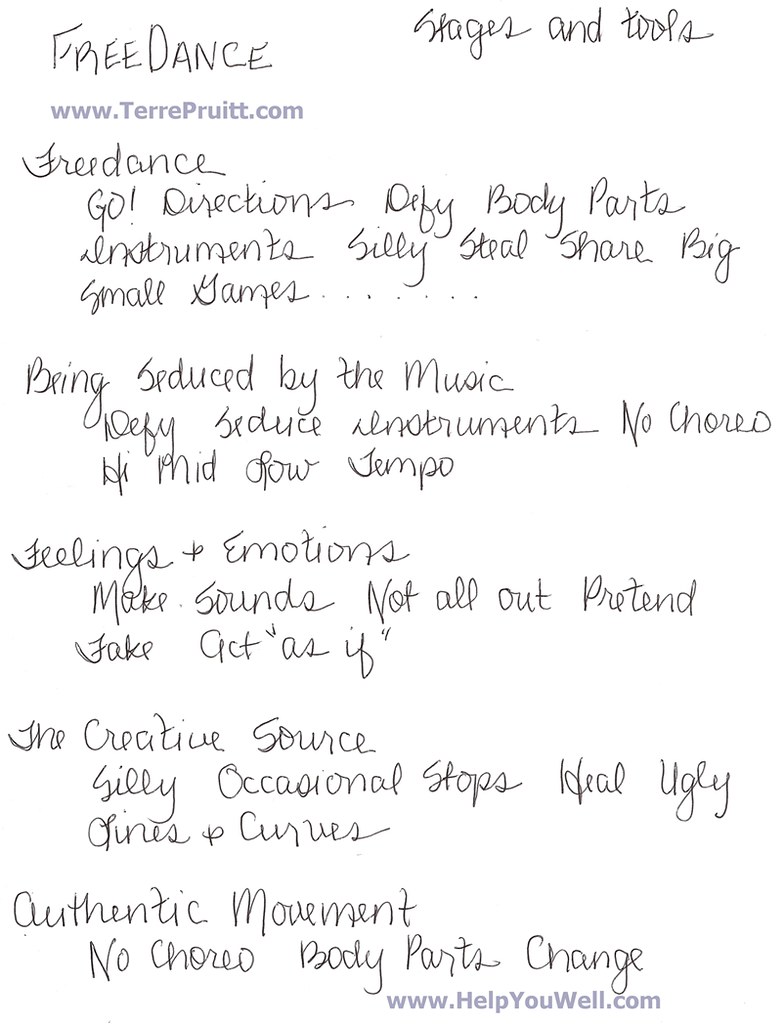
I wrote out the main things that I want to remember (pictured here) and posted here.
There you have a bit about the eight stages of the 2020 Nia White Belt Principle #4 – FreeDance. These can help people with their FreeDance practice.
I could go on and on, but I need to stop here. I hope this gave you an idea about Nia FreeDance and maybe if gave you some ideas on how you can play and practice with dancing in order to stimulate your BMES.
I have several posts regarding Nia FreeDance. When I was teaching often there was a period when we had FreeDance Fridays. That was fun. I feel when I am teaching multiple times a week it is really great to have one class be FreeDance. I have posted about the 8 stages of FreeDance. There are a couple of posts about a FreeDance Playshop I produced once and one about the tools for the eight stages of FreeDance that we can use to help us “to stimulate movement creativity”. We just had our class regarding FreeDance, Nia White Belt Principle #4. I am happy to report, not much has changed. Again, some of the language used has changed and certainly the way it is presented. I want to clarify that the training is always evolving, Nia is always finding new and better ways to deliver the information, but the core information is not changing. That is a great comfort to me and it makes sense. I want the organization I am involved with to grow and improve, but I don’t want it to change the core of what it does. So, 2020 Nia White Belt Principle #4 is FreeDance.
Now in my previous documentation of it, you may see FreeDance written different ways and that is because I understood Carlos (one of the original creators of Nia) to have different ways of writing it. The principle was one way (FreeDance) and then the first stage was another (Free dance). So, if you see differences that is why. And moving forward I will endeavor to keep it FreeDance.
This term sometimes confuses people because they think the class is free. I have experienced this many times. But FreeDance is something that Nia participants do, it is a practice, it is a principle of Nia. It is “stimulating movement creativity”.
Debbie said something today that clarified something for me, she was talking about form and freedom, we have a lot of that in Nia. In light of the 2020 Nia White Belt, we have form in the way of choreography and we have freedom in the way of dancing free. Debbie equated form with “structure” and how that makes people feel safe. Freedom could be compared to “no structure”, which sometimes makes people feel unsafe. The freedom in an exercise class can be intimidating for many people. Being told what to do and how to move the body is the way most people are taught to exercise, so when they come to a Nia class and they are told, “Move your body.” They don’t know what to do. It is just like the story Debbie tells about when she first when to a Dojo. People can be told to focus on moving their arms, but they want to know HOW to move their arms, they want specific movement instruction. We have language to guide people to move in FreeDance, but there is still a lot of freedom in that and for some people that is a huge challenge.
There is a triad for this principle, like with all of the principles, it consists of Move, Explore, and Create. They put the numbers for the 8 stages going counter clock-wise on the triad, but have created a separate graphic with the stages going clockwise. Instead of drawing the triad and creating the graphic I chose to write out the eight stages. We can use the eight stages to helps us move. Here I am just going to list the stages:
1 – FreeDance 2 – Being Seduced By The Music 3 – Feelings + Emotions 4 – Creative Source 5 – Authentic Movement 6 – Witness 7 – Accidental Click 8 – Body-Centered Choreography
The next post will contain the tag lines for each stage and the information I wanted to high-light for myself.
So, Dear Reader, how do you feel about dancing with no instruction? How do you feel about dancing with little to no instruction in a cardio exercise class?
Ahhh, I don’t think I talked about Friday FreeDance. In November of last year we there were four Fridays. Two of those Fridays were holidays for SJCity Fit. So out of the four Fridays in November we were only going to have a Nia class for two of them. So I had decided that we could do Friday FreeDance. Now for some people who sounds totally awesome, but for some people it sounds totally scary or icky, as in not fun. Not everyone is a fan of FreeDance. I understand that. Not everyone is comfortable dancing on their own especially in a dance exercise class. Many people go to exercise classes to be told what to do. A majority of the students that attend my Nia classes have been dancing Nia for years now, so I knew they would be able to FreeDance for an entire hour. We did it, and I received some interesting feedback and information.
First of all, I do want to explain that it wasn’t an ENTIRE hour of strictly FreeDance. I think for both Fridays I started with a choreographed first song. And I ended with instructions in the last song. Then the rest of the songs were mainly GUIDED FreeDance. So there were some suggestions on what to do, but it was left up to the participants to do it in their own body’s way. And in some case in their own mind’s way. They might have had to think of what some of the suggestions would be moving like.
I might have suggested that they move as if they are skiing. With that one usually has to think about it and then do it. The fun part is, of course, that everyone does it different. With no clarification as to what type of skiing there is so much room for interpretation. Someone could be water skiing, some people down hill skiing. Some people might be cross-country skiing. And then of course, even with those qualifications it could look wildly different. That is the fun of FreeDance.
I was very happy that most people liked it. I wouldn’t have done it if I didn’t think they would like it and they could do it. It took me four and half years to feel confident enough in the students love of Nia and FreeDance to do it. And most people liked it. I am thinking they liked it as a Friday thing . . . I mean, they still like the choreography so they wouldn’t want to do FreeDance for the hour all the time.
There are a few people who wear pedometers in class and the majority of them reported that they got over 1,000 MORE steps in with FreeDance. One student said she averages about 4500 steps in regular Nia class, but in the FreeDance class she was at 5700. There definitely is the possibility to get in more steps. But if you are one who needs instructions more than just a guide you would probably get less steps in during FreeDance.
I thought I had posted about this because I was really happy and excited that I finally did it AND that the class really enjoyed it. And I was also really excited and happy that many people got more steps in. I couldn’t find the post I thought I did. So here. And if this is a repeat, oh well.
I have been putting in more FreeDance into our routines because people do really enjoy it. I think I will be doing a Friday FreeDance once a month. I love how Nia brings joy through dance.
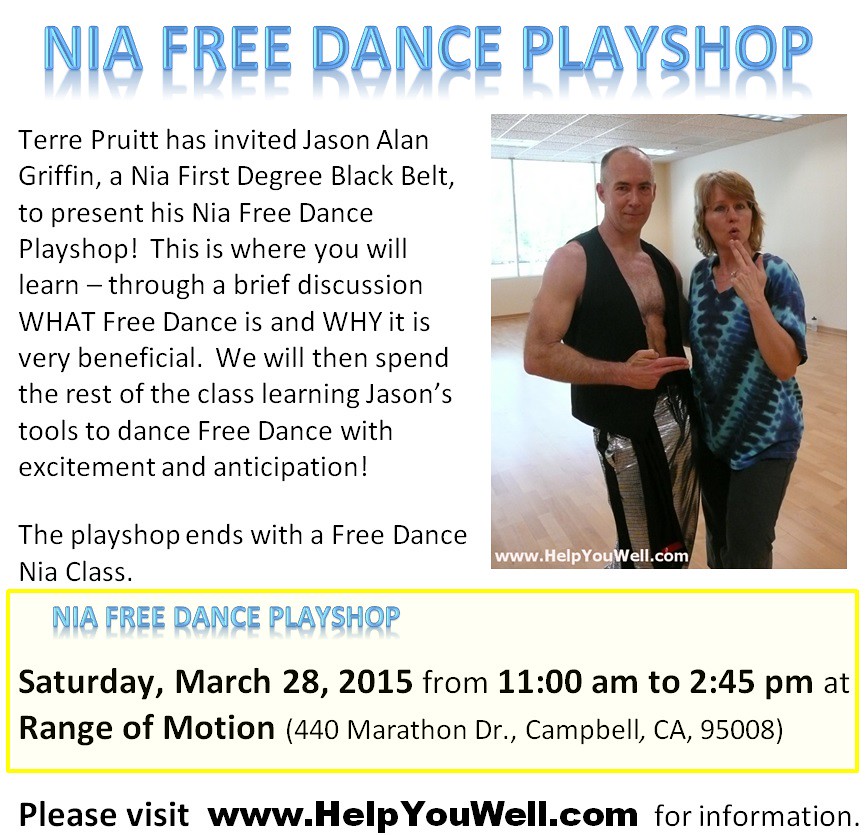
Some of you may be wondering what I mean when I say Nia FreeDance Tools. Recently I invited First Degree Black Belt Nia Teacher, Jason Alan Griffin, to present a playshop of his creation. The playshop was him sharing some Nia FreeDance Tools. I have talked about what Nia FreeDance is before, it is where there is no assigned choreography and we just dance to the music (or not). But it is not the type of dancing you would see in a club. It is not the type of dancing that has specific names for the dance moves . . . yeah a cha-cha, jazz square, or a pirouette might sneak its way in, but primarily it is not that type of dancing. So some of the tools we have to practice Nia FreeDance are the 8 Stages of Nia FreeDance. And within those stages can be additional tools.
First of all as a reminder we do FreeDance to allow our bodies to move in different ways. To move in ways that are not our normal ways of dancing . . . so if you ARE a ballerina, the idea is to let your body dance outside of the ballet mold. If you are tap dancer perhaps in FreeDance your feet don’t tap. It is a way to practice different moves to music and allow our bodies to experience something away from its regular patterns.
There are other reasons and ways a Nia Teacher uses Nia FreeDance, but I am just going to keep this post on the path of tools. So within the tool box are the 8 Stages as I mentioned.
Now, in the playshop Jason did not mention these tools in association with the stages, but a lot of the tools he shared were introduced to me in connection with the first 5 stages of Nia FreeDance.
So with Stage 1: FreeDance (Catch Phrase: Anything Goes, Movement-Wise) . . . almost all of the tools could be associated with this stage but one that sticks out for me is being silly, acting goofy. This is super fun and is pretty close to guaranteed to get you to move in a different way to music than you might be used to.
Tools I associate with Stage 2: Being Seduced by the Music (Catch Phrase: Art of Listening) are as it says, being seduced by the music. So just letting the music take you away. I imagine most of you have had a song play where you can just get carried off by it. You can just move without thinking and dance away.
There is also Tempo Change . . . this involves the art of listening because you are listening for the tempo and then dancing against it or with it or faster than it or slower than it or opposite of it. Just listening and moving to it — in your own way.
There is also a tool that we use called “Forget the music” where you just dance in your own way — period. People might look at you and wonder what you are hearing because it might look to them as if you are not dancing to the music. And you could not be. Perhaps you don’t like the song that is on or you like a different version that you know so your dance is not “to” the music.
Stage 3: Feelings and Emotions (Catch Phrase: Pretend, Fake It, Act As If ). This stage has a lot of tools that connect to it, if you are dancing the “Feelings and Emotions” you act “as if” you are ___________ (fill in the blank with an emotion). You could be ACTING “as if” you are angry so you stomp around the room. Or you are ACTING “as if” you are jealous or ACTING “as if” you are happy. Allowing your body to move in ways that it would move if you were feeling those emotions is a great way to move.
Or you could PRETEND you are playing an instrument. I always say that I have become the greatest musician since I started teaching Nia. Or you could act as if you are playing a sport or a child’s outdoor game. This type of pretending is not sticking strictly to the stage and catch phrase, but it can be connected to it because there is pretending, faking, and acting.
Stage 4: The Creative Source (Catch Phrase: The Real You). This is where there is no story or no acting “as if”, you are moving with your true emotions. The tool would be no choreography allowed, in fact the dance is suspended and you are moving in your own way as an emotional being.
Stage 5: Authentic Movement (Catch Phrase: Change!!). Here is where the tool of changing every two bars comes in. The movement is authentic. The real you, nothing fancy just the way your body goes, but changing it every two bars. Or the change could be applied to directions or levels. You could dance going one direction and quickly change to go another directions. Or you could be dancing in the high plane and switch to the low or the middle. The idea is to CHANGE!
So that is what we mean by “tools”. Basically ideas of how to move. There are a lot of tools that can be used, there are so many ways to move. One of the most fun things to experience is an individual actually practicing these tools and then coming up to me after class and saying what a great workout they received. Many say they didn’t realize that FreeDancing could be such a great workout. That is one reason why we FreeDance . . . it really is a GREAT workout! Having a lot of tools makes it fun!
Does this give you a better idea as to what the “tools” are? Does this give you ideas for your next dancing-in-your-living-room session? Or ideas on how to conduct your next car-dancing moment?
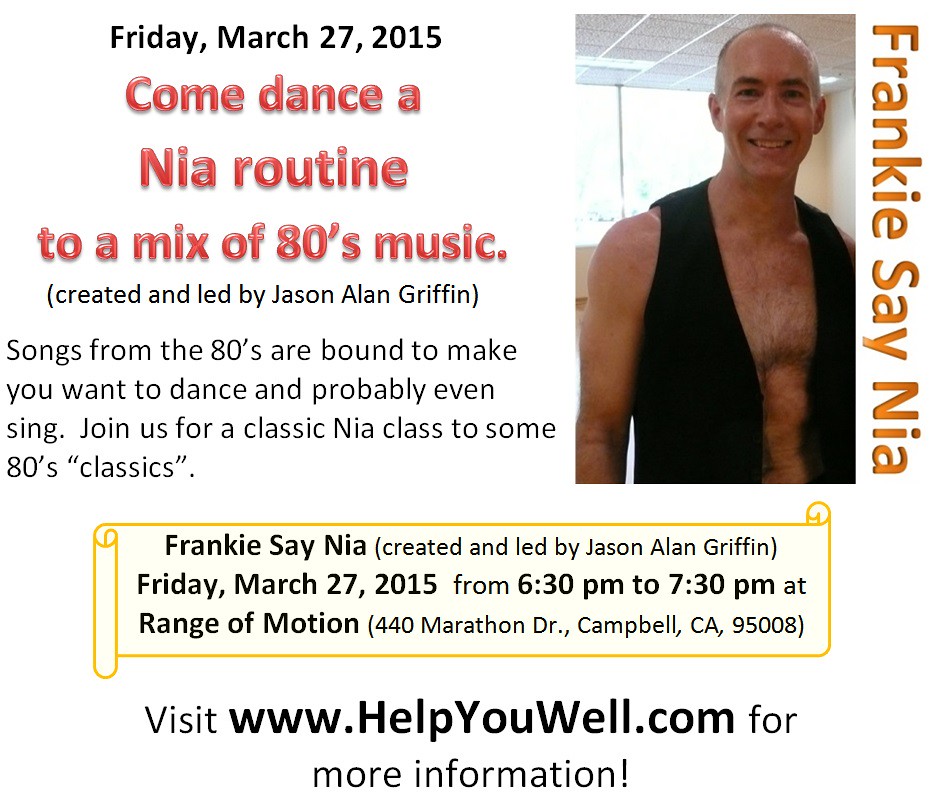
At the end of March (2015) there were two Special Nia Events in Campbell, California. They were special for a lot of reasons. One reason being is because a visiting teacher was going to be doing them. It is always special when someone who does not live in the area comes and shares their talents. Another reason is because the Nia Class is a one-of-a-kind-creation. The visiting teacher created the routine and was going to lead us through it. ANOTHER reason, they were special, was that one of the classes was a workshop or a playshop as we like to call them in Nia. And it was also, the creation of the visiting teacher and it was something that I think anyone that dances Nia can benefit from. Another reason they special was they were the first Nia Events that I produced. Produced meaning, when I heard that the Nia Teacher who created the Playshop was coming to my area I contacted him to invite him to do these events. I secured the location, I created marketing material, I promoted the events (as I am sure you have seen, I posted about them often), I worked to get participants to the events, and I worried about how it would all turn out. So, two special Nia Events. I have posted two separate posts (What Did Frankie Say? and Dancing, Learning, Posting, Editing) about the Nia Class that was held on Friday, March 27, 2015. This post is about the Playshop.
The Playshop on Saturday, March 28, 2015 was a playshop regarding Nia FreeDance. In a Nia class, there is normally choreography. Nia Headquarters and the training staff create Nia Routines. There are Nia Routine DVDs that Nia Teachers purchase. We learn the routines and lead our students through them. We have a lot of freedom with our classes. We can follow the routines “exactly” or we can play with them. We can create our own routines from a mix of Nia Routines or we can take the Nia choreography and add it to other music. Or we can create our own routines with other non-Nia music. But with almost every routine there is FreeDance.
FreeDance is where there is not specific choreography. You are not told exactly how to move. Now, I have heard the creators of Nia express very different opinions on FreeDance. I heard one of them say in the past that FreeDance should ALWAYS be guided and the other one say that FreeDance can just be free. So . . . there are different opinions on the matter. I think that in keeping with the Nia White Belt Principle #4, Nia FreeDance does not need to be guided because “Anything Goes . . . movement-wise”. But FreeDance in an exercise class is a challenge to many people. There are many reasons as to why people cannot or will not just move their bodies in their own way in an exercise class.
This playshop was brought here to help people with that. Many of the tools (ideas) Jason shared were covered in the Nia Intensives. So if you have not attended a Nia White Belt Intensive or Nia Blue Belt Intensive, they would be new to you. They are GREAT! And they were the reminder and push I needed to pull them out to use them. The most valuable things he shared with me though were not necessarily the guiding ideas, but more about how the individuals in class can be left to be.
.
When I see people in my class not moving or seeming to struggle with FreeDance, I take responsibility and blame myself for not getting them to move with my suggestions and guidance. But he brought up some very good points that I will now take to class and practice just letting those people be where they are, at that moment, in class.
Although I will still strive for the “When Harry Met Sally Moment” of wanting people to look at us and say, “I’ll have what SHE’S having.” I will also take into consideration that they could very well be doing my suggestion, but it looks different to me than I would do it. Or that they are just not in a place to FreeDance. Could be a case of Natural Time.
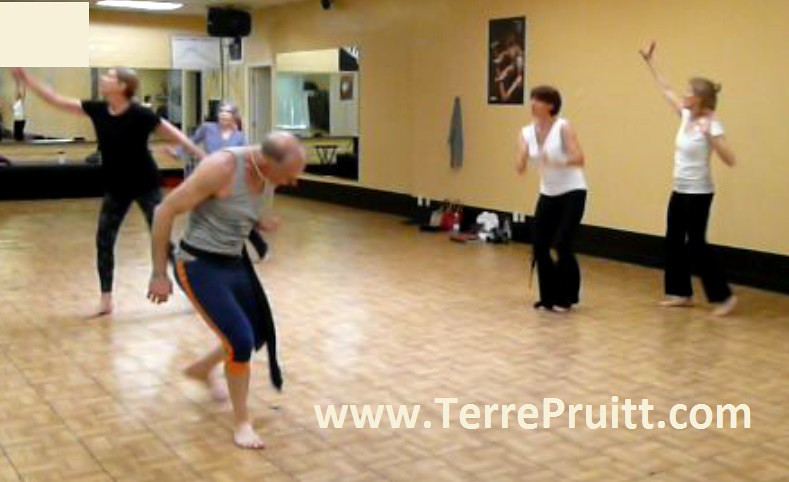
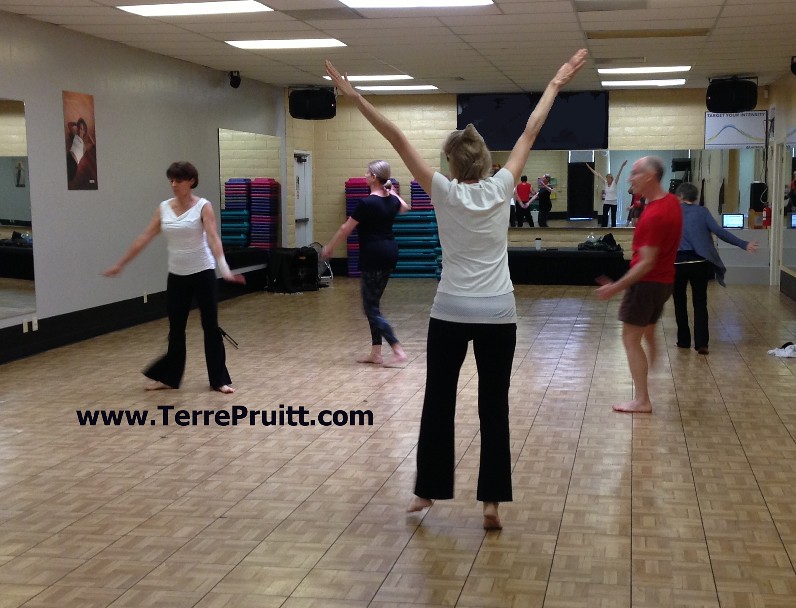
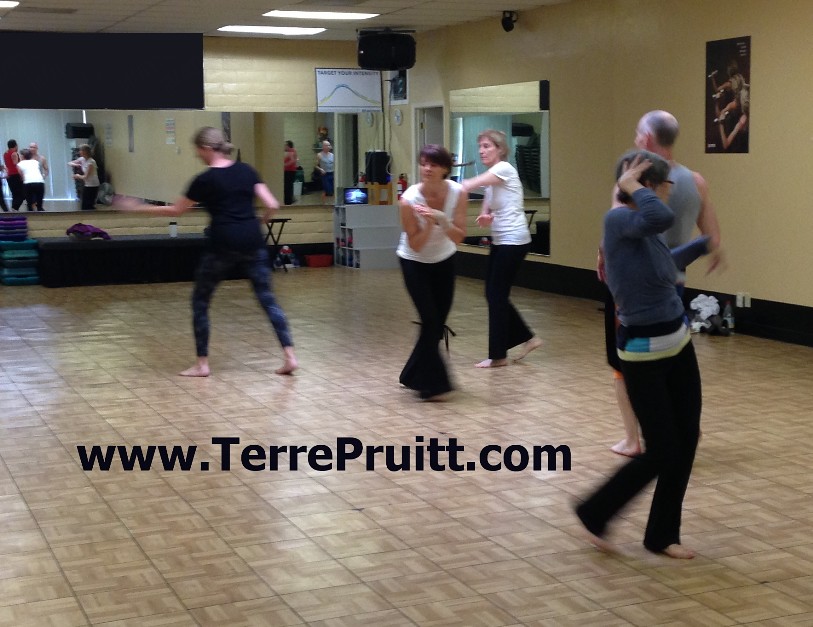
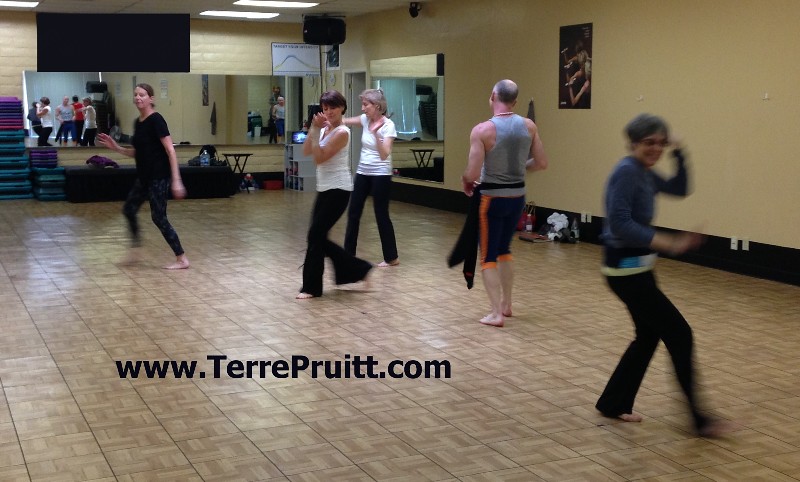
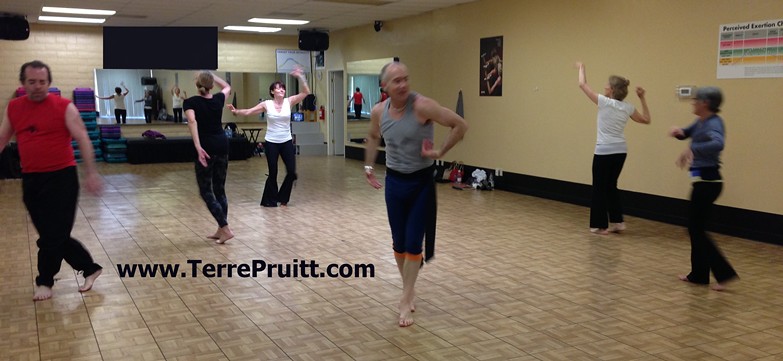
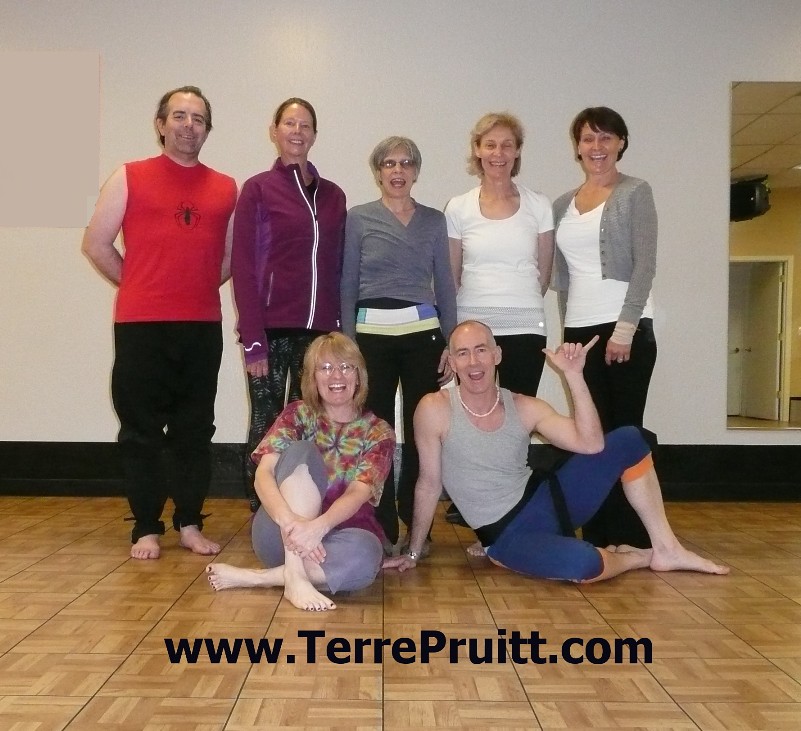
I learned a lot. I had a lot of fun. I am excited for Jason to come back again! This video and the video on my website are the same song. As I only stopped participating one time to video. The videos are at different times so they are a little different. Also shown here are a few of the pictures I took during the Playshop. I took more pictures during the hour Frankie Say Nia class than I did during the 3.75 hours of the Nia FreeDance Playshop.
There might be one more blog post about this, but we will see. These are the extent of pictures and videos. Enjoy!
Please share your comments. Please ask if you have any questions!
.
Do you ever just dance? You might be one to turn on the music and start dancing. Perhaps you have a favorite song you like to dance to? Or you might be one who breaks into dance spontaneously. You could be in the house and a song comes on and you don’t even really think about it, next think you know you are moving to the music. Perhaps you are one that is so gusty or you just don’t care so you dance in the aisle at the grocery store. Music moves us. It is easy to dance to a song we like. Sometimes we “can’t help it”. We just burst into a dance. But dancing without choreography in a dance exercise class? No one telling you exactly how to move? Just move to the music? Without having consumed any alcohol? It is a concept not easily grasped by many. It is a concept that we practice often in a Nia class. We call it Nia FreeDance.
As I mentioned dancing without choreography in an exercise class is a new concept to many. Moving without having a structured plan doesn’t sound like exercise to many people. Some people are very resistant to Nia FreeDance because of this reason. Some people cannot understand how you can “get a good workout” without having a structured plan, without moving the same way over and over again. The way we have been programmed to exercise includes repetition and structure. It includes traveling in a straight line from point a to point b, it includes being told how to move. So just moving without any idea of what comes after the present movement is vastly alien to some.
Yet, I have people who actually let go and try it. Those who push beyond their own skepticism and doubt come up to me and say, “Wow! I am sweating.” Those who let the music move their bodies without thinking about it have said, “Who would have thought that I would have gotten such a great workout?” Some realize, “I might be sore tomorrow.” They MIGHT be sore the next day because they moved their bodies in ways that their bodies are not accustom to moving.
Nia FreeDance is there to help stimulate movement creativity. So if you do it with full abandon you might end up with muscles that talk to you the next day. Your body will have moved in new and different ways. So Nia FreeDance is not the dancing you would do at a club or a dance lesson. It is just free movement. Yes, some of those cool club moves or patterns you learned in dance class sneak in because we dance what we know. We think about it and move in that way. But there really is more to FreeDancing. It might have a pattern for a moment, it might have structure for a moment, but it moves away and comes back. It is free.
To assist with FreeDance and to deepen the practice there are eight stages that can be a guide, because as I said, it is not necessarily an easy thing to do.
The catch phrases have changed slightly since I participated in the Nia White Belt Intensive in 2008, but it is all basically the same. The catch phrases give you a clue as to what the stage is for. All the stages help you to FreeDance. You can dance each stage separately or combine them in any fashion. The idea is just to give you something to help get you moving and then give you something to keep you moving. Moving in new and different ways. The new and different active body, mind, emotions, and spirit. FreeDance is one of the key things that makes Nia unique. If you click on the stages above you will go to the post that I have posted for each stage.
I am very excited about the Special Nia Class and Nia Free Dance Playshop that I am producing next month. So I have been thinking a lot about FreeDance and how great it is. This post is a result of my excitement and my attempt at getting people excited and curious about FreeDance. Reading about it is one thing, but getting up and actually DOING it is another. These are the stages used to deepen your practice, but they are not what we will be covering in the Playshop. As the flyer states, we will be learning Jason’s tools for FreeDance! I hope you will join us!
Are you a dancer? Do you break into dance? What is the current hit that you can’t help but dance to?
Nia is both a dance exercise and a life practice. Kind of like yoga. You can go to a class and get the exercise you want and have it end there or you can learn about its principles and take them into your life. There are levels of the practice. Nia has chosen to use a “belt” system as their levels. Instead of just having numbers or names, they have assigned belt colors to the levels. There are five levels; White Belt, Green Belt, Blue Belt, Brown Belt, and Black Belt. The intensives to gain the belts can be taken and enjoyed by people who aren’t teaching. Each belt has 13 principles, except Green. Green does not have its own set of principles because green is the belt level that is actually designed specifically for teachers and helps them hone their teaching skills. It delves into the 13 principles of the White Belt. The White Belt’s principle #4 is FreeDance. FreeDance as a practice has eight stages. I have posted about eight through two. This post is about stage one. Stage #1 of Nia’s 4th White Belt Principle is Freedance – Anything Goes (movement wise).
While you are dancing any movement is great if it is authentic movement. With Nia there is choreographed moves, but within the patterns of movement there is the ability to freedance. Also with many routines there is sometimes just freedance where we are allowed to dance free to the music without any choreography. Stage one: Freedance, anything goes, allows us the greatest of freedoms. You can dance using the wall, the mirror, a chair, the floor, or a ballet barre that might be in the room. You can dance fast, slow, high, low, or in the middle. Anything that you sense your body wants to do to the music. It is up to you.
The idea with freedance is to just let the body go. Don’t think about it. When you think about it often comes the judgment. Sometimes the judgment can interfere with movement, especially if it is judgment along the lines of, “Oh I must look silly doing this.” “Oh that probably isn’t pretty.” “Oh, I am not graceful enough to spin.” “Oh, I need to do this or that.” This is all inner dialog that clogs up the muscles and their movements.
Freedance also, as I believe I’ve mentioned before, in not club dancing. We are NOT just bouncing or undulating to the beat, we are moving to the music. We are moving our bodies towards as pleasurable sensation of health and well being.
Freedance is also not patterned dancing, we save the patterns for our choreographed movements. Freedance is just free. It is spinning twirling, diving and whirling. It could be hopping or dropping. It really is whatever your body does.
Freedance is not easy. It takes practice. It is not easy to just be on the floor and not think about how you are going to move and just let your body go. It is a challenge. But once you can stop thinking and talking in your head you will find yourself moving to the music. Sometimes you might even notice that you are moving in a way that you didn’t think about and it is really amazing to have that sensation. But don’t think too much, just keep moving.
I would like to invite and encourage you to make some space in your home or if you are so inclined find a space to dance outside . . . find a space turn on some music and just dance. Let yourself go. Let yourself be free. Allow the time, space, frame of mind and spirit to freedance. Remember, anything goes!
Wahoo! I have to add that in the middle of typing this up I secured another class to sub for the City of San Jose. So exciting to be able to share Nia through the city! Yay!
I have posted before about the 13 Principles in the Nia White Belt. The fourth principle, FreeDance, has eight stages. I am working my way backwards posting about each stage. This post is about second stage: Being Seduced by the Music – The Art of Listening. In the second stage of Nia FreeDance the exercise we perform is stillness. We keep our bodies still while we listen to the music. We allow ourselves to be seduced by the music and practice the art of listening. When listening to a song that is not familiar or doesn’t have that “get-up-and-dance” beat it is not so difficult, but when the song is one that makes every part of your body want to move, when it is familiar, or one you love it is not easy sitting still. It is not easy to sit with a tall spine that does not gyrate to the beat. But when we do practice the art of listening with only our ears we might hear sounds we had not been aware of before. While we are listening the idea is to name instruments and sounds that you hear. Sometimes you might not know what you are hearing, either you don’t know the name of the instrument or it isn’t really an instrument at all, so you can give them their own names. For instance something might sound like rushing water or trash can lids. I know a Nia teacher whose husband is in a band and she is familiar with a lot of different instruments and the sounds they make. She is very good at naming them when she hears them. Me, if you look at my bars you will see a lot of spaceships. There is a sound that I think of as a spaceship so I use that symbol to signify that sound. I HEAR a spaceship.
This stage might sound a bit like RAW, where we are Relaxed, Alert, and Waiting while we listen to the music, but it is not. Our bodies might be in the same position, of a lengthened spine and a relaxed state but in RAW we are just listening without opinion or too much thought. We have no inner dialogue so there is no naming of sounds. In RAW we are just waiting to receive. With Being Seduced by the Music we are practicing the art of listening and naming what we hear. We are engaged in the music even though we are not moving.
For me this stage of FreeDance might even produce a few pearls. It could be that I don’t know the instrument so I think of what it sounds like which allows us to move “as if we are sloshing in mud”. Or it could be that the sound just makes me think of a certain movement such as “throwing your arms in the air with a burst of sound”. While I might not be purposefully trying to think of pearls with the seduction I just let my mind flow. If there is a dialog then there is, if not, that is fine. I just let the music flow and I listen giving names to this sound and that sound.
Listening to the music without giving it dance or without it allowing to move us in dance allows us a deep relationship with it. We are not imposing our own ideals onto it as we move or we are not interpreting it, we are just letting it in. We are just listening. With that we learn about it. We hear things we might have missed while floating about the space. It is nice to be able to have that connection with the music.
Stage two of FreeDance, Being Seduced by the Music – The Art of Listening is just another toy in our toy box that Nia has given us to play with to become better teachers and better dancers.
Have you ever been sitting still listening to a song you have heard many times before and heard something you hadn’t heard before?
I have posted about Nia FreeDance before. Nia FreeDance is meant to encourage creativity. In Nia routines sometimes we have entire songs that are FreeDance. Not all routines have an entire FreeDance song, but all routines have at least one part as FreeDance. The one part could be that our feet have choreography and our arms and hands are free to move. The creativity is released. As the 4th Principle of the Nia White Belt it can also be used as a tool to help a Nia teacher learn a routine and/or explore his or her practice. The principle has 8 stages. The third stage of FreeDance is Feelings and Emotions with a catch phrase of: Pretend, Fake It, Act As If. This is the stage where you pick an emotion and you act it out. This is not the same as stage 4 where you draw on the real you and you act out a story you have experienced, this stage is pretend.
The idea of stage 3 of Nia FreeDance is to pick an emotion, a feeling and then act it out. Pretend you are feeling that emotion at that moment. This would be practice or play outside of a class setting where you are doing a routine. So when using this tool as a way to grow and create you aren’t even expected to dance. The exercise is to pick an emotion act it out for a bit, then pick another emotion. Acting and explaining the feeling with your body in an exaggerated way. If it helps create a story in order to fake that emotion. It can be somewhat fun because normally when you are angry you probably would not throw yourself down on the floor and kick and scream, but when we are pretending to be angry and acting “as if” you can. You can throw an angry punch. You can run and jump for joy. You can do anything you would like and since it probably wouldn’t be something you would be “allowed” to do in society it tends to spur creativity. And this creativity gets your body moving in news ways. It gets your heart pumping. It gets your blood moving. It gets your joints juicy.
I used this stage not too long ago as the focus of a few of my Nia Classes and it turned out to be very interesting. So within the class setting we actually danced our pretend feelings and emotions. We continued on with the routine we were doing at the time, but we added our “act as if”. So it altered our movements a bit. We allowed ourselves to follow the emotion so as we were dancing steps and hand movements might have been changed, but we still danced. As I said it was interesting because my class did not want to act the “negative emotions”. Some had a difficult time with some of the ones we deem as “negative” or ones that go against one’s normal self. We danced: keeping a secret, letting a secret go, happy, loopy, light, jealous, worry, love, angry, masculine, annoyed, bashful, brave, calm, childlike, guilty, fearless, and more. We tend to assign negative and positive, but they just are . . .I think that we can look at an emotion and or a feeling and it can be neither, but as we live with it it could become one or the other. If we let it affect us in a negative way, then maybe it can be perceived as a negative emotion?
The Embody and Share portion of the Nia White Belt Manual states: “Emotions are energetic responses to our experiences. We must learn to deal with our emotions to keep ourselves free and unblocked.” So my thought process is, that if an emotion “blocks” us or causes us stress then we consider it negative.
People didn’t like the emotions they felt were negative. There was a tendency to not pick them from the list I had displayed. But I think they are good for exploring movement. So it’s fun to play with them all. Remembering it is pretend, we are faking being (whatever the emotion is that we chose), we are pretending.
Well, what do you think? I invite you to make a list of emotions and feelings, then put on some music. Pick an emotion/feeling from your list and move to it. Stay with it until you are ready to move on and then pick another one from your list. Do this for a few songs. You might be surprised at your movements. You will probably be able to create ways to move that you didn’t realize. When you are not thinking of your movements it allows your body to release and —- ahhhh! —- movement creativity. Go ahead, you can do it. Let us know how it goes!
In Nia we have FreeDance. FreeDance allows for so many things. One way we FreeDance is we dance to the music with no choreography. We let our bodies sense the music and allow it to move us. When we let our body move freely without thinking and without judging it is a great workout. Many of the Nia Routines have songs where there is no choreography and we just FreeDance, and many of the routines have choreography in addition to FreeDance. Our feet might have set patterns, but our arms and hands are free. Or our arms and hands might have the pattern and our feet are free. Many combinations of dance, choreography, and body parts. Nia FreeDance also has stages. A Nia teacher can call upon these stages for many things. The stages in FreeDance are used for learning a new routine, they might be used as a focus in a class, they might be used for a playshop, we have many options. In Nia FreeDance the fourth stage is The Creative Source – The Real You.
With this stage during the White Belt Nia Intensive I participated in, we were instructed to remember a situation and tell ourself the story of the situation and allow ourself to feel the emotion of that situation. We all walked around the room telling ourselves a story. Some of us talked out loud, some of us were silent. All of us used the emotion the story evoked to move. Our movements might not have been considered a dance by some, because in this stage we are not necessarily dancing. We are not moving our bodies with the intent of dance, we are allowing the emotion from the story to move our bodies. Depending upon the story it could appear as if our movements were a dance. Yet, since we do “dance through life” in Nia, all of our movements are a dance . . . just not the typical dance. In this stage we are not intent upon dancing.
The purpose of FreeDance is to the purpose of stimulate movement creativity. So we use the stages to assist in that. So using a story and the emotions along with the story can really allow for movement we might not have thought to bring to the dance floor. Some stories we use to practice stage 4 might be happy, some might be sad, some might be filled with anger, whatever the story and the emotion it is what moves us.
In the intensive there was all types of movements when we practiced this stage. There was stomping, jumping, running, rolling, skipping, punching, kicking, screaming, laughing, smiling, frowning . . . . all types as you can imagine would occure with a group of people with many different stories. As stated this is a tool to awaken different movement.
When we dance I think that we have a tendency to move in the same pattern. We might move in different patterns to different types of music or different beats, but there might just be a handful of different patterns. When we are challenged by using the different tools of Nia, when we practice and play with the eight stages of FreeDance we move in different ways. Sometimes muscles that don’t normally get to join us in our dance come alive. They are happy to be allowed to join in on the dance.
Using different muscles than we normally do in our dance fuels the creativity even further. When you let go and FreeDance you will be surprised. Here I invite you to try this fourth stage of FreeDance. I suggest choosing music without lyrics. Sometimes lyrics and interfere with FreeDance when trying to practice specific stages because lyrics can sometimes compel certain movements or emotions. So music without lyrics allows for you tell the story and listen to your body’s response to the emotion.

 1 – FreeDance ~ Anything goes movement-wise: this really means, just move your body. A lot of people have a strict idea of what “dance” means so unless someone is doing ballet or waltzing across the floor they will say, “that’s not dance”. But in Nia we kick, we punch, we shimmy, we bob our heads . . . . pretty much ANYTHING GOES MOVEMENT-WISE. Granted in a class we will make certain that is it safe.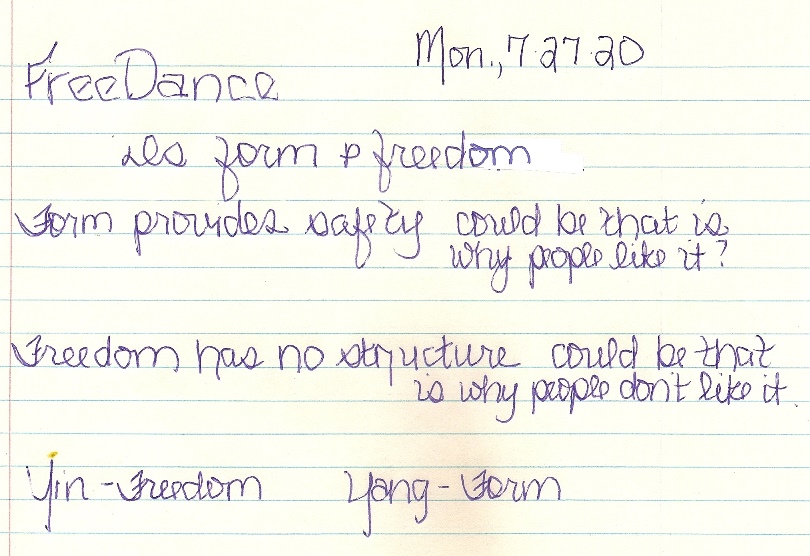
 Terre Pruitt's Blog