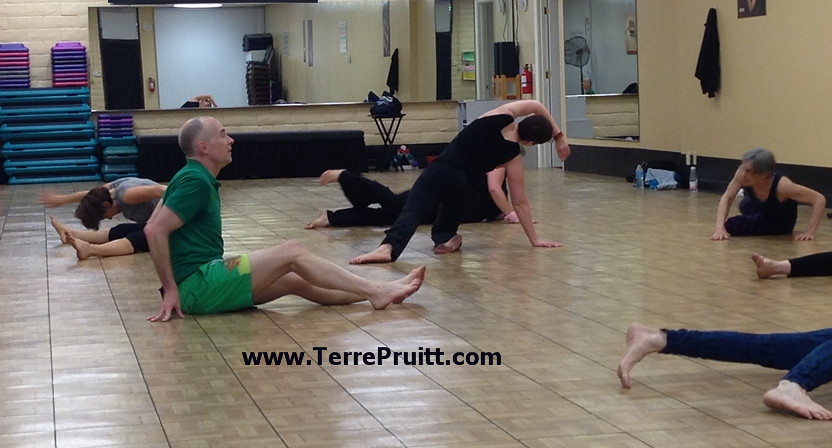
Last night we had a visiting Nia teacher come to Campbell and present a routine that he has created. Jason Alan Griffin is a First Degree Nia Black Belt and he created a routine he calls Frankie Say Nia. He travels around to different places with his dog River and he brings Nia with him. He has routines he has created and playshops. Friday night was the Nia class where he did his 80’s Alternative New Wave music routine. People were invited to dress in 80’s style – bright clothes, animal prints, whatever they think of as 80’s fashion. It is difficult – for me – to think of dressing up at the same times as wearing clothes I can workout and move comfortably in. Jason was wearing shorts that reminded me of Saint Patrick’s Day and I was wearing animal print with my hair up in a silly pony. That was as far as I was able to take my dressing up. I’ll have to check with Jason about the shorts. I forgot to ask him about them today. The dressing up and the clothes were not what makes it fun or 80’s, it was the music.
Jason had us dancing to many familiar tunes. I was happy to hear all of them that I knew. I knew all of them until we arrived at the Floorplay portion of the Nia class and then I was just mystified. I kept thinking I would eventually recognize it, but it was out of my scope of knowledge. And I don’t even remember what it was. I believe there was mention of a bar. It was odd to me. And, later it was indicated that I had a look on my face (odd) matching what I was thinking. As I said, I kept waiting to hear something that would spark some sort of little hint that I had ever heard the song before, but nothing came.
Jason’s playfulness and ability to match movements to music is so evident in his routines. And they are just fun. I can say that we all had a great time because every commented on having one! His choreography and the music made for a great time.
I was very happy that he had some FreeDances in the routine because I was looking forward to gleaning some tools from them as he taught. And I did. Then the next day he took it to the next level with the FreeDance Playshop. That has to be a post all of its own. Perhaps more than one. We will see. I am still processing.
As I have recommended before to you, Dear Readers, if Jason comes to your town you should go to his class. That is, if you like to have a great time while you are getting your dance workout in. You can always check out his schedule on his blog.
I have included some pictures. As I have said before, it is not easy to get pictures of moving bodies. I had help from my hubby. We had at least three devices taking pictures and videos.
Can you tell from the pictures that we are having a good time?
I did not intend to write a blog post on all of the 52 Moves in Nia. My intent was to post a few and entice you into buying The Nia Technique Book. It seems as if I just might get to all of Nia’s 52 Moves on my blog. It so happens that sometimes I am at a loss as to what to post, so I turn to a move on the list of 52 Moves. Or sometimes I am intrigued by one the moves because it is in a routine that I am currently dancing with my students. Or I am intrigued by of the moves that it is in a Nia Routine that I danced with another Nia teacher. OR I am intrigued by of the moves even though it is NOT in a Nia Routine – as in, it is not part of the original choreography, but we do it anyway. That is the fun thing about Nia Routines and the 52 Moves. You can kind of put them in anywhere. And, I will say it again, because I think it is important to state that the moves that Nia includes on their list are not unique to Nia. Nia is not claiming to have created them. Also, it is nice to know that you will experience moves in Nia that you have experienced before. The moves are on the lists and included in Nia Routines because there are benefits to doing them. Some of them are so simple the benefits could be overlooked. Some of them might seem odd to have included on a list of moves done in a dance exercise class. But they have benefits. One move that is simple and might seem random to have in an exercise class is Finger Flicks.
Yeah, you read that right, Finger Flicks. Flicking your fingers. This move can be done so many different ways. Fast, slow, high, low, fingers up, fingers down, with an emotion, without an emotion, with the music, against the music, so many possibilities. The benefits of this move include conditioning the muscles of the forearms and hands. If you really use your thumb to resist the fingers the move contracts the forearm muscles and makes your fingers work! The Nia Technique Book states that this move helps rid the hands of tension.
The how-to is simple enough. I bet you know it already. You form a loose fist with your hand, keeping the thumb on the outside of the fingers. Then push with all four fingers against the thumb. Allow your thumb to resist. Then let your fingers push through. Practice this move with your hand at different levels-as in high above your shoulders, at the same level as your shoulder, below your shoulders. Let your arms hang, hold them out . . . in other words flick your fingers all over. Use one hand, then the other, then both. Just flick, flick, flick, flick. Try doing it how I mentioned, fast, slow, high, low, fingers up, fingers down, with an emotion, without an emotion, with the music, against the music, play with the possibilities.
You can practice this move while dancing around your home. You probably do this move without even thinking about it after washing your hands. You could probably check the mirrors above the sink to verify it.
I don’t know about you, but I seem to use the time after I get in bed before I fall asleep to think about all that I have to do the next day. I lie there and prepare my to-do list. Often times it has “roll-over” stuff. Stuff that I didn’t finish during the current day so I need to roll it over onto the next day’s to-do list. Sometimes my to-do list includes grocery shopping so then I might be mentally preparing a grocery shopping list. Sometimes my to-do list includes learning or doing a Nia routine . . . so then I am thinking about that. Sometimes the schedule of the day might include writing a blog post so then my mind goes into what-to-write-mode. As you can imagine with all that planning other things pop into my head too. Planning of menus might turn into reminders that I need to contact a friend to make plans for lunch or dinner. Thoughts of a Nia routine might have my mind wandering to that song I heard on the radio earlier in the day . . . what was it? Coming up with an idea for a blog post can have my thoughts all over the place. While this might seem very productive . . . . all this thinking and planning . . . it is not because I am in bed and I should be going to sleep. I recently read something about what productive people do that helped me get to sleep.
I can’t even remember where I read it, but it was a list of things successful and productive people do. Ya know, the usually list that includes “have your staff do all the things you would like to get off your plate.” Yeah, ok. Well, in addition to the things on the list for people WITH staff there were a few things that people without staff could do. One of them, of course, was make a list of things you need to do. Well, I think we are all familiar with that. In fact I have a lot of lists. And as I said, one of the things I do when I am supposed to be going to sleep is mentally move the things from my current to-do list onto the next day’s to-do list. But – to me – the key thing the article said about the to-do list was to let is be a tool to let you concentrate. Allow the list to take all the things you have to do out of your head so you can concentrate on the one thing you are doing at the moment.
Well, I have never used a to-do list like that . . . exactly . . . that I am aware of . . . but maybe . . . it sounds right, right? Sometimes I think I fret over my to-do list, but perhaps, sometimes I do allow it to help me concentrate. But one night I was so busy mentally reviewing my to-do list as I laid in bed needing to go to sleep, I thought, what if write it down right now? Yes, I do have a to-do list on my desk, but what if I write down all my thoughts now so I can get them out of my head. So I did. Some of the things I wrote down weren’t even necessarily “to-do” items, they were just thoughts. But I needed to get to sleep and not think about them so I jotted them down too.
I liked it. It worked. I bet this is not new to many of you. As I said to-do lists are not new to me, but writing it down to empty my thoughts right before I go to sleep was new to me. I hadn’t thought of doing that before. Especially because I have a to-do list. But when I go to bed and start reviewing it, that is not helpful. So re-writing it and any thoughts that interrupt my relaxation really helped me.
Do you have to-do lists? Do you have trouble falling asleep? Do you feel you think too much about too much when you should be sleeping? Have you ever wrote your thoughts down to help you fall asleep? Do you think this might help you fall asleep?
I am learning a Nia Routine and the focus is the Nine Movement Forms (of Nia). All routines can be an opportunity to connect with the Nine Movement Forms, but when it is the designed focus of the routine it really helps to emphasize each one. There are nine songs to the routine and each song was created with the specific movement form in mind. It is an easy way to practice each form. It is a wonderful way to learn more. There are three arts and three movement forms from each art. The Arts are Healing Arts, Martial Arts and Dance Arts. The movement forms are the Teachings of Moshe Feldenkrais, Alexander Techinique, Yoga, T’ai chi, Tae Kwon Do, Aikido, Jazz Dance, Modern Dance, and Duncan Dance.
Each movement form can be used to guide the movements. Each movement form can energize the moves.
The below is from the Nia Technique (page 101)
(Healing Arts)
“Teachings of Moshe Feldenkrais: Reflective, healing, conscious. Move with sensory awareness and feel life as it happens.
Alexander Technique: Transformative, exploratory, natural. Move as a whole person, connected up and balanced.
Yoga: Timeless, linked, expansive. Move in ways that link your body, mind, and spirit to the outer world.
(Martial Arts)
T’ai chi: Flowing, tender, fluid. Float like a balloon, and move like a willow tree in the wind.
Tae kwon do: Sharp, powerful, active. Move with confidence, and feel* your own speed and strength.
Aikido: Harmonizing, peaceful, cooperative. Connect and blend with everything around you.
(Dance Arts)
Jazz dance: Playful, peppy, sexy. Move with pizzazz and express your most passionate emotions.
Modern dance: Languid, moody, balanced. Create different shapes with your body. Play with balance and contrasts.
Duncan dance: Soulful, spontaneous, unbounded. Move like a child enchanted by life.”
*I believe that should say “feel”
In the song matched up with the Teachings of Moshe Feldenkrais we move in the space. Sensing our bodies and the space around us. Sensing the space with our bodies. The T’ai Chi song has us moving fluidly both slow and fast. The movement is a flow. The third song takes us to a dance art and it is jazzy. We do jazz squares and move with pep and we snap our moves. In the song where we are focusing on Modern dance we make shapes with our bodies. We also sense the moods created by the different shapes. In the Duncan dance focus song we play rushing in and rushing out. The sixth song has moves that are to be done sharp and powerful. It is presented first slow than fast. And that gives the participant options to do either speed. In the song that focuses on Aikido we do a lot of turns . . . Aikido turns or four point turns. With the eighth song we are doing a cool down and use the idea of “long bones” and “short bones” which allows us to expand and stretch connecting to the sensation of yoga. The last song inf our floorplay, we explore the Alexander Technique by moving from the top.
Just a different way to experience the Nine Movement Forms (of Nia). A great way to delve deeper into Nia and its movement forms.
What do YOU think of when you think of these movement forms? What do you think of when you think of Moshe Feldenkrais? Are you familiar with the Alexander Technique? What comes to mind when you think of Yoga? What do you know of T’ai chi? Have you ever done Tae kwon do? Does thinking about Aikido make you dizzy? What could you show me about Jazz dance? Are you into Modern dance? Do you know who created Duncan dance?
In Nia there is something called “the beginner’s mind”. Since learning about it associated with Nia, I have heard about it in association with other things. It might not always be called “beginner’s mind”, but it is the same concept, the same idea. It is the idea of stepping into something – anything, even if is something you are well familiar with – with a mind as if you are a beginner. Step into it as if you are hearing it, doing it, seeing it, or learning it for the first time. Step in as if you are a beginner.
This is a wonderful tool. When you walk into a situation with an empty cup, when it is not full of knowledge on the subject, it is able to be filled with all the information, new stuff is easy to learn, stuff you already “know” can be learned in a new way, and your cup gets filled again.
There are many reasons why you might want to practice the “beginner’s mind”. It could be because you are required – perhaps through your company, your certifying board, or any number of things – to take a particular class. It could be because – even though you know you don’t know everything there is to know . . . the timing of the class has you thinking it will be a waste of time. It could be — as just mentioned — you know you don’t know everything, but the length of the class has you thinking you will only get two hours worth of information out of the twelve hours you are being required to attend.
When I take a Nia class I always step in with a beginner’s mind. I know that no matter what routine is going to be taught it is going to be different. Which is not to say that the teacher will not do it correctly or will not do it the way it was taught on the DVD, but it does allow me to easily accept. I accept the way the teacher is teaching it. It flows so much better if I am just receiving as opposed to trying to inject my knowledge and the way the routine is supposed to be done. I accept that the teacher might not teach it exactly as I teach it. The teacher might use different pearls. The teacher use different cues. She might have found that a slight change in the choreography works better for her students or even something for her. And . . . with the idea that I am doing it as a beginner . . . instead of an expert who knows the routine . . . I can learn something. If I just do as I am being instructed I might sense that the move she does is actually good for a particular audience. Or the pearls that the teacher uses really matches well with the movements. Instead of my inner dialog being the moves or worse something like, “Well, here I say, ‘XXX'” or here we move like XXX, with my beginner’s mind I am listening instead of “talking” over what is happening. All of this could lead to discover of a new movement pattern.
In regards to a training where you are required to be, it could just make it be less dreadful than you thought it would. If you accept the fact that it is a requirement and decide to walk in with a beginner’s mind being told stuff you already know is not such a waster of time. Keeping the beginner’s mind and not telling your entire story to prove what you know gives you time to listen to what others know and learn about them. And — as stated before — possibly hear the same information but in a new way. Allowing yourself to let go and not be the expert is freeing and lets you relax into the learning process.
I was grumpy this past week because I knew I had to spend my Friday night (FRIDAY NIGHT) and all day Saturday in a training. I was afraid that my grumpiness would keep me from learning and be recognized by others. So I asked for help and was reminded of the beginner’s mind. I was able to step into the class not as grumpy. Of course, I did mention the fact to the trainer that it was a long training and the trainer – being an EXPERT trainer and pretty awesome – agreed, gave me the sympathy I wanted and boom! I got over it. 🙂 With my “cup” empty . . . I learned some cool things!
Do you every have the opportunity to practice the “beginner’s mind”? Have you every practice the “beginner’s mind”? How did practicing the “beginner’s mind” work for you?
I often tell my students at the end of class that making them get up is the worst part of my job. I have posted blog posts about savasana. The restful period of time at the end of a yoga class where you take time to relax letting the body and mind absorb the benefits to be had from the asanas that were just practiced. Let the body remember the stability and strength. Give the body time to become accustom the space that was created. Allow the mind to reflect on the stillness. Well, in Nia we often end the routine in Floorplay. Floorplay is either playing with gravity to experience the muscles or stretching or . . . it can be a combination of both. There are a lot of ways to play on the floor. There are a lot of ways to end the class. Our Nia training DVDs have floorplay and ending movements, but they are not choreographed. So there is a lot of freedom in the last songs. Nia teachers can either duplicate what the trainer does on the DVD or they can create their own movements to the songs and end the class in their own way. I know I sometimes do what I sense the class needs so sometimes I lead the class through movements and sometimes I instruct them to do their own free dance. Often times we end by lying on the floor in a restful pose. Just like in my yoga classes I don’t like to have to make my students get up.
In the studio I rent, I think that I should rent an extra 30 minutes so we can just lie there. Sometimes I sense the class could easily just stay there for an extra 30 minutes beyond the one hour Nia class. In the classes I teach for the San Jose Park and Recs Department, I sense they could do that too, but we need to end on time. Sometimes there is a class right after us so our restful period is interrupted. But when it is not, it is a challenge to know when to interrupt the peace.
Recently I taught a class and I really didn’t want to tell them to get up. The clock in the room was not working so I snuck up to check my phone and as I was returning to the circle I saw such peace and relaxation I didn’t want to bother them. I toyed with the idea of just letting them stay an extra 5 or 10 minutes. But without having planned that in advance, I didn’t want someone lying there past the hour and not knowing it. Many people workout on their breaks so they need to get back to work. Or they just need to get on with their day. So as much as I don’t like interrupting their peace and as much as I would like to just let them relax, I need to keep to our schedule. But it really is the worst part of my job when I feel they would love to just stay.
But, on the other hand, it really is a great part of my job when I can be in the presence of those that can just relax and let go. After dancing and getting all sweaty it is so nice that they can just take a deep breath and melt into the earth and relax. I get a huge sense of peace when I am in the presence of their stillness . . . . that is why it is so hard to disturb them.
Do you take moments out of your day to just relax and experience peace?
There is a Nia Routine called Miracle. It is fun routine. Like many Nia Routines it has form and freedom. There are two songs in which the foot work is pretty much the same throughout each song (form), but within the sameness you have the freedom to switch it up and add your own style. The choreography gives you the steps, the area where your feet are to be in dancing to the music, but you can decide how to get there and how your foot will be placed into that area. Form and Freedom. There is also something in this routine that Carlos Rosas (NKA, Carlos Aya-Rosas) calls the “Nia Bundle”. It is basically where the entire class gets very close together and dances. This is not easy for people to do. Why? There are at least as many reasons why this challenges people as there are people. But there are many benefits to dancing in a “bundle” and as a group.
One benefit of dancing in a close bundle is to practice our proprioception. In close proximity to other Nia Dancers we want to be aware of where our arms are, where are feet are, where are hands are. Are our limbs close to our body or are they out as far as they can go? Are we going to step on someone’s toes? Are we going to bump into someone? While the goal is not to step on nor bump into anyone, it is understood there might be some contact . . . but not often. For those in my classes that participate in the Nia bundles we do a good job being aware and moving in a close group.
Also dancing so close to each other helps us be aware of each other. Not just the physical presence of the other students, but there is eye contact, there is giggling, there is connection and a sense of community when you are brought really close together. No one is in their own space, we are sharing space. We move as one in space. We move as individuals in a shared space. We learn to dance together.
Another benefit could be that we – as individuals are pressed into moving in different ways. Finding a new way to move our body in dance because we are so close to someone. How can we move our elbows without elbowing someone? How can we dance to the music and express our spirit in such close proximity to others? Ahh . . . yes . . . new-to-your-body-moves just might be discovered.
I always laugh at the thought of someone looking in the dance studio at the community center and seeing all of the space with 12+ of us all clumped together in the middle or in a corner. I imagine them thinking that odd. I imagine them thinking, “WHAT are they doing?” Then we throw our hands up in the air and sing. It is quite fun!
So despite some people’s misgivings about dancing really close in a Nia bundle there are those who join in with gusto and reap the benefits. Does your dance exercise class have a bundle? What would you think if you were to peek in a class and see it? Would you be a bundle dancer?
We do! Today in the group exercise class I was subbing, I did a Nia class. Our focus was the knee, with the intent of bringing awareness to the main muscles that help move the knee. So with that intent we were thinking about the quadriceps and the hamstrings. There are other muscles involved in the knee’s movement and stability, but we were keeping it simple and just focusing on those two sets of muscles. There are four muscles that make up the quadriceps and three that make up the hamstrings. The quadriceps are on the “front” of the thigh and the hamstrings are on the back of the thigh. To see my brief post on the Quadriceps click here. To see my brief post on the Hamstrings click here. The muscles of the quadriceps help straighten the leg. So they extends it. They pull the lower leg forward. The muscles of the hamstrings pull the lower leg back, what we call bending the knee. The knee gets straightened and bent a lot in a Nia dance exercise class, but there might not always be awareness of the muscles that are doing it. Today we brought awareness to the knee bending and straightening muscles.
Bringing awareness to muscles can be done in many ways. Often time the choreography of a Nia Routine has us doing specific steps and arm movements. In the first few songs of the routine I am doing I did not have the class do any touching of our legs. I just suggested that the class think about their legs, while, in the first song we moved our chest down and lowered our hips. Everyone moves to their own depth so not all of us were in a bend with chest on our thighs, but we were still able to bring awareness to our thighs with knees bent. The next few songs have us aware of our knees as we sink a bit to activate hips and move with front, back, and diagonal steps.
When we were at a song that is a free dance we wiggled our knees, we knocked them, we straightened them. We touched the front of our thighs while we moved our legs, opening and closing the knee joint. We kicked forward and back. While we danced we touched the back of our thighs. The act of touching allows us to sense the muscles as it moves the leg, extending and flexing. The act of touching helps us bring awareness to the muscles as we use them.
While we do a punching and blocking sequence we are aware of the stability we have in the wide stance with the knees slightly bent. This pose allows the opportunity for awareness of the full thigh activation. Even while standing still we are sensing the dance of strength and stability.
I love that Nia incorporates a focus and an intent as one of the workout cycles. This gives us a chance to focus on many things. In this case the movement of the knee. This is a great way to keep both the body and mind active while bringing awareness of how the body moves into our dance exercise class.
Do YOU think about your knees? Do you think about how your leg bends?
One of Nia’s 52 Moves is a nice move. It can be done easily, it can be used in almost any dance, and it has numerous benefits, but the name is one I get crawly skin saying. I don’t like to say it. It is worse than Creepy Crawlers. When we do this move I often start out using the actual Nia name, but then explain how I would rather not and I would rather do something else. The move is fantastic though because it has many uses, but the name. I mean, what do you feel when I say, “Catching Flies“? I prefer not to.
But the move itself is a great move and very important to keep our hands, arms, eyes, and brain active. When we “Catch Flies” in Nia we open the hands then we make a loose fist to “catch” and hold the “flies. Ewwww. Just thinking about it . . . I mean . . . really thinking about it grosses me out. Thank God, I don’t think too much about it when I am teaching. I do think enough to change it. There is one routine I teach where I change it to “catching your dreams”. It goes along with the whole sequence of moves before and after. So I will often start out with “catching flies” then change it to “catch your dreams”.
Part of the move is to LOOK before you grab. So we are not just randomly grabbing in the air. We are looking as if we really were going to catch a fly. Since most of us are not like cats — do you know what I mean? Have you ever been playing with a toy with a cat and they won’t even be looking and they just reach out their arm and snatch the toy out of thin air? (Crazy!) Most of us are not like that, we need to look. So we LOOK before we grab at the “flies”. We engage our eyes and our brain — THEN we grab. We are also engaging our neck and spine because we are catching FLIES after all. See, the image makes sense. It is a “good” one, but an icky one. But since it is good and it makes sense, I will start out saying “catching flies” so people get the idea. Then I can change it if I want.
I think I got catching fairies from another Nia class. A Nia teacher said it and I was thrilled, so I use that one. Sometimes I say catching joy. Or perhaps grabbing some energy. There are many things to say after the initial move is understood and the Nia name is announced.
Practicing Catching Flies increases brain activity. This move neurologically connects your hands, your head, and your eyes, and engenders manual dexterity and speed. Emotionally, you can use the is move to express aggression, determination, anger, frustrations, playfulness, and achievement.
I am sure you can use it to express a lot more emotions. When we practice this move we add variety. There can be fast flies, slow flies, they can be flying high, they can be flying low, they can be flying right in front of us, they can be flying behind us, you get the idea. The flies can be all over so it can be quite and active move.
It is like the Locust pose in yoga — GREAT MOVE, not so great name.
What do you think? Do you want to catch flies? Would you rather catch fairies? Would you rather catch joy? Can you understand what a great move it is?
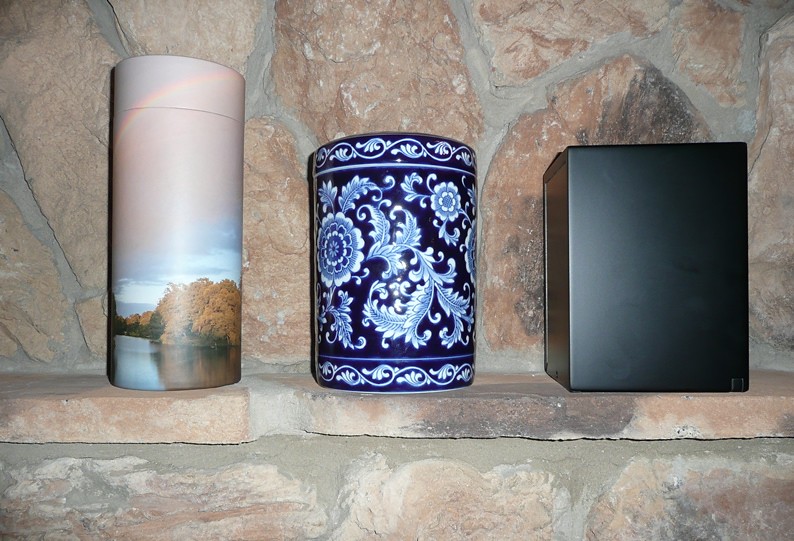
Everyone is so different. We all have different ways of doing a lot of things. Sometimes we can see things the same way in order to function. We can get along or just go along with ideas and customs to just have peace. Or we can do it for a loved one. But it seems like when it comes to death and our beliefs around it there is sometimes a huge separation. You can be going along in life completely meshing up with everyone around you and then someone dies and BAM! You suddenly don’t agree on anything. The way we all handle death is so different. I understand the five stages of grief*, “popularly known by the acronym DABDA”, (although, I have never heard it called that). I am not saying that I understand each stage in the sense that I have experienced them, I am saying I understand that someone has identified these as stages people grieving might go through. But what people do during these stages and after is still very individualized. Everyone deals with grief differently, I understand that, although I do not agree with how everyone deals with it as you might have guessed if you read Grief Is a Very Personal Thing, where I say people grieve differently and as long as they aren’t mean or causing harm I don’t like to label their behavior unacceptable. This post is not so much about behavior, I don’t think. I know that many people want their loved ones near or they want to be able to visit their loved ones, but I am not one of those people. I think of my loved ones as being gone . . . so having their remains near by is just odd to me.
Today I was trying to concentrate on learning a Nia routine and it is one that has the Nia participant turning to face all four walls. So that means I turn to each four walls in the room. I found myself facing the ashes of loved ones at two of the walls. The first and second wall, so by the time I got to the third and fourth wall I was lost in other thoughts. I had been avoiding the room upon my travels through the house. Normally I walk into this room to get to the back rooms because it is the softer path, but I had been avoiding it. But this is the best, the largest room to practice in so I was doing my Nia practice in it. But it just happens to have three of my relatives in it. I don’t care for that.
As I type all three of them are at my back. I bet I would not be as conscious of it had I not seen a post on Facebook from a friend who is pretty confident she did not receive the correct ashes of her pet. She posted a picture of the paw print of what she received compared to the pet she had. She has similarly sized pets still so she compared paws. The mold she received was at LEAST four times larger. And she went onto say that she has about three cups of ash. She said she thought her pet would be about one. AHHHHHHHHHHHHHHHHH!
It got me thinking. AHHHHHHHHHHHHHHHHHHH! How many cups of people are in this house. WHAT???????????? Sigh. Breathe. Breathe. Breathe. Breathe.
Whew. People are so different. Many people have loved one’s ashes. In fact, they sell beautiful urns to contain these ashes. We’ve (probably) all seen those horrendous comedy TV shows where someone has accidentally spilled the ashes all over. Breathe.
I just don’t know what to think about that. I am working on letting people do what they need to do. But, I personally don’t need to do it. I think that tomorrow I will workout in another room — and probably from here on out. I — don’t care to have THAT kind of reminder of my loved ones around. To each their own. And let everyone be . . .
Donna, thanks for always making me laugh, even if it is particularly in horror.
Thoughts? What are your thoughts about this? Are you an ashes and urn type of person? Please feel free to share your feelings. I’ve shared mine.
*The five stages of grief (according to Wiki):
Denial — As the reality of loss is hard to face, one of the first reactions to follow the loss is Denial.
Anger — “Why me? It’s not fair!”; “How can this happen to me?”; ‘”Who is to blame?”; “Why would God let this happen?”
Bargaining — “I’ll do anything for a few more years.”; “I will give my life savings if…”
Depression — “I’m so sad, why bother with anything?”; “I’m going to die soon so what’s the point?”; “I miss my loved one, why go on?”
Acceptance — “It’s going to be okay.”; “I can’t fight it, I may as well prepare for it.”

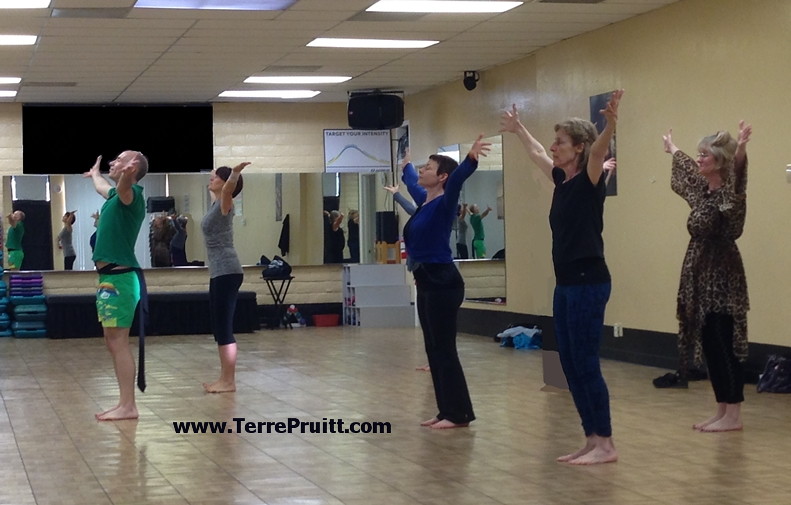 Last night we had a visiting Nia teacher come to Campbell and present a routine that he has created. Jason Alan Griffin is a First Degree Nia Black Belt and he created a routine he calls Frankie Say Nia. He travels around to different places with his dog River and he brings Nia with him. He has routines he has created and playshops. Friday night was the Nia class where he did his 80’s Alternative New Wave music routine. People were invited to dress in 80’s style – bright clothes, animal prints, whatever they think of as 80’s fashion. It is difficult – for me – to think of dressing up at the same times as wearing clothes I can workout and move comfortably in. Jason was wearing shorts that reminded me of Saint Patrick’s Day and I was wearing animal print with my hair up in a silly pony. That was as far as I was able to take my dressing up. I’ll have to check with Jason about the shorts. I forgot to ask him about them today. The dressing up and the clothes were not what makes it fun or 80’s, it was the music.
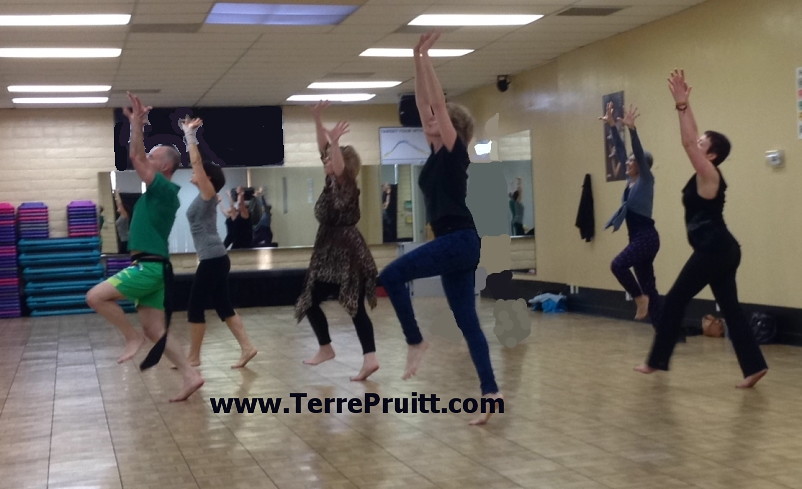 Jason had us dancing to many familiar tunes. I was happy to hear all of them that I knew. I knew all of them until we arrived at the Floorplay portion of the Nia class and then I was just mystified. I kept thinking I would eventually recognize it, but it was out of my scope of knowledge. And I don’t even remember what it was. I believe there was mention of a bar. It was odd to me. And, later it was indicated that I had a look on my face (odd) matching what I was thinking. As I said, I kept waiting to hear something that would spark some sort of little hint that I had ever heard the song before, but nothing came.
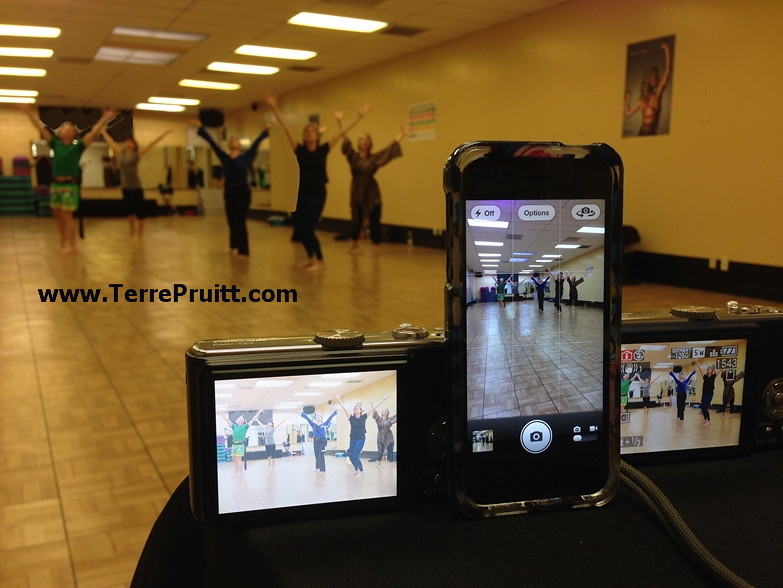 Jason’s playfulness and ability to match movements to music is so evident in his routines. And they are just fun. I can say that we all had a great time because every commented on having one! His choreography and the music made for a great time.
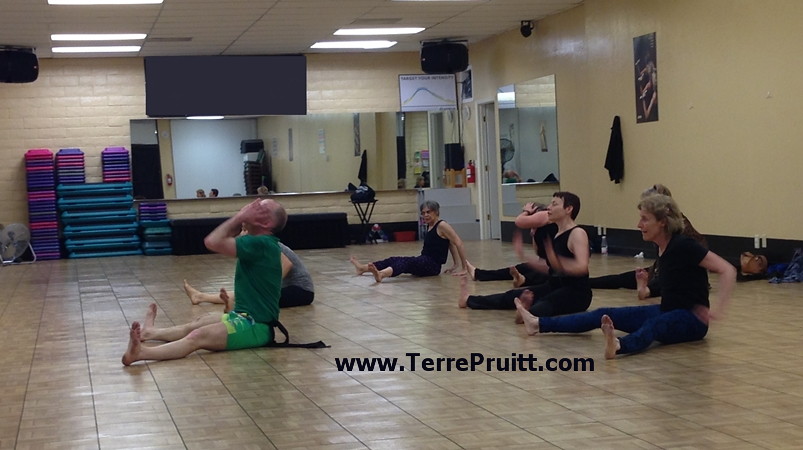
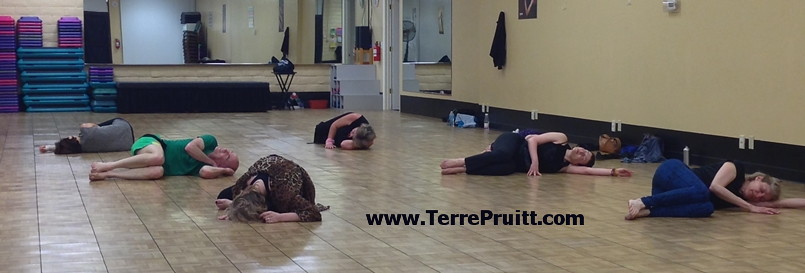 I hope one day we will be able to dance together!
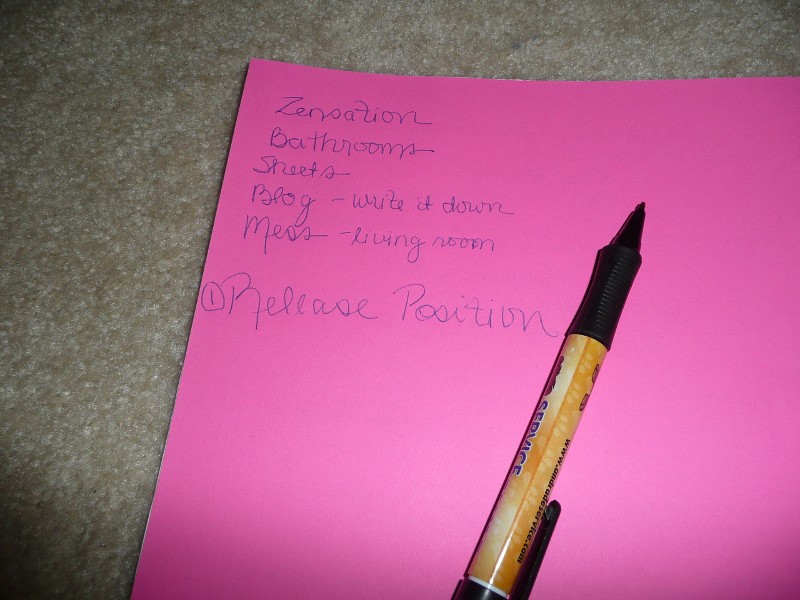 I can’t even remember where I read it, but it was a list of things successful and productive people do. Ya know, the usually list that includes “have your staff do all the things you would like to get off your plate.” Yeah, ok. Well, in addition to the things on the list for people WITH staff there were a few things that people without staff could do. One of them, of course, was make a list of things you need to do. Well, I think we are all familiar with that. In fact I have a lot of lists. And as I said, one of the things I do when I am supposed to be going to sleep is mentally move the things from my current to-do list onto the next day’s to-do list. But – to me – the key thing the article said about the to-do list was to let is be a tool to let you concentrate. Allow the list to take all the things you have to do out of your head so you can concentrate on the one thing you are doing at the moment.
 Terre Pruitt's Blog