I teach Nia for the City of San Jose and the YMCA. I have been teaching Gentle Yoga too, but that is different. The Gentle Yoga classes are usually smaller both the actually room we are in and the number of people. And with yoga we don’t need the music loud so often times my iPhone in the middle of the yoga mats serves us just fine. But with Nia we need the music loud. Not “Zumba-loud” because I still need to be heard over the music, but loud enough that I can hear my music cues and people can get a sense of the music. With most of my classes the number of students is more than yoga and the venue is larger. I actually have taught at some places where the audio system did not work so I tried using my phone and it did not have enough volume. With Nia people follow my lead, but they also move their body in their own way so it helps them dance when there is music to dance too. So since I teach in all different places and the audio system is not always the same I have a variety of speakers. I had been looking at one for a couple of years, but never wanted to invest the money. But one day my hubby and I were at Costco and we saw a device I had been looking at. He wanted to get it. I hemmed and hawed, but we came home with a Block Rocker.
I had almost bought one before but with every model they came out with something different so I was trying to decide which one to purchase. Then they came out with a Bluetooth enabled version. I wanted to know that I could still use an Aux cable because Bluetooth can be spotty. I had not been able to determine that from my shopping online at first. And then I forgot about it until I saw it in Costco. We pulled it off the shelf and checked it out. Read the box to make sure it would play music both ways — via Bluetooth or a cable. And my hubby put it in the cart. All the way around the store I kept thinking, “Yes. No. Yes. No.” and on and on.
We came home with it. We plugged it in and hooked it up to our devices. It was pretty cool. Both my husband and I have used it around the house. It does GREAT house sound. Our house is an acoustical “weird-mare”, but it works great. Both of us have used it out in the yard. But none of that is in a big room with people in it. And I am not complaining that the rooms I have been teaching in have sound systems. That is GREAT. I am very fortunate. I have not had the opportunity to use my big speaker.
My Group Ex Nia Class with the City of San Jose on Tuesdays and Thursdays is normally held in the dance studio. But this summer there is Summer Camp in there for the kids one week every month. So at the beginning of the year my supervisor moved us from the dance studio to the Multipurpose room. I didn’t know if this room had an audio system. I have been telling my class for months that we were going to be in the MPR for a few classes this summer. Then for the past two weeks I have been reminding them of the actual dates. I would have been very upset with myself if I had shown up and not be prepared. Here I have been preparing them for months and then I didn’t have music. I am soooooooooo glad I thought about my Block Rocker. This is EXACTLY what it is for.
I even remembered to charge it the night before. Ya see it is a Bluetooth device and it has a rechargeable battery so it can be used totally cordless. Squeeeee!
So I used it today and it worked GREAT. I am super happy. I love it when things work out. I am so glad that Costco had it and it was such a good deal. As I said, I had been shopping for them for a couple of years and was happy this one was priced lowest of them all. Even though it was the newest model.
Here is some information copied from the ION website:
•Streams music wirelessly from any Bluetooth music-playing device or phone
•Works with iPad, iPhone, iPod touch, Android devices, and more
•Input for a microphone (came with a microphone), instruments and other audio sources
•High-quality microphone included
•Built-in digital AM/FM radio and retractable antenna
•USB port for charging iPad, iPhone, or other devices
•Built-in battery provides up to 50 hours of use
•Bluetooth range of up to 50 feet
•High-output powered 2-way speaker
•1/8-inch auxiliary input for amplifying other audio devices
•Recessed wheels and telescoping handle for portability
•Rugged design to withstand heavy use
•Projects high-fidelity sound up to 150 feet away
•Built-in cradle for your smartphone, iPad, or other device
It does not have an equalizer so it will not be “perfect” sound. It is what it is. It is great . . . in my opinon . . . for exercise classes. Oooo, I am so excited. You know me, I like to share when I am excited about things. When I learn of something that helps make MY life easier I like to share. I like to let you know so perhaps it can help one of you.
Can you see yourself owning one? Do you think you could use one? Do you like to have people over for outside grilling and/or BBQing?
We have sounding in Nia . . . where we make sounds as we are dancing. Plus people are always invited and . . . in my class . . . encouraged to sing. I’ve written several posts about sounding and put them in their own category under Nia. (Click here for the link to those posts) Although I do not think of making sounds as being regulated to Nia, I just have them as a sub-category under the category Nia. I think sounds are appropriate to make during other exercises and workouts. One that always comes to mind when people seem to need convincing of making noises and exercising is martial arts. Once I remind them that “Hi-Ya!” is a common sound, they seem to relax into the idea a bit. As I probably have mentioned before, I remember it being an unspoken rule that you didn’t make noise while you are doing Jazzercise, lifting weights, or working out at the Lady Spa. Could have been ideal that it was unladylike to make noise. I don’t know, because I never remember being told NOT to make a sound, I just know that no one did it. It was almost as if even breathing heavy was taboo! One reason I love Nia: breathing and making sounds are encouraged. But I think of these sounds as helping with the flow of oxygen and energy. I think of them as stress relieving and joy bringing. So when I was flipping through Yoga Journal and came across an article titled “How To Be Fearless” I thought, “Huh? Interesting.” Mark Moliterno, an opera singer and yoga instructor has paired yoga with voice to create YogaVoice.
This reminded me of one of Nia’s instructors who created Kivo® The Kinetic Voice . . . which is – according to her website – “a vocal practice that uses the whole body. It is designed to harness the power of vocal vibration and movement as transformational tools that unlock energy, activate your true radiance and empower you to go out and create the life you were born to live.” So . . . back to the article when I looked at the chart within the article I realized that the pairings were for more than just overcoming public speaking jitters as the subtitle read. It was for a list of different areas.
Just as we know certain sounds to be related to certain chakras and feelings, you probably also know poses are related to certain chakras and feelings. When sounds and asanas are paired up they can be very beneficial. I would bet many of you are familiar with “OM” as a yoga chant. Different sounds and different mantras can be used. The information on the YogaVoice websites leads me to believe this is different from chanting while doing yoga, there are indications that it goes beyond that.
I just love that more sounding is coming into the workout. Since I believe there is a lot more to sounding — a lot more benefits can be reaped than just breathing — I love movement forms that stem from sounding or that incorporate it.
Do you believe the is benefits to making noises while working out? Do you make noises while exercising?
I was in a yoga workshop all day. The day was beautiful and I was in Santa Cruz, but I was inside all day. Well, most of the day. I was in a class about “How do we make our yoga practice and our approach to teaching yoga more meaningful?” A lot of people do yoga just for the physical exercise of it. But some people are interested in making it more of practice. Some people are interested in exploring the deeper aspects of it. I often compare Nia to yoga because it is the same thing in that both are a great workouts in and by themselves, but there is the part that I call the “practice” where it is more than just doing the exercises it is it taking some of the “deeper aspects” out into the world. Or even applying them in the class. But first you have to be exposed to the deeper aspects. This class touched upon that and throughout the class I smiled at the similarities between it and Nia.
Yes, Nia has taken aspects of yoga and used them to make the mix that is Nia, but I am not certain that all of the similarities were used on purpose. As an example, several people have told me that they do not do yoga because it is a religion. I have experienced debate on this. I have read articles that exclaim angrily that Westerners have taken their religion and made it into an exercise. Then I have had yoga instructors/owners of yoga studios vehemently deny that yoga has anything to do with religion. I have had people say they will not come to Nia because we talk about “Spirit” and in a song or two there is an “Om.”
Today it was said that some people do use yoga to connect to God. But “there is no God in Nia” (as quoted from Carlos Rosas during my Nia White Belt Intensive in 2008.) Today’s workshop started out with the religious aspect. Briefly exploring how to teach and stay true to oneself.
During the class there was a lot of talk about awareness and being present. Something that is understandable when in a yoga class. Sensing the body while moving through and holding asanas. This is also something we employ in a Nia class. Being able to dance in the now. At one point Nia was NIA = Now I Am. So during both types of workouts there is an emphasis on moving with awareness and being in the present. Being aware of how your body moves. Noticing the bends and flexes, the circles and lines. Being present and not thinking about our to-do list we have to accomplish after class. And, this is where I consider it a practice . . . where you take those ideals out into your everyday life. Be aware of what you are doing while you are doing it and BEING in the moment. (By the way: This is particularly challenging for me right now. As you might imagine.)
Then the topic of listening to students to learn what they needs was discussed. It went along with teaching people as opposed to teaching poses. I particularly loved this because just last week I told my students we were going to start doing a particular group of poses and they looked at me and said, “Why?” And I said because you told me you needed to. They hadn’t actually told me they needed to so I explained to them that what they told me led me to that conclusion. As a teacher you might be able to relate to the eye rolls I received. Of course, as I feel I do this (teach people), I know there is always room for improvement so I will continue to listen.
Most often I ask my Nia students if they are having any issues or would like to focus on anything in particular during the class. I feel that allowing them to pick the focus or take part in picking it helps me teach to them and their needs. I felt that was a Nia connection to this part of the yoga workshop.
In the workshop, I also kept hearing talk from the students about no judgment and self acceptance. Two things which are also taught and emphasized in Nia. No Judgment is part of witnessing which is a stage in Free Dance. While dancing just witness what is happening but don’t judge. Could be something like, “I kick to shin height.” Instead of, “I am in such bad shape I can’t get my leg higher than my shin.” Non-judgment. Accept what you can do and work to do more if that is your desire.
It was a nice day. And this about sums it up. Plenty of things to think about and work on.
I posted some information on Facebook, but there are Nia students that are not on Facebook, but who read my blog. There are also yoga students who I am not friends with on FB who read my blog . . . and there are many of you who have sent love and support while my mom was dying. I am very grateful for all of the love, support, stories . . . and just everything that has been sent to my family and me. It has helped me more than you know. I will probably go back and tell the story of my mom’s last two years (or so) just because I really feel like sharing the story of the brave woman that she was. Also, it will serve as therapy for me and as a log. I will probably share more about my feelings on this whole “process of dying” that so many people just accept as the way it has to be. I do not agree nor do I feel it is an acceptable way for someone to spend their last days on this earth. The purpose of this post, though is to share with you that my mom died around 11:00 pm on Friday, April 11, 2014.
The hospital called me at a few minutes before 1:00 am on Saturday, April 12, 2014. So I keep thinking date of death is today, but I was told it was about 11:00 pm on Friday. I don’t know the exact time, but that is not all that important. What is important is that she is done with the twelve days of the “process”.
She went to the hospital on Saturday, March 22, 2014 because she could not breathe. They placed a tube in her throat to open the airway because they thought that they would be able to do more for her on the Monday. But her team of doctors decided that there really was nothing more they could do. One of her doctors was willing to perform a very risky surgery if my mom elected to go that route, but she did not. So she was told that she needed to pick a day to die . . . the conclusion reached by her medical team was that once the tube was removed her damaged trachea would collapse shortly there after and death would be relatively quick.
It was a common occurrence though, for my mother to not do anything according to what the doctors have previously experienced or think would happen. That is just how it has always been. She reacted badly to drugs that no one EVER had reactions to. She was always surprising her doctors and teaching them things by way of her body responding to treatments/procedures/etc differently than they had ever seen. This always served as a reminder to them, over and over, that each body is different.
The tube that was in her throat was thought to be keeping her throat open. As I said, the medical professionals thought once it was removed her throat would collapse. While the tube was hooked up to a ventilator it was rarely breathing for her. She was breathing on her own. Only once in a while — when she was tired — did the machine take over. And most often it was only for a few breaths. So she was able to breathe on her own, it was just an airway issue. Because trachea’s can’t be fixed or transplanted she was told she would die and that she needed to decide when that would be.
She sat in bed for 10 days contemplating death. All the while she worried about us — did we eat, we should go sleep, etc. She joked with us and allowed us to talk while she listened. The day for the scheduled extubation was stressful and nothing went as planned. In fact it was twelve days after the tube was removed that she died.
I want to emphasize that the hospital staff and my mom’s medical team was very kind and caring and they did all they could to make the dying process “comfortable”. My issue with the process is not with them nor the hospital. As I said, that is another post altogether, but I wanted to explain that she received good care.
We are now able to enter into the grieving stages of “after a loved one dies” . . . because up until now it was a horrific place of limbo. So, if you are able, please keep up all the wonderful stuff you have been doing. Please keep sending positive thoughts and prayers. Throw over that glitter, sparkle, and shine. I have really been lapping it up and I appreciate it so, so, so, so, so, so much.
Make a toast, take a bite, relish the breath . . . . .
Sometimes after a Nia Class or even a yoga class a student will come up to me to explain why they weren’t doing something I said to do. This is a HUGE education for me because some times what they say they can’t do is not what I intended for them to do. When my students share with me it helps me teach them better. Their understanding of what I am instructing them to do helps me hone my teaching skills and at times has me finding different ways to say things. Could be an entirely different way of saying something or it could just be a matter of me explaining it a little better. Either way, I am always learning from my students.
As an example, one day after one of my yoga classes a students explained to me that she has a very high arch so she cannot use her whole foot. Many standing poses in yoga require you to stand on the entire foot and in Nia we also use our whole foot at times. Whole foot meaning your weight is distributed over the entire foot. Not standing on the toes or leaning back on the heals, or even to either side of the foot, but to use the “whole foot”. Since I say whole foot all the time it didn’t even dawn on me that someone could take it as the WHOLE foot. To be fair, she is correct. When I say whole foot, I actually mean your whole foot PRINT. I don’t mean to include the arch of the foot which would actually be covered in the term “WHOLE foot”. I am not certain if this was ever a thought for any of my Nia students, but just to be clear, I throw whole foot PRINT out there every once in a while in all of my classes so people understand when I say whole foot, I mean the foot PRINT. Not the arch. Flash! I learned something.
There was another time when we were on our hands and knees doing the cat pose. In this pose I have my students look “down” into their lap. If the individual’s neck allows and they are comfortable with that, I go for the big stretch all the way down the spine. So when we arch down with belly towards the earth, I tell them to look up since I consider looking into the lap looking “down”. After class one day, one student told me she can’t look up because of a neck issue and when she said it we were standing and she looked up at the sky. At that moment, I just said, “Ok. Good for you for recognizing a position your body cannot do and not doing it.” I wasn’t exactly certain what she was talking about because I hadn’t instructed anyone to look up at the sky, but if her neck can’t do that, is great that she not do it. The next time I was doing the combination, I thought “look up” and – FLASH! (the light bulb again) – I understood what she was talking about. When I said look UP, she thought I meant UP at the SKY and not just up from the “down”. So, again, I learned something. I can still say look up, but I clarify that I mean up from your lap (or the other options I give).
It always amazes me and make me happy that I learn so much AS I TEACH. I think I have shared before in a post that there comes a time in my process of learning a Nia Routine where I just have to take it to the class. No matter how much time I spend at home by myself learning it, I always learn more in that hour of teaching it than all of that before time. Awesome. I might have even posted something similar to this before. It just goes to show that I am always learning something from my students! Ta-da! Students are teachers too.
Do you ever talk to your teacher about stuff? Did you ever thing that you could be teaching them something?
There are a lot of yoga poses. Especially since a lot of them I know are the modification of the actual pose. Some of these modifications seemed to have morphed into their own pose with their own name. In addition to teaching Nia in San Jose, I am now teaching Gentle Yoga. And I was thinking. I wanted to make a list of my favorite poses. I was thinking I could have a list and do them every day. But it turns out that I like a lot more than I was thinking. And some I don’t like at all. And some I look at the picture and guffaw, saying, “Yeah, right?” Anyway I came up with about 38 poses that I really like, ones that I would call my favorite. I have a feeling that I am forgetting a couple too so I bet my list could really be in the 40’s. I could do over 40 poses a day, but I would rather do less and repeat a handful of poses then just work my way through all of my favorites. So then I circled ones that I would like to do every day and I ended up with 16. I was thinking I could do those 16 every day. But then I realized that while I will probably do that every once in a while I would be better off just picking some from the list everyday. Whatever strikes my fancy. I feel that if I pick a group every day I will end up getting the exact practice I need for that day. It could end up being my favorite 16 of the favorites.
I do feel that my “favorites” for the day will end up being exactly what I need. I plan to post about some of my favorites. Working my way through the list. I have already posted a few of them. One of my favorites that I have posted about is the Gate Pose. This is a balance pose but it is done on a knee and an extended leg. Not all balance poses are done standing. This is a pose that helps with stabilization, strength and flexibility.
Another favorite with a post is the Locust Pose. I REALLY like this pose. This is one that I do extremely modified. I mean I’ve seen the locust pose where most of the yogi’s body is off the ground and they are resting on just their sternum, upper shoulders, and their chin. That doesn’t even look comfortable to me. I prefer the belly-on-the-earth-with-the-head, chest, arms, and legs-lifted-off-the-ground version. This is a whole body pose. Not only on my favorite list but on the favorite 16!
I also like the Sphinx. This is another backbend, but with this one we rest on the forearms and elbows. Another pose that made my list is another back bend, the Cobra. This one to me is more of a lift using the back. And another backbend – the Updog – made the list. Updog and Cobra sometimes look the same in demonstration – depending on who is demonstrating. Be sure to check out my posts to see the difference. I use Patrick Reynolds’ video to explain the difference. I think of Up Dog more like a hanging backbend. The only backbend that made my top 16 was the Locust Pose.
The Garland Pose made my list of favorites and the top 16. This is a position I try to find myself in every day. Even if I am not doing yoga or any type of practice, I will put myself in this posture to pick up something. I think that this pose is a great way to help keeps hips bones healthy and juicy. Also pushing up from this squat is good for the legs.
So I have already posted about a few of my favorite poses. So I will continue to explore and share with you.
What is your favorite yoga pose? Why is it your favorite?
I love my students. They are a great source to me; they teach me and they make me laugh. Recently one of my students happen to mention a policy that was told to her – a facility stated she could try the class for 10 minutes without charge, but would have to sign up for the class to stay longer. The comments from those that she was sharing this with was that 10 minutes was not really long enough to get a sense of the class and if they would like it. She said, “I know, if I would have only stayed 10 minutes I would have missed the nap time at the end!” That was the best. She, of course, was kidding . . . sort of. She was talking about Shavasana. A very important part, yet for many, one of the most difficult times in yoga.
She was kidding in the sense that we all know it is not nap time, but not having been familiar with yoga she would have missed seeing that part of the class if she had only been allowed to stay for 10 minutes. Shavasana is a pose of total relaxation. It is where you allow your body to rest and relax from the workout it just participated in. In some classes this is a necessary time for recuperation of the body, but in others it might not be so much about the body. In a Gentle Yoga class it could be more about the mind. In Nia we have BMES – Body, Mind, Emotion, and Spirit. We could say that shavasana is a time for those four things. So after a nice gentle class it could be more a time more for the mind, emotion, and spirit to relax. While the inner dialog should be kept to a minimum while practicing the asanas it is even more important to do so during shavasana. This is the time when the body absorbs all the goodness from the poses it just performed.
I had once thought that you DID shavasana IN the corpse pose, but the name comes from the Sanskrit words Shava meaning “corpse” or dead body and Asana meaning “posture”.*
One of the reasons shavasana is so difficult is because there is not supposed to be any inner dialog going on (as I just mentioned). This is not the time where you begin making your shopping list for your trip to the store after class, or where you decide what you are going to say to your boss/friend/spouse. This is a time of quiet, a time of reflection, a time where you do a “body check”. Check in with each body part or area of your body to see if it needs any attention, see if it needs to be relaxed and focus on allowing it to relax. Sometimes because of this relaxation one might fall asleep. When I first started every time I did shavasana I fell asleep. Now I don’t, I am better at being mindfully relaxed. It is a practice though. This might not be something that comes easy to you, it might be a challenge, but it is something worth practicing.
I’ve heard different ideas on how to hold shavasana in a class. Some say that a guided meditation is the way it should be done. Some say that total silence is the only right way. Some say some music or nature sounds should accompany this pose. In my classes I usually softly lead the participants into a relaxed state. Then I allow them quiet time with this pose — I do have sounds playing during class and I don’t turn that off, but sometimes I turn it down. Then after the time allowed I talk them back to awakening their bodies and moving again.
If this pose and time is not something that you include in your yoga practice, I encourage you to give it a go. Try it. If you fall asleep that is ok. But keep doing it and when you are able to achieve that relaxed state while staying awake you will see how powerful this simple pose is.
Do you practice shavasana? Have you ever fallen asleep during shavasana? How long do you stay in this pose?
For centuries, people have derived pleasure from drinking many different varieties of wine. Whether it’s a sensuously versatile Pinot Noir or a divine Chardonnay, drinking wine in moderate amounts has proven to be one of the more effective ways to unwind, relax and allow the stresses of the day to just slowly fade away into the ether. Various studies have emerged throughout the years espousing the health benefits of drinking a glass or two of high-quality wine.
Experts from the world-renowned Mayo Clinic have stated that there are certain substances in red wine called phytochemicals (specifically, flavonoids and resveratrol) that may help prevent heart disease and failure by performing two critical functions: increasing levels of high-density lipoprotein (HDL) cholesterol (also known as the “good” cholesterol) and protecting against artery damage. It is worth noting that both resveratrol and flavonoids are also recognized as antioxidants (not all phytochemicals are antioxidants, though).
Resveratrol, in particular, is markedly more prevalent in red wine than in white wine; after all, red wine is fermented with grape skins for a longer period of time compared to white wine. Additionally, resveratrol has gotten a lot of attention due to possibly playing an important part in maintaining healthy cardiovascular function. Some of the existing research has linked resveratrol to reduced blood vessel damage, prevention of blood clots, and a decreased amount of low-density lipoprotein (LDL) cholesterol (the “bad” cholesterol). Dr. Eric Crampton, a highly respected University of Canterbury academic, has also opined that based on his interpretation of the current studies available, moderate drinking reduces mortality risk. Furthermore, according to Paul Jaminet of the Perfect Health Diet, animal studies have shown that the harmful effects of alcohol on the liver – fatty liver disease that inevitably leads to a scarred and damaged liver (cirrhosis) – occur only when it is combined with excessive intake of polyunsaturated fats.
Clearly, judicious consumption of red wine not only calms the senses; it’s also a healthful habit in moderation.
Image courtesy of M&S
_________________________________
This post is a guest post. The conclusion reached is that of the guest author. My approach would be more from a “COULD be” healthful. Many things we eat, drink, and do have the appearance of being healthful, but it always boils down to moderation AND the individual, so to me it is not so clear.
Did you sing it? When I began to write this post the first thing I thought of is what I often think of when I sit down to share something on my blog and that is WHICH way do I want to describe it. As I have said numerous times there are different ways to do things and you can check the web, books, magazines, and other places and you will see different instructions. So while I was glancing at the different pictures what popped into my head was “GET DOWN ON IT!” There really is no “it” in this position. That is just what popped into my head, then as I was typing it . . . I was singing. Of course, you were singing too as you read it right? Please stop here and take a few minutes to Get Down On It!
Ok, now that you are back. Let’s talk about the Garland Pose. This is an instinctive position for the human body and one that gets abandoned as we age. As I type, I see myself writing at least three posts about it, not the Garland Pose specifically, but this position. I am starting with the Garland Pose.
The Garland Pose or Malasana is a yoga asana. This pose can easily be described as a low, deep, or full squat. I have posted about squats before, but the squats I was talking about previously were not full squats. I think of those ones more as “weight training” squats. Either doing them with weights or on a BOSU and not going all the way down. The legs are not fully “folded” in that type of squat.
In the Garland Pose the legs are folded to where the back of the calf touches the back of the thigh.
Remember there are different ways to do this, the main goal for ankle and hip flexibility is full foot on the floor, legs folded with knees wide. So these instructions are going to start with feet flat on the floor. Place your feet about shoulder width apart (not wider than). Have your toes pointing just slightly out on the diagonal. Then lower your buttocks down, keeping your knees wide.
If it is not just a matter of “lowering your buttocks down” as in, this is not easy for you there are things to do to allow you to practice getting into that position. One way is to fold over, bending at the hips, and place your hands on the ground then lower your tush down. If that is not a comfortable option you can put your hands on the seat of a chair and lower your butt until it is comfortable. With each try, go lower. Eventually you will be using elbows on the chair. With this method you have to be cautious with the chair. If you are using it to hold your weight you have to make certain it will not move or tip over on you. So use a secure chair.
If not the fold over or chair technique, you can use a strap or something secured around a door knob. Hold onto that as you learn to lower yourself down. There are many precautions to take when using a door knob so make sure you think about all of them (strap not slipping off, door knob not popping off, door secure – not opening, no one walking in the door you are using — and more, so please be careful if using this technique). With a secure strap you can work your way down slowly or in increments.
Once down, center your torso in between your knees and thighs. Your knees are wide. Place your elbows at your knees hands in Añjali Mudra or prayer position. Embrace the beauty of posture that is yoga and lengthen your spine. Lift the crown of your head up, reach the neck longer, lower the shoulders as they pull back, lift the ribs off of the hips, all the while your tail reaching for the earth. Stay as long as you are comfortable.
Another modification to practice is to put a folded towel or blanket under your heels until you are able to put your heels down. One of the reasons this position gets abandoned as we get older is our calf muscles get shortened and/or tight. In some people high heels are the cause of that.
This pose is beautiful for some many reasons. To name a few; it helps with balance, it opens the hips, it improves flexibility in the ankles, it can transport you back to when you were a child and did not hesitant to squat to see what was on the ground!
When you are done push up to standing. If that is not an option, I recommend getting up any way that is comfortable for you. Eventually with practice you will get stronger and find many ways to rise. Also with practice you might find yourself using the squat to pick things up instead of just bending over. Remember it is a practice so you don’t have to save all the moves for the mat, incorporate them into your day.
So did you sing? When practicing this pose how far can you get down? Are you utilizing either the chair or the door knob technique?
Nia is a body/mind type of practice. Or mind/body . . . however you want to say it. I tend to say body/mind because the first step is to get into the body. But it is different from a lot of other exercises. It is much more like yoga and Pilates then say . . . weight lifting or running. I recently taught a class where a woman told me afterwards that she really loves it because she is very athletic, she runs, she plays other sports, but she wanted something that was more freeing and more connected so she decided try Nia and now she is hooked. She still does all of the other stuff and continues to love it, she is just rounding out her workouts and exercise with Nia as a body/mind addition. Nia is really great to add to any type of workout regime you have.
Since Nia focuses on allowing the participant to participate at their own level it can easily fit into your workout schedule. I have had many people who love more traditional sports tell me that Nia is a great addition for them. They all love that body/mind connection and the way it allows them to feel like a kid. They love the play of it.
I have had people come up to me before class and say, “I can’t dance are you sure I can do this?” The answer in The Nia Technique is “if you can walk you can do Nia.” And that is true. In a Nia class you might even fine tune your walking a bit. We might train you to do that Heel Lead that often gets lost in a high heeled or runner’s gait. Get that flex and extend back in the ankle. But really anyone can do Nia.
I would bet that you have noticed the increase in the popularity of yoga . . . well, it is that mind/body connection that draws people to it. Many people are understanding that even a regularly scheduled exerciser benefits from having that mind/body connection. With Nia there is also the Emotions and Spirit. The whole enchilada. BMES. Body, Mind, Emotions, and Spirit.
I’ve posted about Spirit before. It is one of the things that many people really enjoy about Nia. It can be compared to the “feeling like a kid” again. The play in the exercise or workout. The “Wooohooo!”
So the intention of this post is just to remind people – because I am sure I have said it before – that Nia is for everyBODY. To remind you that people who like the more traditional exercise and workouts, the more athletic type of stuff, as in running and weight lifting, find they really like to add in Nia to the mix. It actually helps them in their other type of workouts. They claim — the ones that talk to me — they are more focused when they do run and/or lift weights. So if you are one of those people who prefer the more traditional exercise, maybe break out of that for a Nia class and see how it works for you.
Check out my schedule on my website Nia Class Schedule or if San Jose is too far for you look at the Nia Classes on the main website.
Do you ever find yourself wanting to try something different for a workout? Do you want to add something new to your exercise regime?

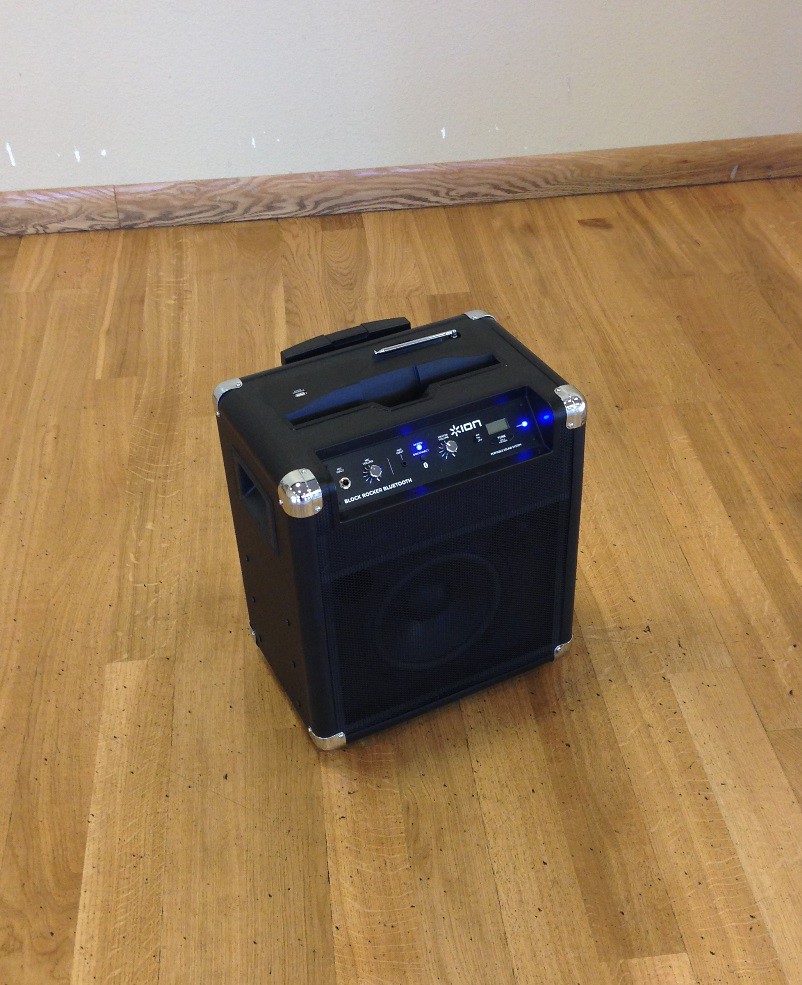 We came home with it. We plugged it in and hooked it up to our devices. It was pretty cool. Both my husband and I have used it around the house. It does GREAT house sound. Our house is an acoustical “weird-mare”, but it works great. Both of us have used it out in the yard. But none of that is in a big room with people in it. And I am not complaining that the rooms I have been teaching in have sound systems. That is GREAT. I am very fortunate. I have not had the opportunity to use my big speaker.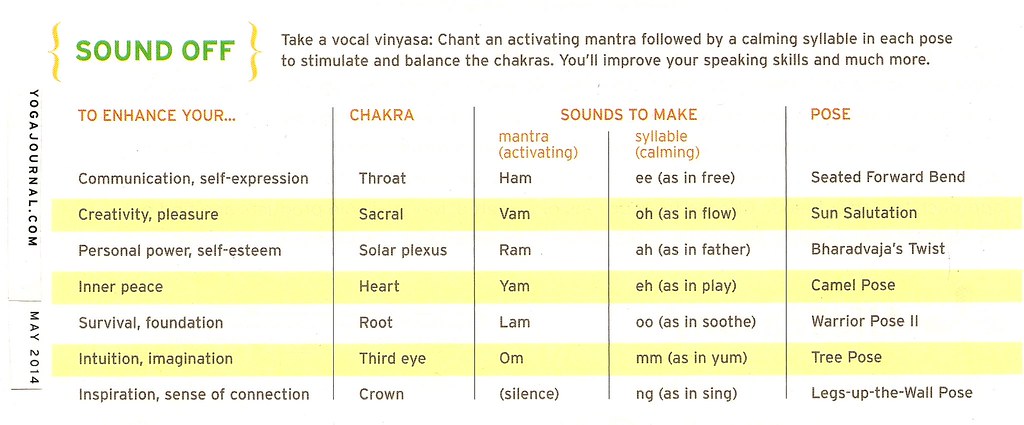

 Terre Pruitt's Blog